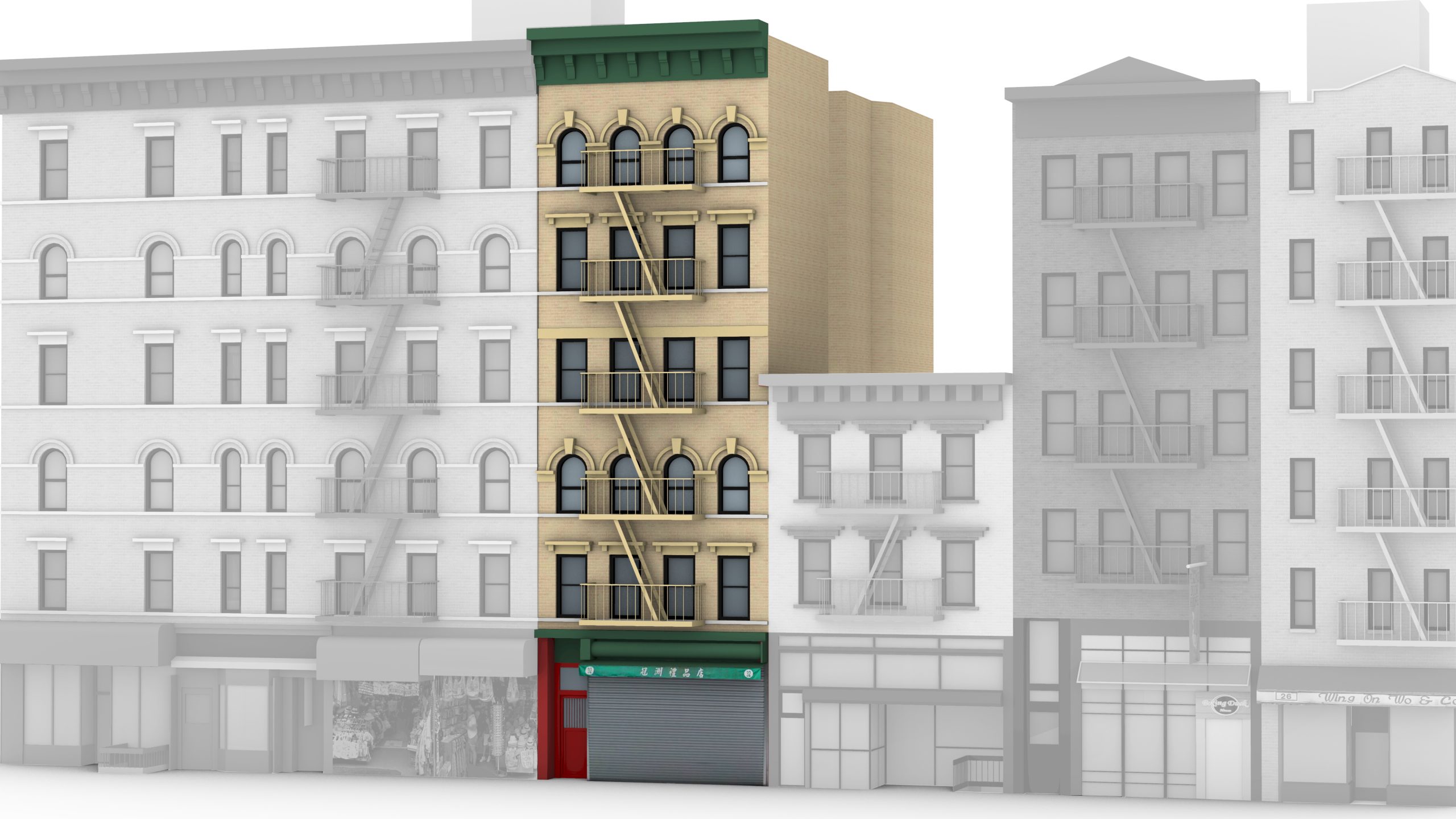
32 Mott
Good Fortune Gifts
Architect: Louis Heineke / Developed by James Poggi
Built in 1897
2024
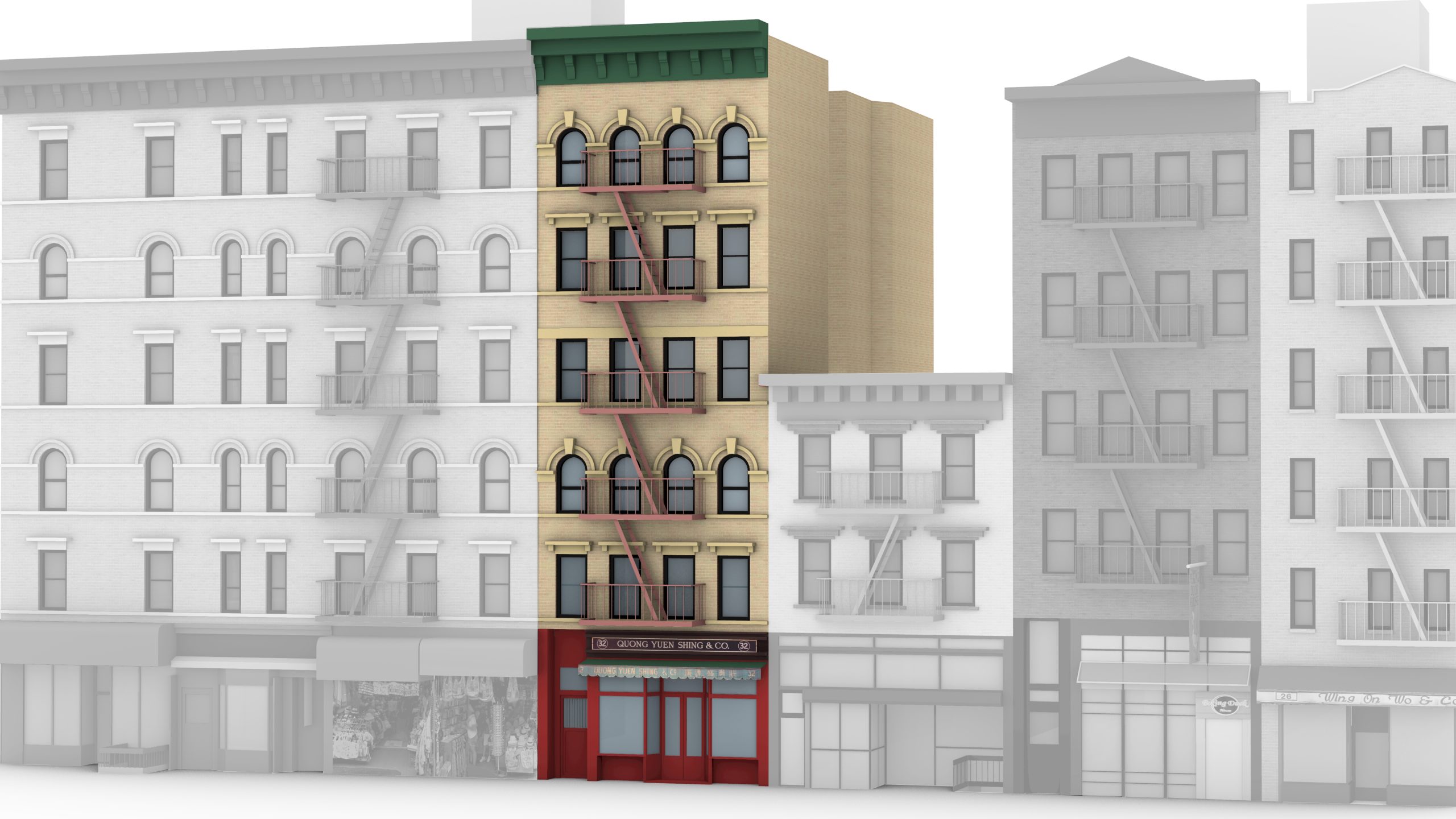
32 Mott
32 Mott General Store
Architect: Louis Heineke / Developed by James Poggi
Built in 1897
1990s / early 2000s
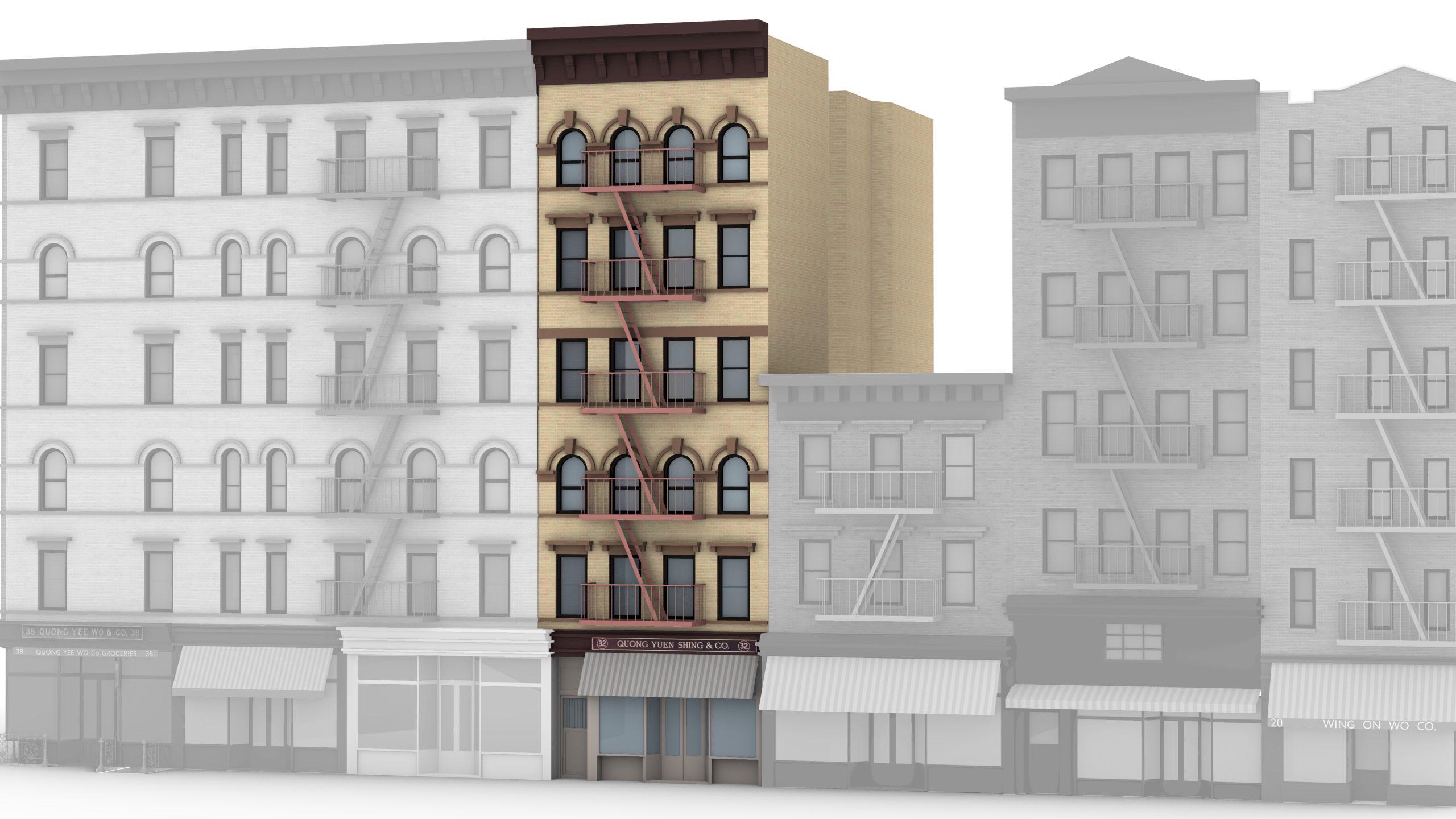
32 Mott
Quong Yuen Shing
Architect: Louis Heineke / Developed by James Poggi
Built in 1897
1940s
Interview
WITH KEITH LEUNG (FORMER EMPLOYEE AT 32 MOTT STREET GENERAL STORE)
Interview conducted in June 2022.
+ Would you give me a brief introduction of yourself and your connection to Chinatown?
My name is Keith Leung, and I was born and raised in the Lower East Side on Monroe Street between Market and Catherine St. I’ve lived there all of my life and went to P.S. 1 on Henry Street from first to sixth grade. I went to Junior High School 104 and went to Fiorello H. Laguardia Performing Arts High School.
+ How did you come to be connected to Chinatown? Tell me more about your family’s history in Chinatown.
I was born into the connection to Chinatown. My dad immigrated here from Hokshan [China] during the 1970s, I believe, and he worked for two or three restaurants as a waiter. From there, he was able to save up some money to bring over his siblings from China. My dad has been in Chinatown for a good portion of his life; he worked at Hop Kee on Mott Street and for another restaurant on Bowery that might have been called Double Happiness in the 1980s.
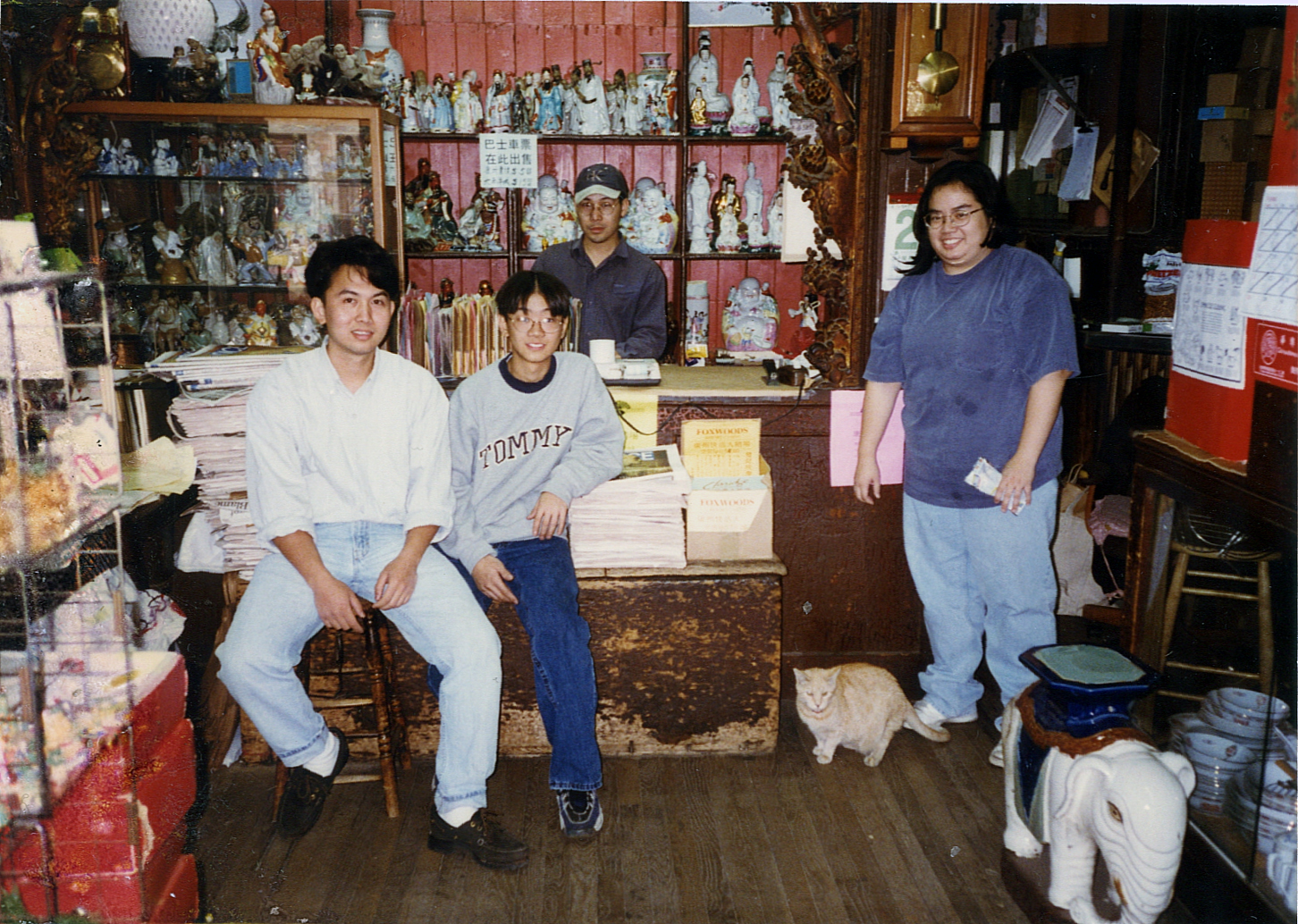
Quong Yuen Shing / 32 Mott Street General Store – inside the store.
Courtesy of Paul J. Q. Lee, October 1998
From there, my dad had a partnership at a restaurant called Wong Kee located at 113 Mott Street. I remember that very vividly because he started it, with the grand opening, in the year that I was born in – 1983. My dad worked there from 1983 until 2002/2003. He retired quite early, in his 60s. My dad was part of the Hok Shan Association on Mott Street, but he wasn’t a very active member.
My dad was here for such a long time, and there were a lot of gang wars happening on the street, so he heard and saw a lot. He would tell customers when it wasn’t a good night to stay late. Because of that, he was very protective of me in Chinatown when I was growing up, even though as years went by, there were fewer and fewer gangs and recruitment of kids into the gangs on the street.
My father apparently married his first wife in Hong Kong and had two boys. Unfortunately, they got divorced and my brothers were around 7-8 years old at the time. Because of that, my dad became a single parent with custody of the sons. Because he was living in Chinatown and working as a waiter, he couldn’t spend a lot of time with them, so it was really my grandparents who looked after my brothers. They were lenient — so my brothers got into trouble a lot (fights in school, etc…) and joined gangs. My dad remarried my mom around 1981. He was introduced by my mom’s aunt to my mom, who was in Guangzhou at the time, where she was born and raised. He ended up writing letters to her and they traded letters for a few months and then my dad went over to China and brought her over to the U.S. My mom worked as a seamstress on East Broadway when she first came over to the U.S. Two years later, in 1983, my mom gave birth to me and she then took care of me and my two brothers.
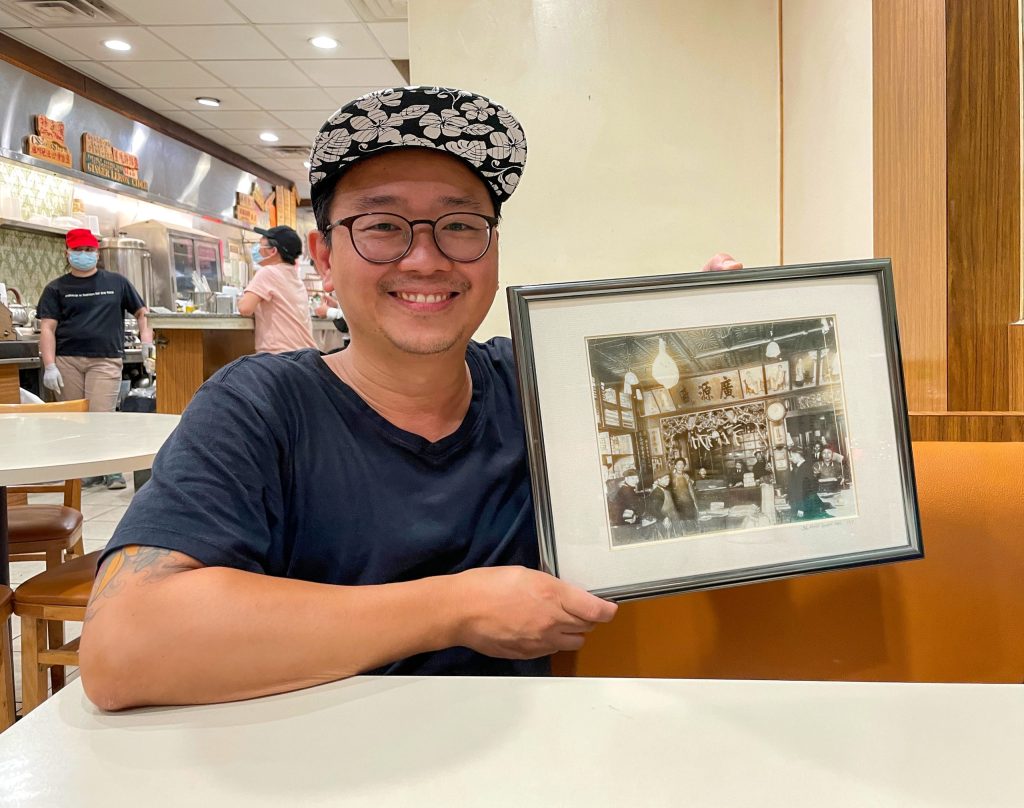
+ What was Chinatown like at that time when you were growing up?
While growing up, right off the bat, I was very sheltered by my mom and dad. It was a straightforward upbringing: I went to school in the morning, and afterwards I went to an after-school program at Oliver Street Daycare. My mom would pick me up at 5:30/6PM. She would take me back to her workplace at the seamstress factory, and we would stay there until around 8PM when she would finish working. I would finish my homework in the after-school program, so I would often either sit there, play with toys or other kids in the factory. Sometimes they would even put me to work cutting pant loops or putting bags over shirts that were pressed. I was kept busy and out of trouble. There were kids who were growing up in the factory with mom and eating dinner at 9PM, going home to clean up and then going to bed — this was me.
I never saw my dad when I was in elementary school. I really only saw him on the weekends because he was getting ready for work, or on Mondays, his day off, when he would pick me up from school.
Probably as a childhood memory, it was a good time when he would pick me up, because we would go to Blimpie around the corner and he would get me a pepper steak sandwich. There were a couple of video rental places in Chinatown, and one where Chinese Tuxedo restaurant is now located at 5-7 Doyers. We would rent VHS video tapes in all genres and languages. I would go there with my dad; it was spending time with Dad and having a little bit of fun that wasn’t typical to what I would do with my mom. I remember we rented VHS tapings of Dragon Ball the cartoon.
I never felt scared in Chinatown because I was always with my mom or dad. It felt more crowded with more Chinese people on the streets then than it is nowadays. It’s definitely a lot less dense now than back then.
There was a steam rice rolled noodle cart operated by a woman on East Broadway outside of my mom’s workplace. They served steamed rice roll with either fish balls or curry squid — this was my favorite go-to snack. That little cart became what is now Poon Kee. They opened a brick and mortar that was located at 39 Monroe Street, a Chinatown staple that now supplies steam rice noodles to most of Chinatown restaurants and rice noodle carts.
+ When did you start working at 32 Mott Street General Store? How did that job come about?
My dad had a difficult time looking after my brothers when they were growing up… and he didn’t want that to happen to me. He made sure he knew where I was at all times, so it was tough. It was like I was under surveillance.
I knew when I was 14, I could legally work. All of my friends were turning 14. I knew of only two places to work: as a clerical, errand boy delivering to law offices and courts – 90% of my friends were doing that– and at 32 Mott Street General Store. When my dad discovered I wanted to work — he knew Paul J. Q. Lee, who was the owner of 32 Mott Street General Store. Paul told me: “Your dad came up to me and poked his finger on my chest and demanded that I let his son work at 32 Mott…” At the time, one of my brothers also worked for Paul when he was 16 or 17 years old, at the general store’s storage unit that housed all of the Chinese imports.
And so I worked there for the owner Paul Lee from 1997 until August of 2002. I remember we closed soon after 9/11.
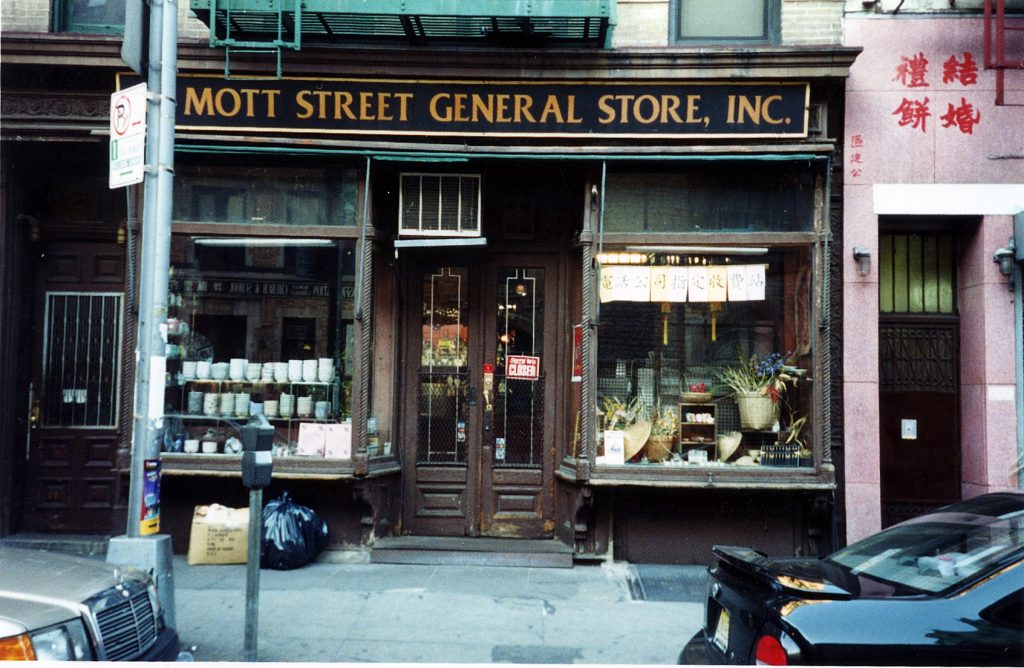
Quong Yuen Shing / 32 Mott Street General Store – exterior.
Photograph courtesy of Keith Leung, May 2001.
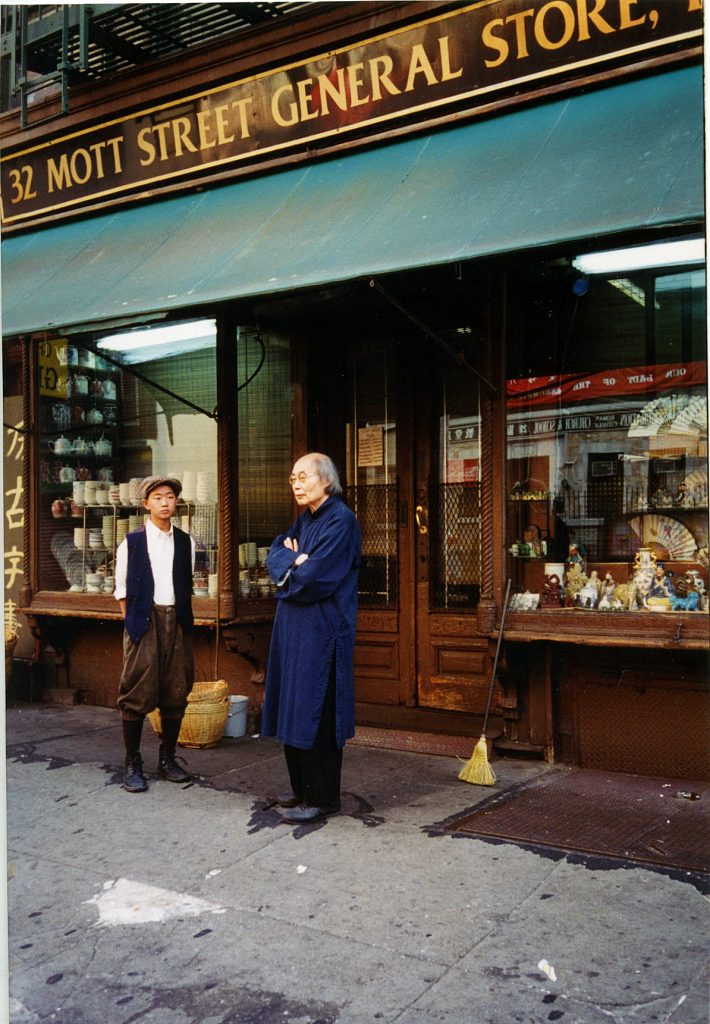
Paul with Kim Chan. Courtesy of Paul J. Q. Lee, June 1999
+ Tell me about the legacy of Quong Yuen Shing and 32 Mott Street General Store and how long it’s been in the building at 32 Mott? Can you tell me some of the history behind the store and its different owners?
The store was opened by Paul’s grandfather, Lee Lok. It was taken over by his father and then by Paul himself.
I met Paul when I was 14, working for him at the store. From what I know, he was born here in the U.S. and very active in Chinatown. He was part of the Wan Chi Ming Kung Fu school, located on East Broadway and Market Street, which is still active, practicing kung fu and lion dancing. He was a neighborhood kid – he was a book of old school Chinatown knowledge. It was always impressive hearing his stories. He was active in the community and one of the first to bring a lot of film crews to film in Chinatown, so he opened that door with the Mayor’s office. He himself was also an actor with a few speaking parts in movies. He was also selling life insurance in Chinatown and was a very good salesman. The only reason why he ended up taking over his family’s business, Quong Yuen Shing, was because his father was getting old and had to help with the family business.. He quit his insurance job and looked after the store. This was probably in the 1970s.
From what I heard, the store was opened in 1891 on 32 Mott by Paul’s grandfather, Lee Lok. It was originally an herbal shop, selling dry goods to the community, but it also served as a community gathering spot where locals would come in to read the newspaper, chit chat, have letters written to send back to China and serve as a sort of small wire-transfer bank to send money back to China. I think Paul’s grandfather was a big supporter of Chiang Kai Shek; there was a big photo of the general and his army hanging in the shop.
I think it was the early 1980s when the business transitioned to importing porcelain goods and other products from China to sell here in the States. They weren’t selling any more herbal products. Instead, they sold porcelain spoons, bowls, teapots and home goods. They also had a huge warehouse on Walker Street, where they housed all of their imports. I guess they were doing pretty well at this point.
In the early 1990s, Paul had to change the name of the store from Quong Yuen Shing to 32 Mott Street General Store.
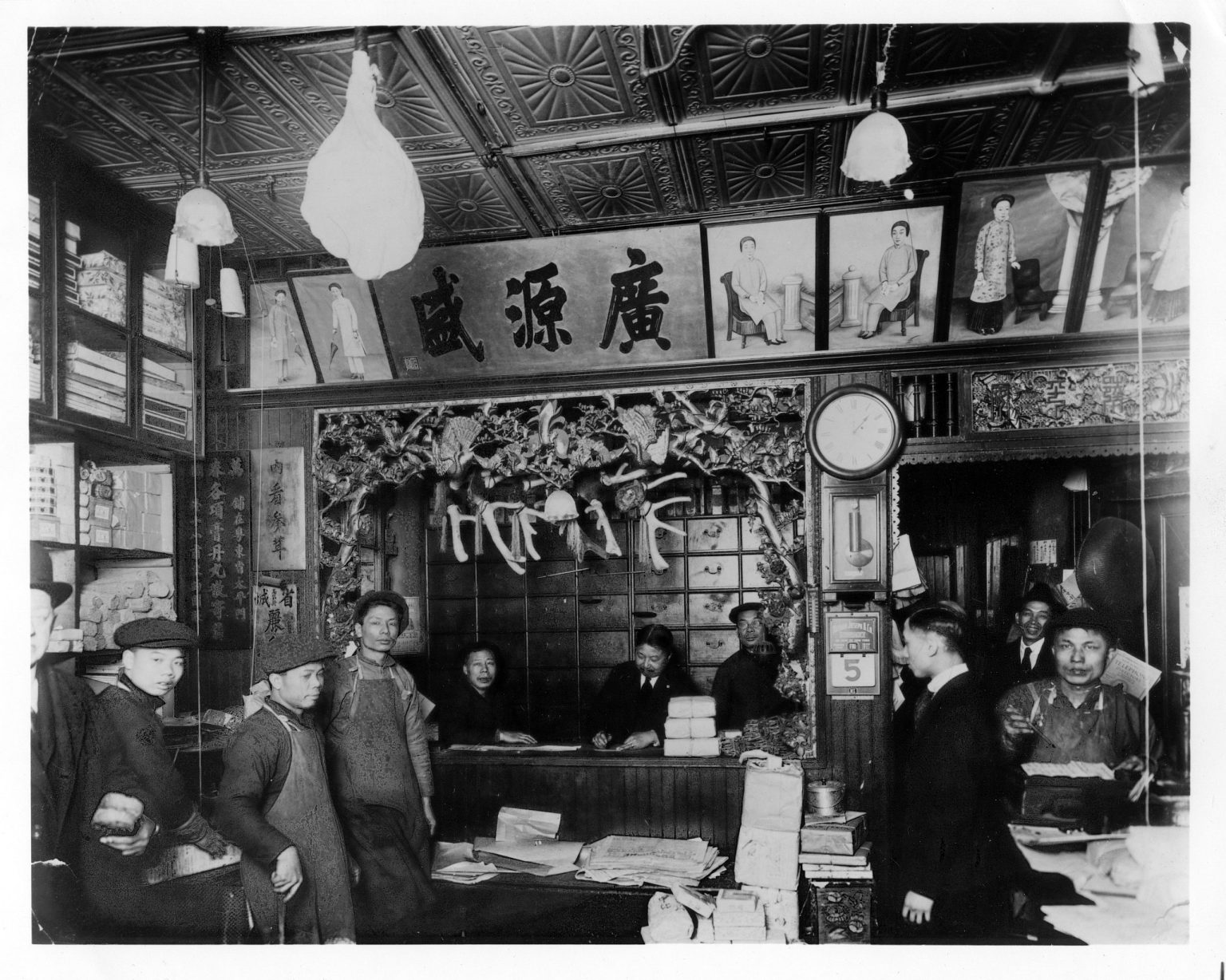
Quong Yuen Shing. Photographer unknown, taken in 1912. Photograph Courtesy of Paul J. Q. Lee and Keith Leung.
When we were still in business, we were considered the oldest active store in Chinatown until we closed in 2002. Right after 9/1, all the streets that were south of Canal Street were closed off unless you lived or had a business there. The heart of Chinatown became isolated from the rest of the city. Soon after, Park Row was closed off as extra security for Police Plaza, municipal buildings, and courthouses. As a result, Chinatown was affected by the economic downfall. With the lack of car and foot traffic, Chinatown became ground zero. The store lost a lot of business and it never picked up.
Eventually, Paul owed back rent and the landlords decided to get the marshals involved and ended up locking us out of the store. I remember the morning when we went to work. I was about to walk in and noticed Danny Yee (the son of the owner of the building) was there with the marshal. The lock was removed from the door and a padlock was installed to prevent anyone from getting in.
Eventually I had to plead with Danny to get some of my things and Paul’s things. Everything else had to be left intact and given back to the owner. I believe Danny kept everything except for the Quong Yuen Shing sign — I believe that MOCA has it now.
I wish it was handled differently…
Afterwards, the Yees took the storefront back and operated their own business selling collectable toys.They painted the wood carving gold and painted other areas of the store; a simple face lift, but structurally they left most of it intact. I don’t think there was much he could have done to the store without getting a lot of flack from Chinese leaders, due to the store’s history in Chinatown.
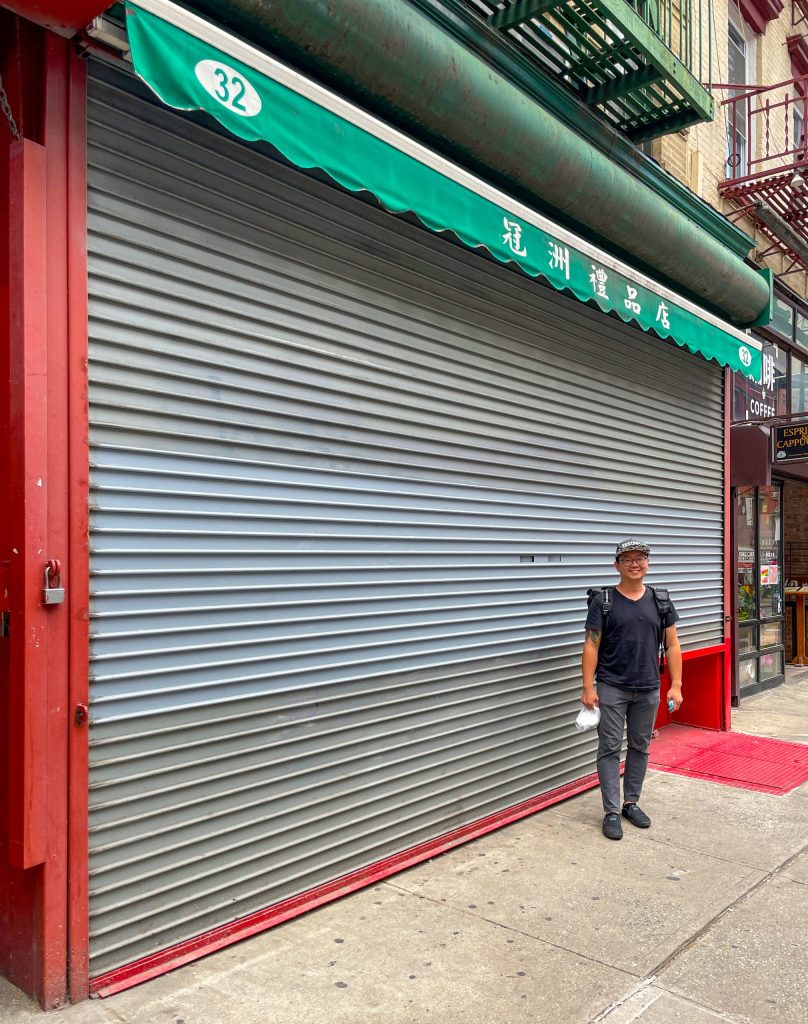
Keith Leung outside the now shuttered storefront at 32 Mott, June 2022.
+ While working at the store, what did you do?
I first started out doing everything, like sweeping the floors, taking out the garbage, breaking down boxes, running out to get lunch, cleaning bathrooms. I listened to the manager of the store, Mr. Eng, an old-timer. He was basically running the day-to-day business, even though Paul was the owner. It wasn’t until Mr. Eng retired, maybe three or four years later, that another gentleman, Eugene Leong, also a Chinatown native, took over as manager.
During the school year, I worked there after school from 3PM until 6PM. On weekends, I worked on Saturdays from 9:30AM to 6PM.
I was getting paid $3.00 an hour, which was great to me at the time so I didn’t have to ask Mom and Dad for money.
I basically stocked inventory, was a salesperson, and wrapped up goods… I was the front of house person. The longer I worked there, the longer I was exposed to the community. I met lots of local politicians, association presidents, business owners, and community members — and that’s how I ended up getting into the film business. I was mainly hired doing translation work and location scouting in Chinatown. I became Paul’s right-hand man doing this type of work in the film industry. He basically took me under his wing and became a father-like figure to me. I never understood my dad, but Paul understood where I was coming from. He sort of had the old school and new school thinking.
Paul was very outspoken in the community, an advocate for Chinatown.
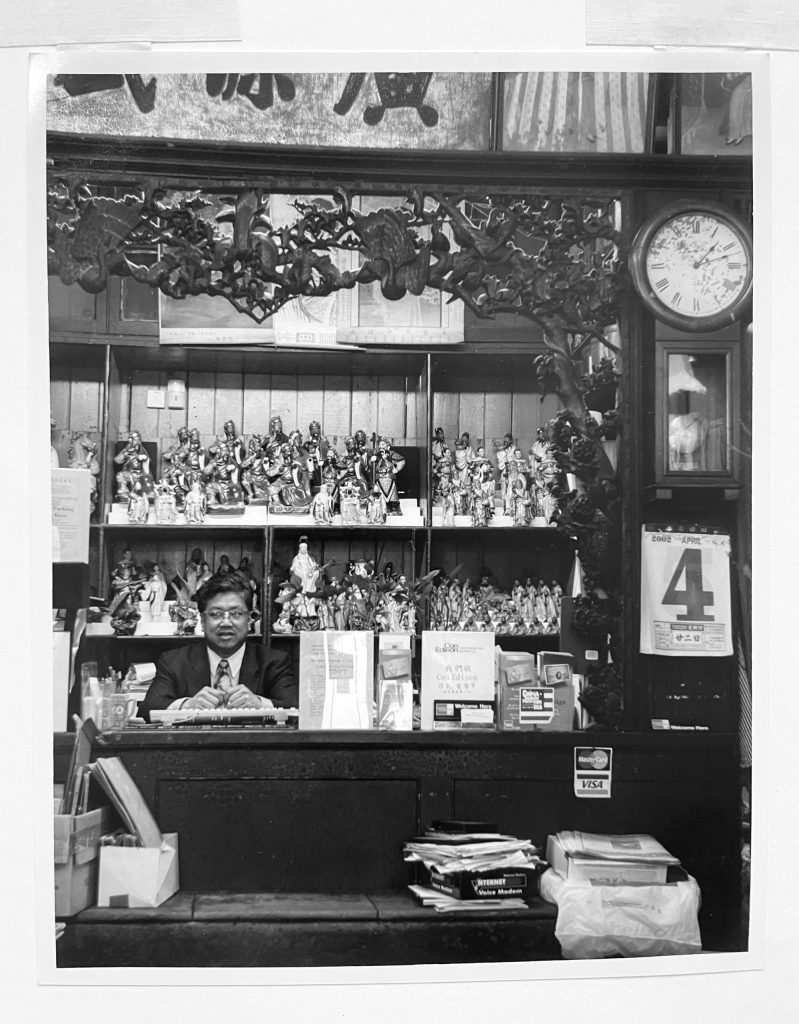
32 Mott Street General Store interior, April 2002.
Photograph courtesy of Paul J. Q. Lee and Keith Leung.
+ Who owns the building?
I think it’s the Yee family who [still] own the building. Everyone in Chinatown always thought that Paul Lee’s family owned the building, but this was never the case.
+ Describe the store’s interior to me.
When I first started the job, I walked in and thought — Ugh, this is an old store, not modern-looking, and we’re in the twenty-first century! Everything required manual writing and an old abacus to calculate prices. It was old, dingy and dusty. At the time, I didn’t know what character and charm meant.
It wasn’t until I got older that I had more appreciation for what the store had to offer.
When I saw the postcard the store was selling, a photo of the store in 1919, I was able to compare it to the store at the time, and it was more or less the same. Walking in, everything was basically wood and glass — original wooden floors with rectangular-shaped, heavy-duty nails used to keep the floor panels down. All of the shelvings with the porcelain were wood. The glass was all original — you could tell because the reflections were slightly warped. The glass doors on the shelves were still on the original hinges. The shelves were from the ceiling to eye level, and from waist level to the floor were wooden drawers. I remember vividly seeing one giant steel safe that I never had access to, next to an old school writing desk. There was a steel pulley string that would turn the light on and off.
There was a wood carving of birds and leaves, a traditional Chinese type of wood carving hanging from the ceiling at the rear of the store. It was originally painted in gold and that deteriorated — Paul never revived it, so it was kept original. Directly behind the wood carving, there were wooden drawers that were filled with herbs.
The front doors were french doors. During the summer, we would open them up. Outside the store still had its original wood carving. There were tin panels on the ceiling.
+ How do you think the store has been important for the Chinatown community?
I think everybody who lived in Chinatown knew about the store, because it was the oldest active store in Chinatown . They used the term lo gee ho, which in Cantonese means a long term, old school place.
It was important, before it became a porcelain shop, as a community gathering space. Now, though, I feel like maybe the community wasn’t as aware of the impact of losing it— sort of like, this happens. It was a whole different mentality at the time: the people who lived in Chinatown were just trying to survive. (Now it feels different, because of the pandemic.)
Photographs of old memorabilia from 32 Mott Street General Store, given to Keith Leung by Paul J. Q. Lee.
+ What’s the current condition of the storefront?
Currently the landlord just has the store sitting there. When the store was closed, the landlord took it back.
+ What are your fondest memories of 32 Mott?
I met a lot of celebrities in the shop. I took a picture with Marissa Tomei and Rosa Perez on Chinese New Year, because Paul knew Marissa Tomei’s parents very well. Every year he would invite people to watch the Chinese New Year parade from his store. A festive celebration– it was nice to be a part of that.
+ How have you seen Chinatown impacted since the pandemic started? How have you felt about this?Chinatown itself has been in an even bigger hole… ever since 9/11, Chinatown has never recuperated and has kept getting knocked down. It’s been hard for Chinatown to climb back up to keep any business afloat, whether you’re in the restaurant business or retail. It’s been really tough. At the same time, I’m glad to see businesses that did survive, like Mee Sum Cafe…
+ Can you draw a diagram of how you remember the interior layout of the store?
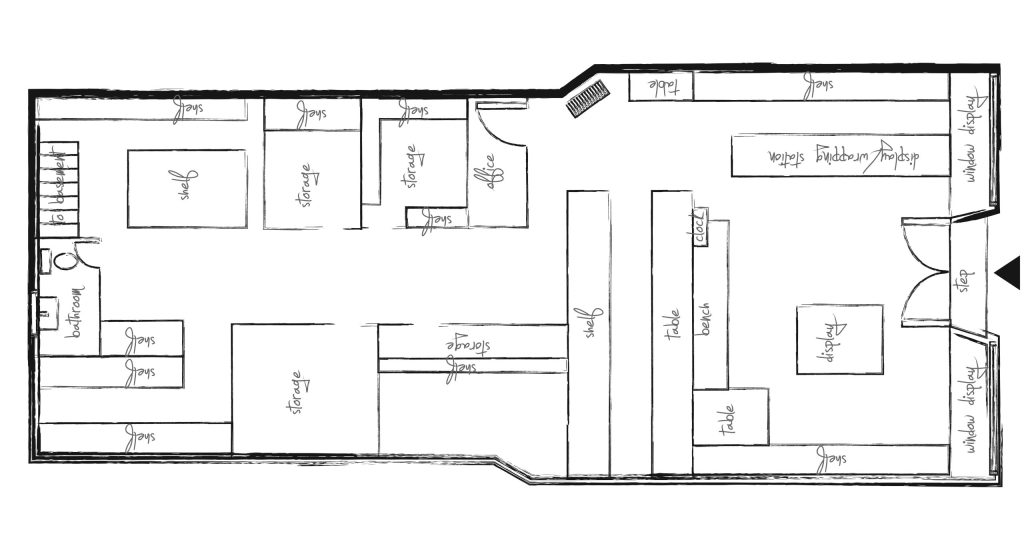
Floor plan drawn from memory by Keith Leung, 2022.
32 MOTT - HISTORIC PHOTOGRAPHS
Courtesy of the Museum of Chinese in America (MOCA) Institutional Archives.
32 MOTT - BUILDING PHOTOGRAPHS
Photographs taken between 2022-2024.