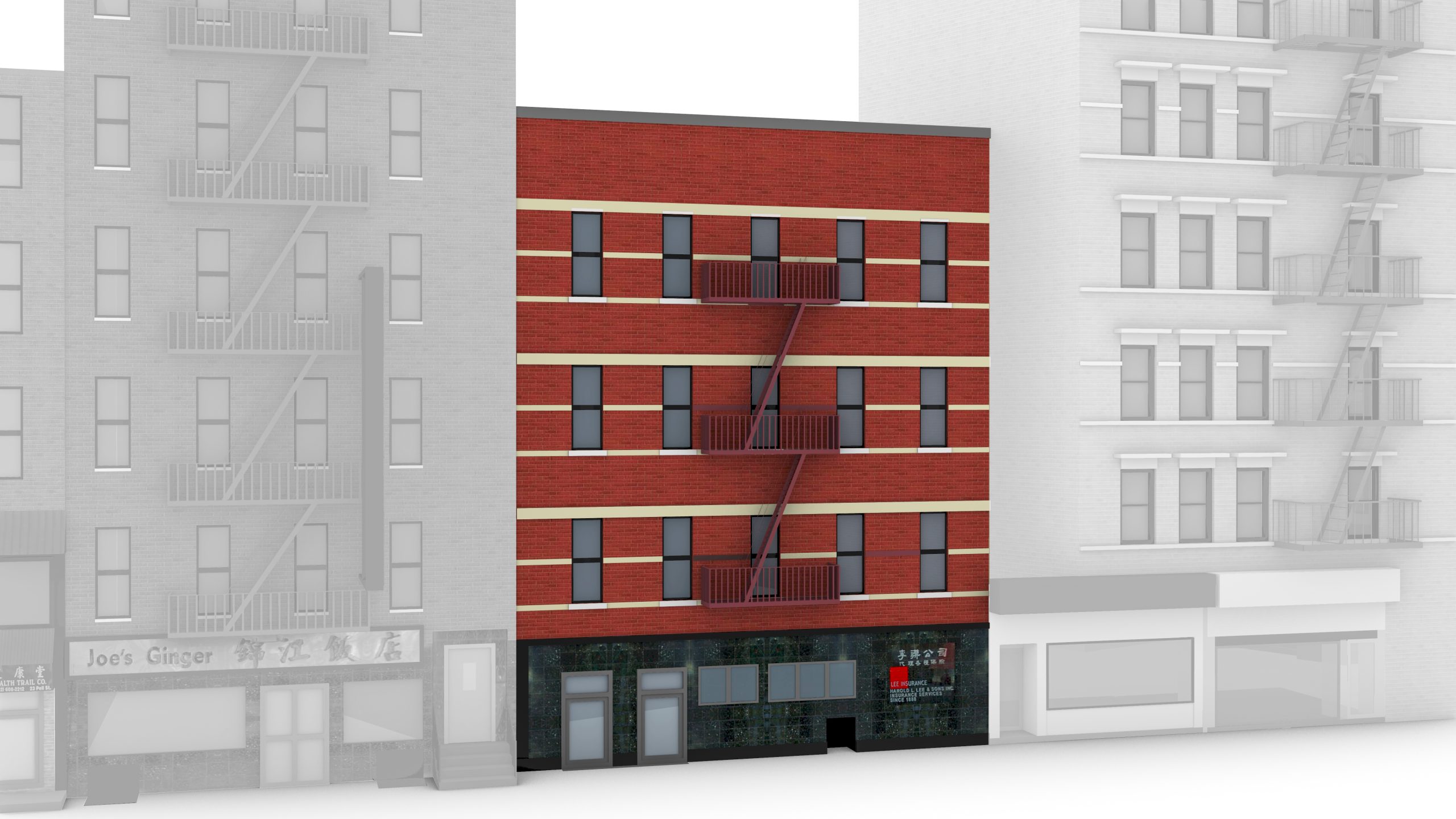
29-31 Pell
Harold L. Lee & Sons Insurance
Built in 1896
2024
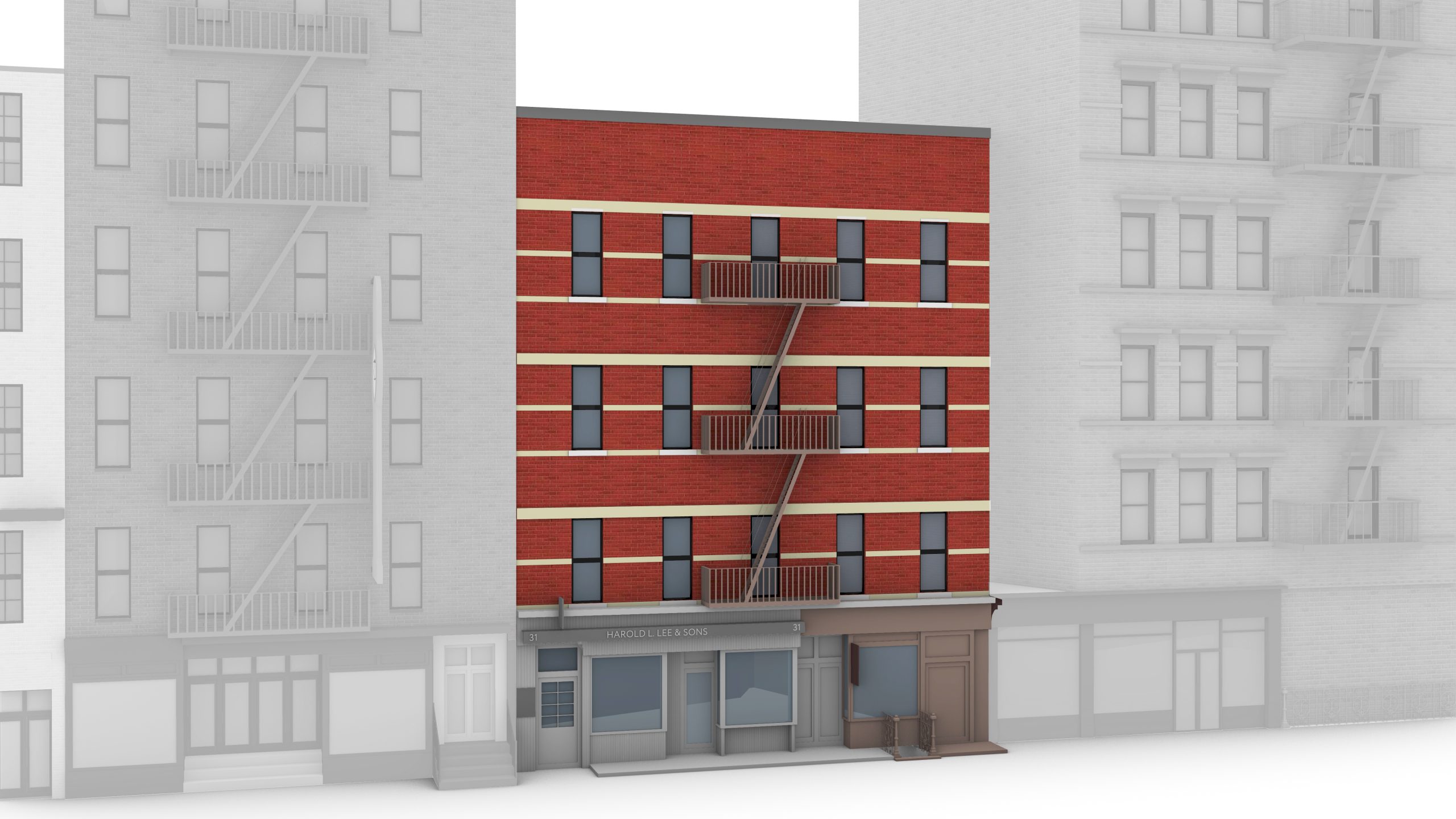
29-31 Pell
Harold L. Lee & Sons Insurance
Built in 1896
1950s
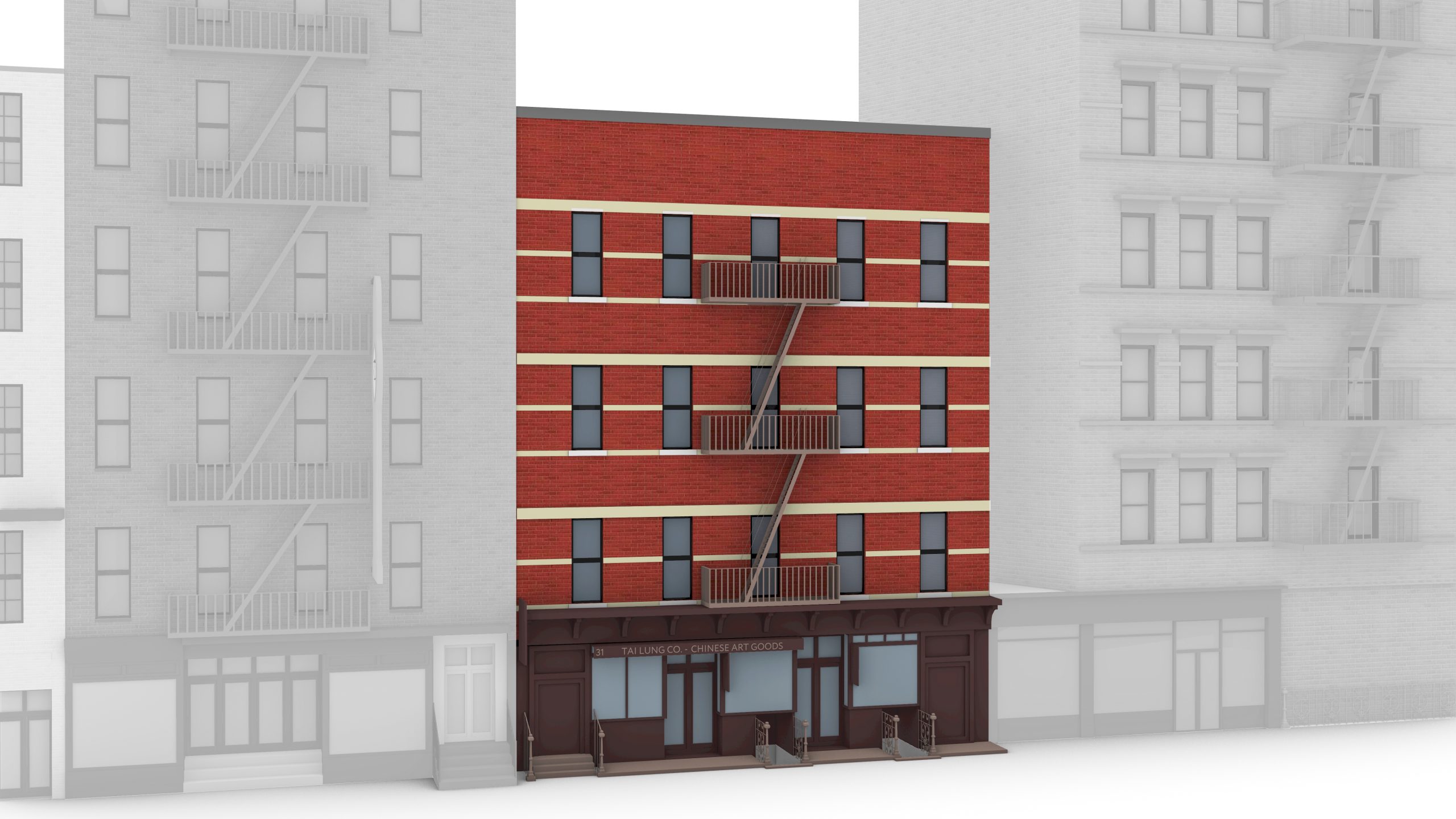
29-31 Pell
Tai Lung Co.
Built in 1896
1940s
Interview
WITH SANDY LEE (CEO OF LEE INSURANCE)
Interview conducted in April 2022.
All photographs included in this interview are courtesy of Sandy Lee and the Lee Family Photo Collection unless otherwise noted.
+ Would you give me a brief introduction of yourself and your connection to Chinatown?
I’m now the CEO of the business. My cousin Gerald owns the building along with my brother Doug. It was so very Chinese; the grandparents left the building to the boy cousins who were Lees. I took over the business with Steve Poon, my cousin, when my father retired.
I grew up in Flushing and Long Island but we’d come to Chinatown every week.
My father was born in the building. My grandfather had been here. He came over in 1905 and they found the building in 1888. My great grandfather, who was born in San Francisco, had a trading company. Because of the earthquake, they decided to leave San Francisco. His two brothers were setting up the business. All three brothers had different interests. The one in America, whose father was a railroad worker, was sent to open up the New York office with his uncles.
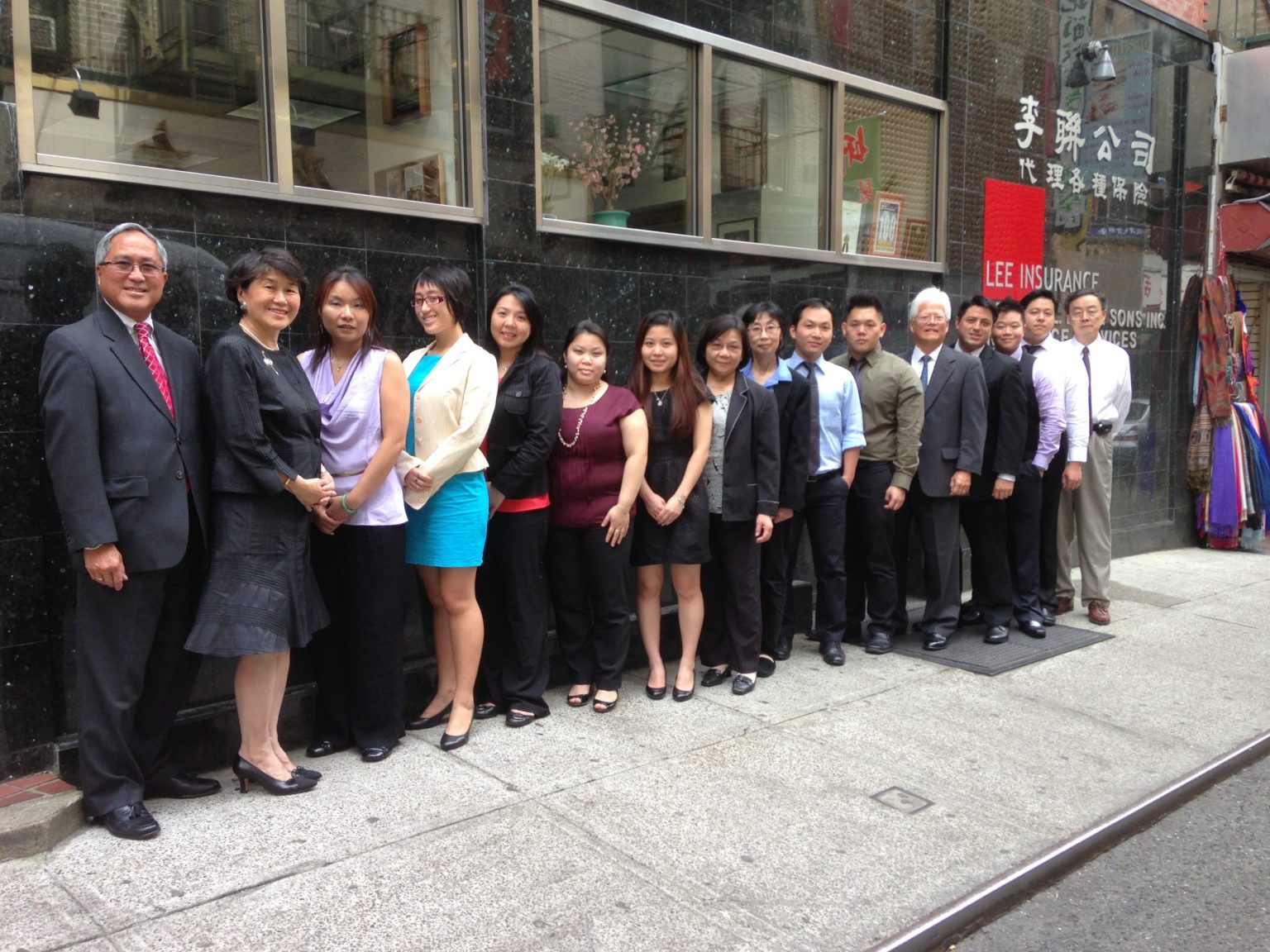
Sandy Lee and the staff of Lee Insurance
In 1888, there were like 60 Chinese in Chinatown.
In1860, the building was built. It was built by an Italian family and then in 1888, our family got there and needed to rent space for their trading company. They rented the ground floor and second floor and then eventually the whole building. We now have four stories and a basement.
They did a typical evolution of meat market to grocery store to curio shop… The door used to be in the center.
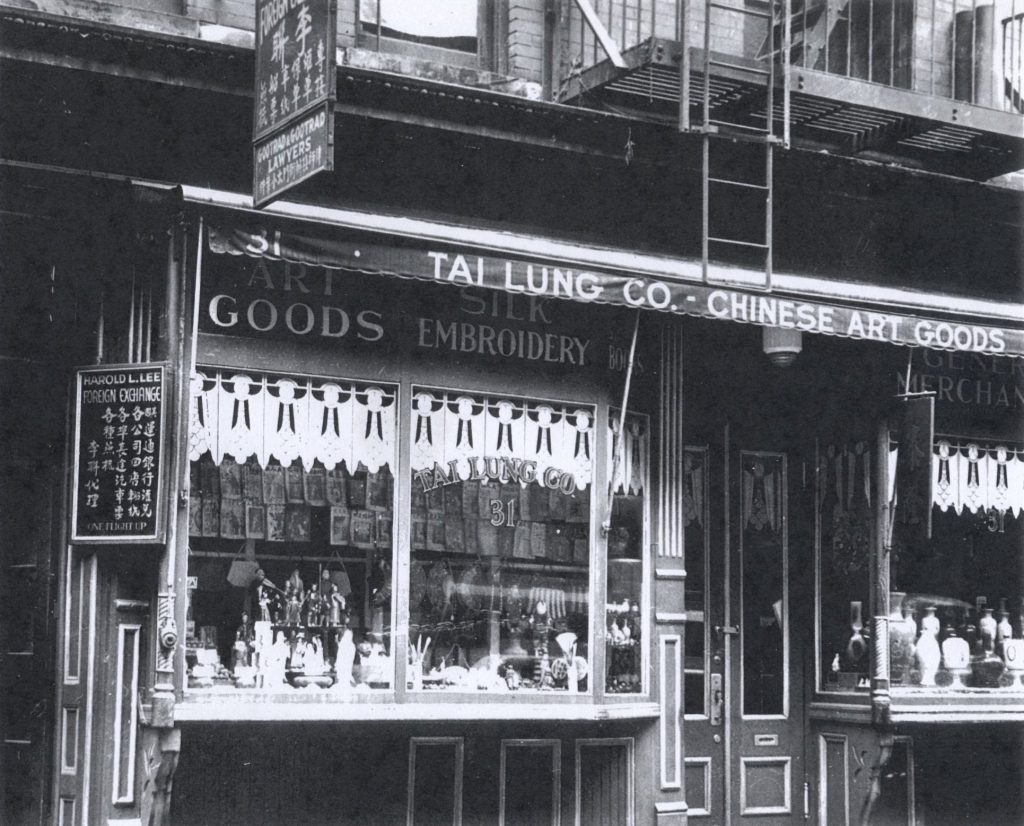
Tai Lung storefront. No longer a grocery, the storefront of Tai Lung now advertises Chinese Art Goods and Silk Embroideries.ca 1940. Photo by Beecher Ogden. Courtesy of the Museum of the City of New York.
In the early 1900s, it used to be a trading company called Tai Lung, and then in 1920, it was changed to a curio shop. On the second floor, my grandfather – who was pretty entrepreneurial – started a foreign exchange where someone from the village came with Chinese currency and could change it into local currency and remit money back to the village. This was before planes were prevalent, so everything was done by ship at the time. It became the first Chinese agent for American Express.
They were doing this in the 1940s through the war until the late 1960s, where it morphed into travel and accounting. Chinese banks started to pop up and the currency conversion started to lose steam.
The curio shop ran through the 1940s, 1950s. My father took over in the 1960s. In the front, they had the teller windows. There was one desk for the insurance, one desk for the CPA and one desk for the travel agent. Out of four to five desks, they ran several businesses — that lasted through the 1960s.
Then, [the] travel [agency] moved across the street and the main core of the office was kept as my father’s main business — insurance. Insurance became the dominant focus because everyone had offices elsewhere. In the late 1960s, when other banks came, we decided to expand to insurance.
We paid people’s Con Ed and phone bills. They had no checking accounts. My aunt would do that. We also had laundry bonds. It was quasi financial services / quasi community services. We were really a community services organization. It was a lot more than just enterprise and business; it was social services in the end, a lot of which we weren’t getting paid for. We were seen as a center of influence for many years. We helped people who got a letter from the IRS and couldn’t read it. We provided guidance on things. We still are. We constantly have a flow of immigrants…
(Left) TAI LUNG GOOD LUCK GREETING (1888), Ink on rice paper
At the opening of the first Tai Lung business in 1888, this traditional congratulatory greeting was presented to the Lees and displayed on the wall of the grocery at 31 Pell Street. It has remained on a wall inside 31 Pell ever since and occupies an honored space in the Lee Insurance office to this day.
(Center) An abacus from the early days of the business.
(Right) Foreign Exchange trade signs, ca 1940s.
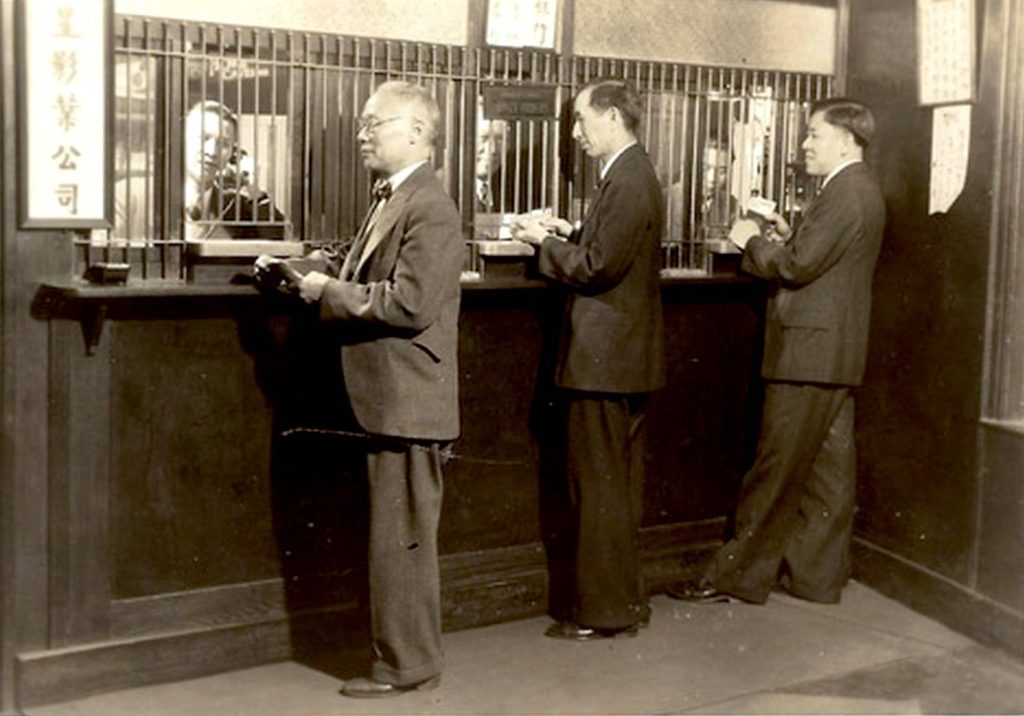
Sandy Lee: “That was when it looked like a bank with cubicles. You could go up inside from the curio shop.”
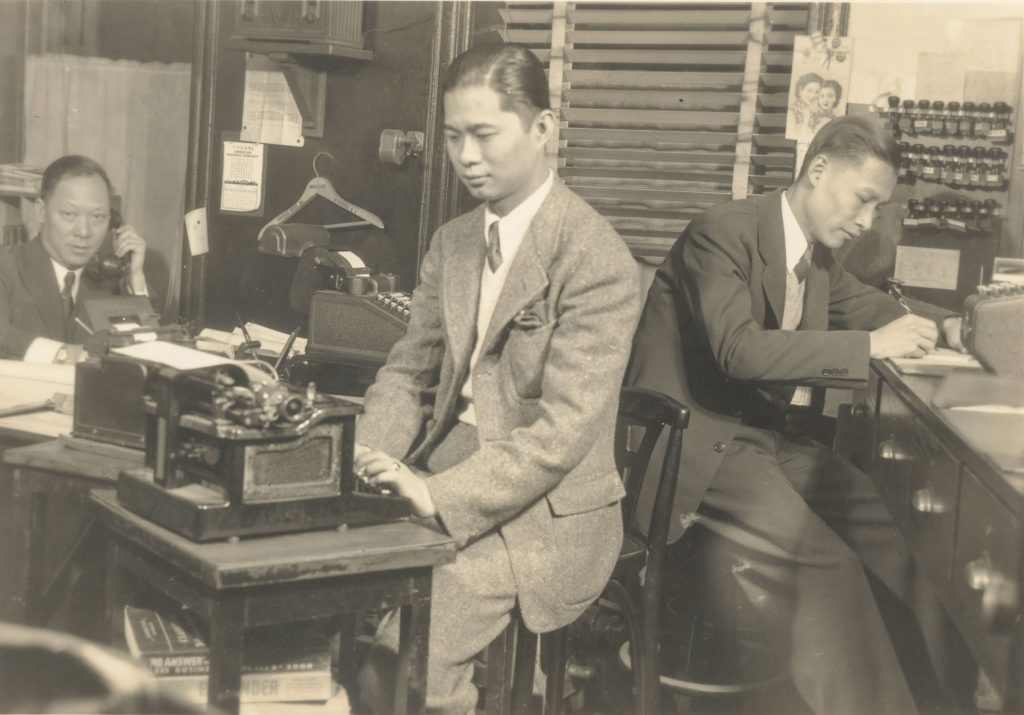
(Left to right) Harold is shown on the phone, village cousin Lee Poy typing, brother Jones is making a notation at the teller window, ca 1940s.
+ What’s the history behind Lee’s Insurance? Who was Harold Lee?
Harold Lee is my grandfather. Andrew was my father. Lee On was born in 1874 in San Francisco Chinatown and then he was sent back to the village (Toishan) when he was nine. He married and had two sons there and then came back to San Francisco to have the third son, my grandfather. His wife was able to come over because he was a merchant.
+ Can you share any information about the building’s history, or its past lives? (Did Harold Lee buy the building back in the late 1800s?) Have there been any major renovations or changes to the building since it was first constructed?We didn’t own the building until 1960 because the laws were so racist. If you were non-white, you couldn’t own. We had all six kids (aunts, uncles, my father) born in the building. The top floors were and are still residential. They were born on the third and fourth floor, from 1914-1926. They were all involved with the family business.
He [my father] couldn’t touch it before, so he did a big renovation in 1960 after the title changed. That’s when he took down the curio shop and made office space – a private office in the bank, with the front as workstations and counters for customers to come to. There used to be a light turquoise formica on the desks. When my cousin and I took over the agency – Dad retired in 1983 – we moved two private offices out of the big office.
The doorway used to be in the center and then he moved it to the left side (facing the building) and he built a higher wall for privacy. It was very dated — 1950s and retro and one of the architects was a prominent Chinese – perhaps it was Wei Foo Chun? The basement became our office storage and office equipment and mechanical.
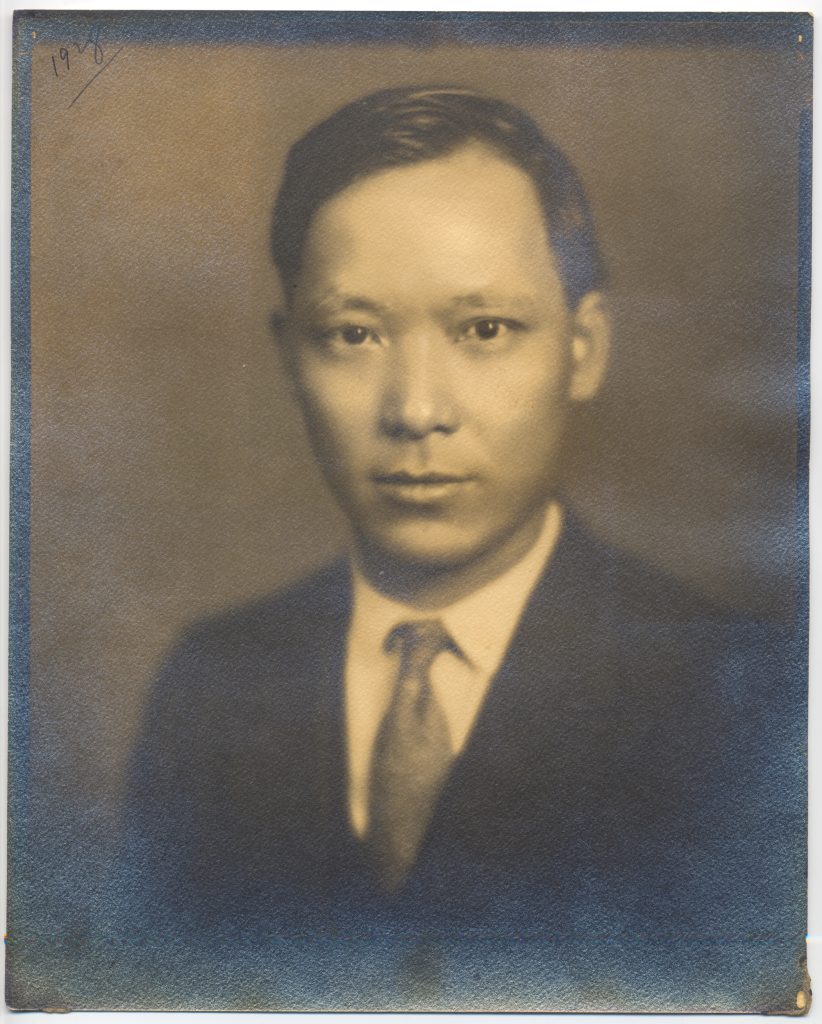
A portrait of Harold in 1928.
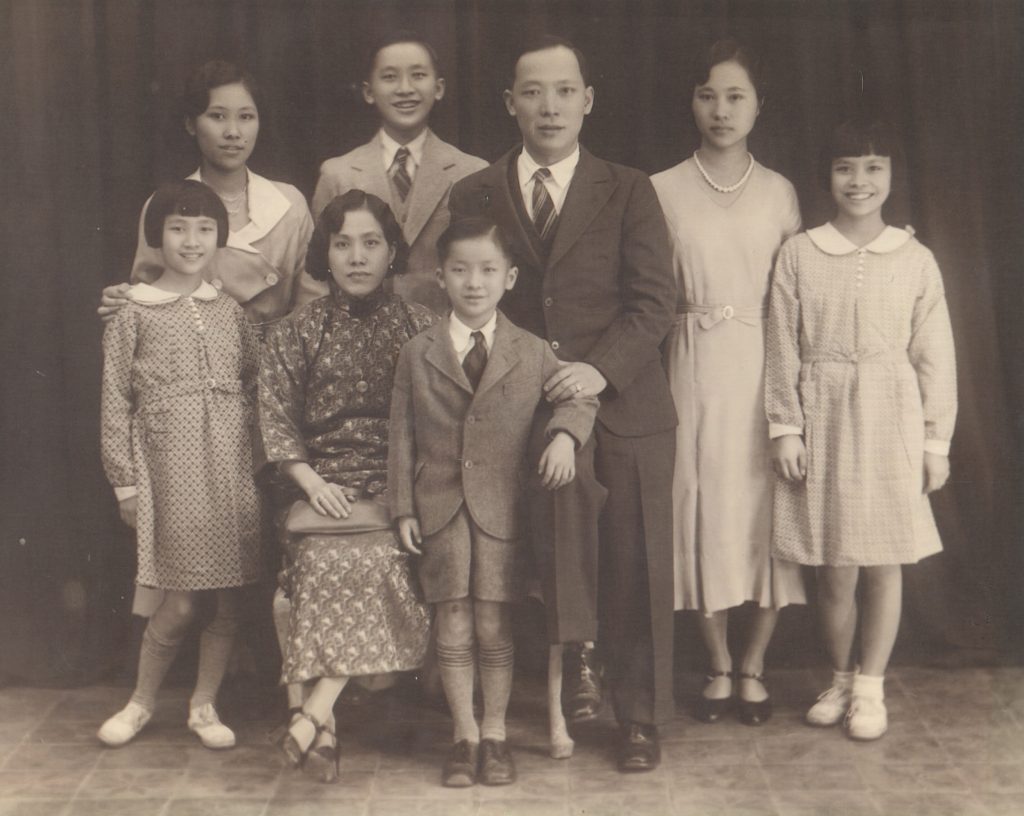
Post-Depression family photo: Harold and Sue Sang taking the family back to Hong Kong, 1930, New York City.
The third floor is a studio apartment (for data entry / IT) and the fourth floor is residential. My niece lives there. I’ve lived there too. My sons have lived there. We have 11 cousins from the six siblings who are very close and they’ve all lived in the building at some point.
We have a roof — we have pictures of them playing on the roof. It was our only outdoor space, aside from Columbus Park.
For the 2013 MOCA exhibition, we made a catalog, and here I wrote the history of the company. (See more images at the bottom of the interview.)
+ Describe Lee’s Insurance’s space at 31 Pell.
Originally it had a cement floor and then we lay carpeting over. It’s been renovated two or three times now, so it’s pretty modern looking. We did that in the late 1980s / early 1990s; that’s why we redid the facade in granite.
This last year, we were graffitied. We never had this issue or any robbery before, only recently.
+ Who is the architect for this building?
We had a Chinese architect do the building. It was his first job; he was a Chinese-American, Peter Poon, who did the most recent renovation. He did the East-Bank building and Cathay Bank interiors and he does a lot of the Chinese churches.
+ Who does Lee’s Insurance provide services to? What kind of services?
We have every kind of insurance. We go four and five generations back. We’ve been prominent in the Asian community and we also have a Northern California presence. Our clients include most banks (ICBC), lots of nonprofits (MOCA, Charles B. Wang, CPC) and we insure thousands of individuals for home, auto and health insurance… We cover a lot of small businesses like The Lee Family building, homecare, daycare, food, restaurants, manufacturing. There are not as many laundries now, but back in the day when my father was still active, his bread and butter were restaurants and laundromats. He convinced main insurers (like Chubb and CNA) to write with him. Previously they wouldn’t touch it because of the language barrier. We would insure family buildings where the whole family lived there — across all of the boroughs. We were kind of pioneers in bringing that to the forefront. My grandfather saw potential and let go of the foreign exchange to let more insurance come through.
We’ve been insuring the Lee Association building — for forever. My grandfather and The Lee Family bought a safe at the same time. The Lee Family donated theirs to MOCA. We still have our original safe; it’s a hassle to get out of there! It’s an old-fashioned safe with the big dial that you have to open twice…
Lee Travel was owned by Harold Lee & Son Travel Services. In the 1960s, it was at 32 Pell on the first floor and basement and stayed there until 1999. It’s now at 18 Pell. My uncle, Gerald’s dad, was also a pioneer in travel — he got major airlines and hotels in Asia to work with them to do tours. Lilian Lee, Gerald’s mom, did the tour of China with Robert Rauschenburg in the 1980s. We booked corporate tours too, but that went away after… There’s still a Lee Travel, but it’s much smaller.
Maybe the same architect who did Lee’s Insurance also did the travel agency – the architect William Louie, who used to be at HOK.
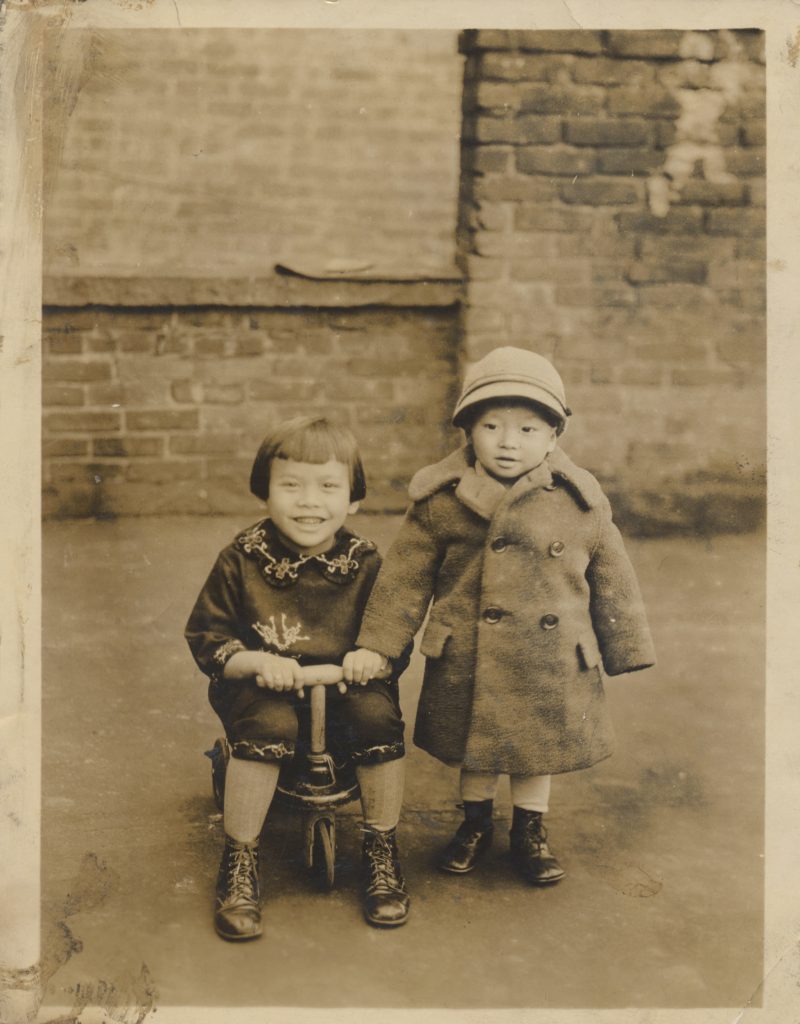
Mardell and Henry on the roof at 31 Pell.
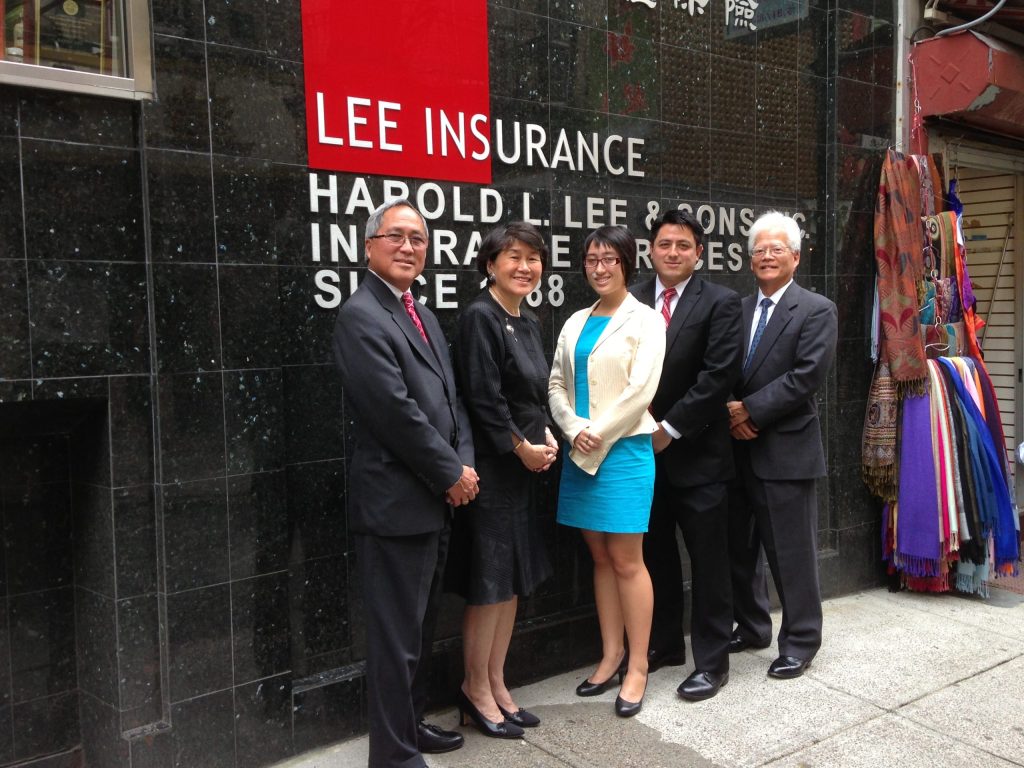
Sandy Lee, second from the left, outside 31 Pell.
+ What are your fondest memories of this building?
It’s really home to me. I lived there for a while… it was always home to all of us. We would go every weekend. Our parents worked and were born in the building. For the cousins, this building was a fortress of our history… We could have moved to Fifth Avenue and had an easier space to work through, because the space has a challenging footprint and there is no elevator, only an internal stairway, but… it brings back lots of memories and shows our heritage and legacy in the community from very early on. We persevered to stay there and in the community and to contribute to the many nonprofits and civic organizations there. We keep the traditions and pay attention to the changes too.
(From left to right) Jones Lee, the manager of the Tai Lung curio shop, is shown here inside the store.
Sue Sang Lee, Harold’s wife, poses in front of the teller windows.
Sue Sang Lee with two unidentified Chinese actresses taken at the Foreign Exchange, also the office of the Film Exchange. ca 1940s.
Family portrait, 1930.
+ Selected family history written by Sandy Lee, from the catalog for MOCA’s 2013 exhibition, which featured Lee Insurance:
Great great grandfather Lee Ling came to N. California in the late 1860s, started a business Quong Sam Lung at 706 Dupont St (now Grant Ave) in SF Chinatown, which sold Chinese herbs & merchandise.
Their son, Lee On, was born in SF in 1874.
Lee On married Lai Shee and had a first son, Lee Ying Lun (Harold) in 1893.
Lee On’s brothers, Lee Him and Lee She Nam, traveled from San Francisco to New York Chinatown. In 1888, they found a 4-story brick building at 31 Pell and began to live and work there. Since the Chinese Exclusion Act of 1882 prohibited Chinese from owning real estate, they rented the building from an Italian landlord. In 1960, they bought the building.
In 1888, they founded a company called Tai Lung (meaning “Great Prosperity”). At first, it ran a grocery store selling Chinese vegetables and meat. By the mid 1890s, Lee On rejoined his brothers in NY. Drawing on their business experience in SF, the Lee brothers began to expand the grocery into a trading company and store that sold Chinese goods and merchandise.
By incorporating Tai Lung (in 1898) the Lee brothers devised a corporate structure to satisfy the merchant exception to the 1882 Exclusion Act.This allowed family member partners who were still in China to immigrate to the US and expedited 11-year old Harold’s 1904 arrival in New York to study and work. Harold enrolled in PS 23 at 70 Mulberry. After school, he often worked until midnight at W.R. Brown Company, a customs brokerage house at 124 Pearl Street.
But as Tai Lung flourished in New York, the San Francisco earthquake of 1906 devastated the Chinatown family business there.
After his father and uncles returned to China and Macao, Harold took over… he expanded the original grocery store and meat market into a curio shop that sold higher-end Chinese merchandise, gifts and goods.
The store attracted local Chinatown customers, as well as other New Yorkers and tourists.
As the street-level retail store at 31 Pell expanded its merchandise, Harold began a foreign exchange and remittance business on the 2nd floor to exchange and remit currency, as well as to sell laundry bonds (required of laundry owners by city regulation, due to the fact that they took in the clothing of others) and money orders. Because of language barriers, there were no banks serving Chinese residents. He started the Foreign Exchange — it became one of the earliest, if not the first, Chinese-owned businesses to offer financial services to the community. Having worked in a bank, Harold renovated the second floor into a small financial institution, complete with wood paneling and featuring glass teller windows and a large safe.
Harold wrote, spoke Chinese and English fluently.
It became the first official Chinese agent for the American Express company. Clients could purchase money orders, wire money to China, send telegrams, exchange currency and pay utility or phone bills. It became the business center for the community and enabled many Chinatown bachelors to securely connect with and send money back to wives and relatives in China. Later on, the Foreign Exchange also offered insurance, travel and accounting services. Over a 50-year period, Harold’s other investments included a movie theater and film company, Kee Heung – a noodle factory, and several restaurant ventures led by his brothers.
Harold founded the NY Chinese Film Exchange, which distributed Chinese-language films to theaters catering to the immigrant community.
Harold’s Uncle, Lee Kee Do, one of the founders of Tai Lung, was also the financier of the Great Wall Film Company, which was set up in 1921 in New York to produce films that more accurately portrayed Chinese lifestyles than the stereotypical Hollywood movies of the time. The studio was born when Chinese community leaders, outraged over the 1921 release of “The First Born”, a movie that depicted everyday Chinese life to be full of drugs, opium dens, brothels, foot binding, etc, protested to the National Board of Review of Motion Pictures. They were told to make their own pictures if they wanted to change the stereotypes and the Great Wall Film Company was the result, underwritten by Lee family money. The company moved to Shanghai in 1924, producing around 30 pictures before eventually going out of business in 1930 with the onset of the Depression.
Harold’s family and 6 children were living happily in New York Chinatown… the family had also become active in the True Light Lutheran Church on Worth Street… Under the leadership of the popular Reverend Louis T. Buchheimer and Mary Banta, True Light formed a social network for the few Chinese women in the community. (Women in Chinatown were rare because of the 1882 Chinese Exclusion Act.) One of Sue Sang’s friends was also a merchant’s wife, lived across the street. The two women conversed from their fire escapes on Pell Street since walking in the neighborhood wasn’t always safe.
Life for the young Lee family members, during their childhood years in the 1920s, centered around Columbus Park, the public schools, True Light Church, scouting and Chinese School. Their roof at 31 Pell St was often the Lee family playground, where they could ride their tricycles and scooters.
29-31 PELL - BUILDING PHOTOGRAPHS
Photographs taken in 2022.
Find more information on the Harold L. Lee and Sons Inc. on MOCA’s website.