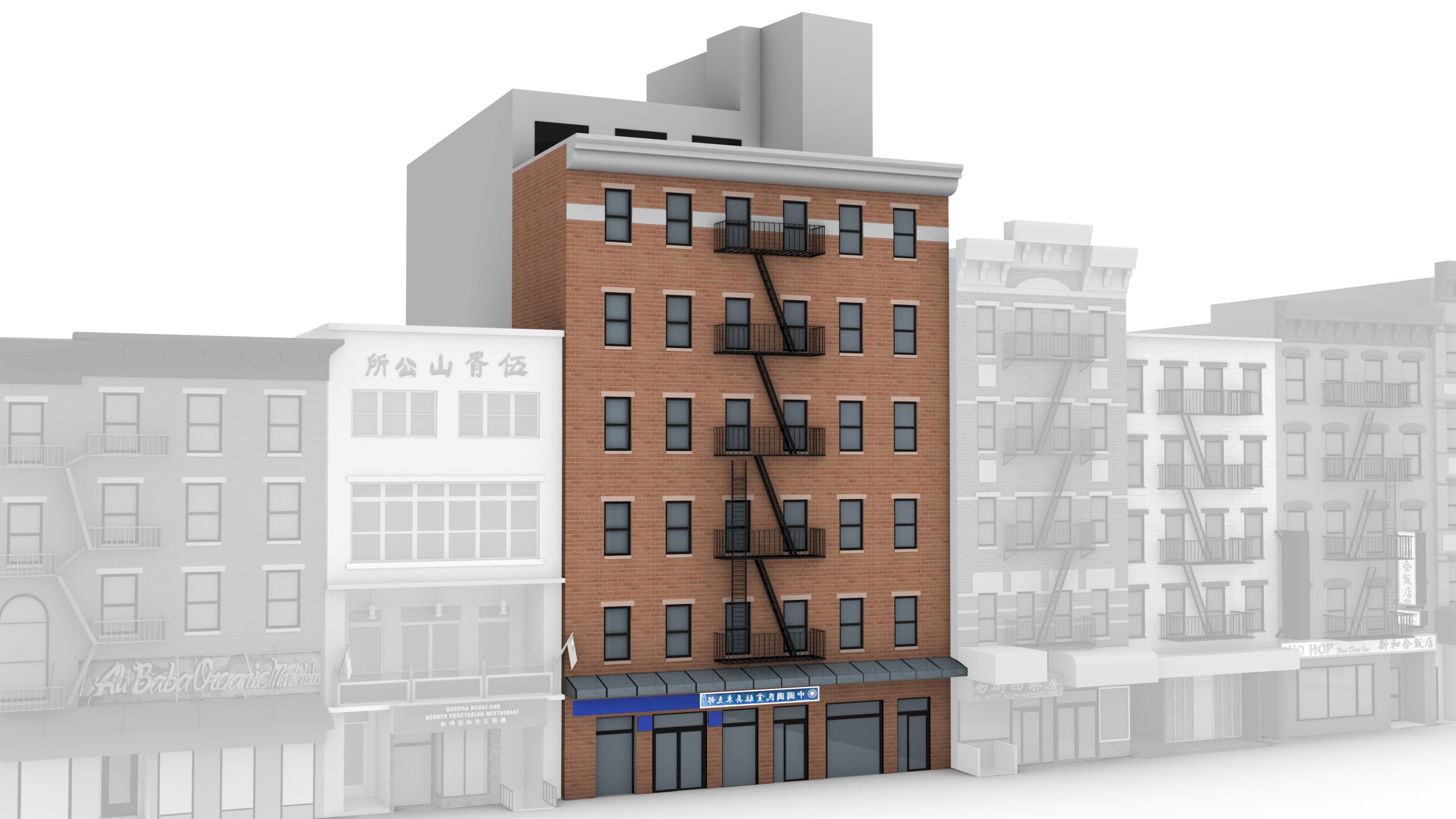
7-9 Mott
Chinatown Community Center
Built in 1885 or earlier
2024
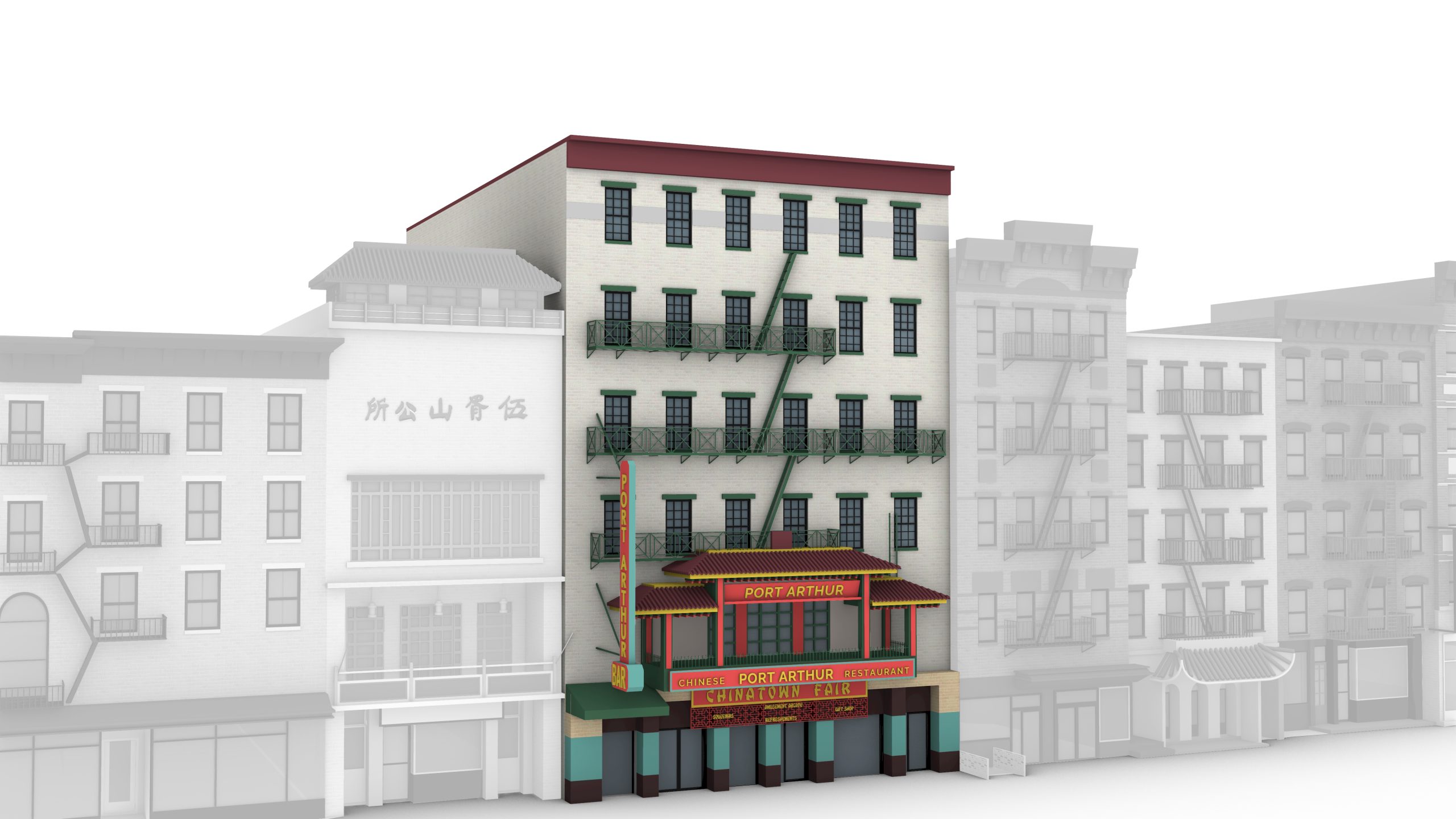
7-9 Mott
Port Arthur Restaurant / Chinatown Fair
Built in 1885 or earlier
1960s
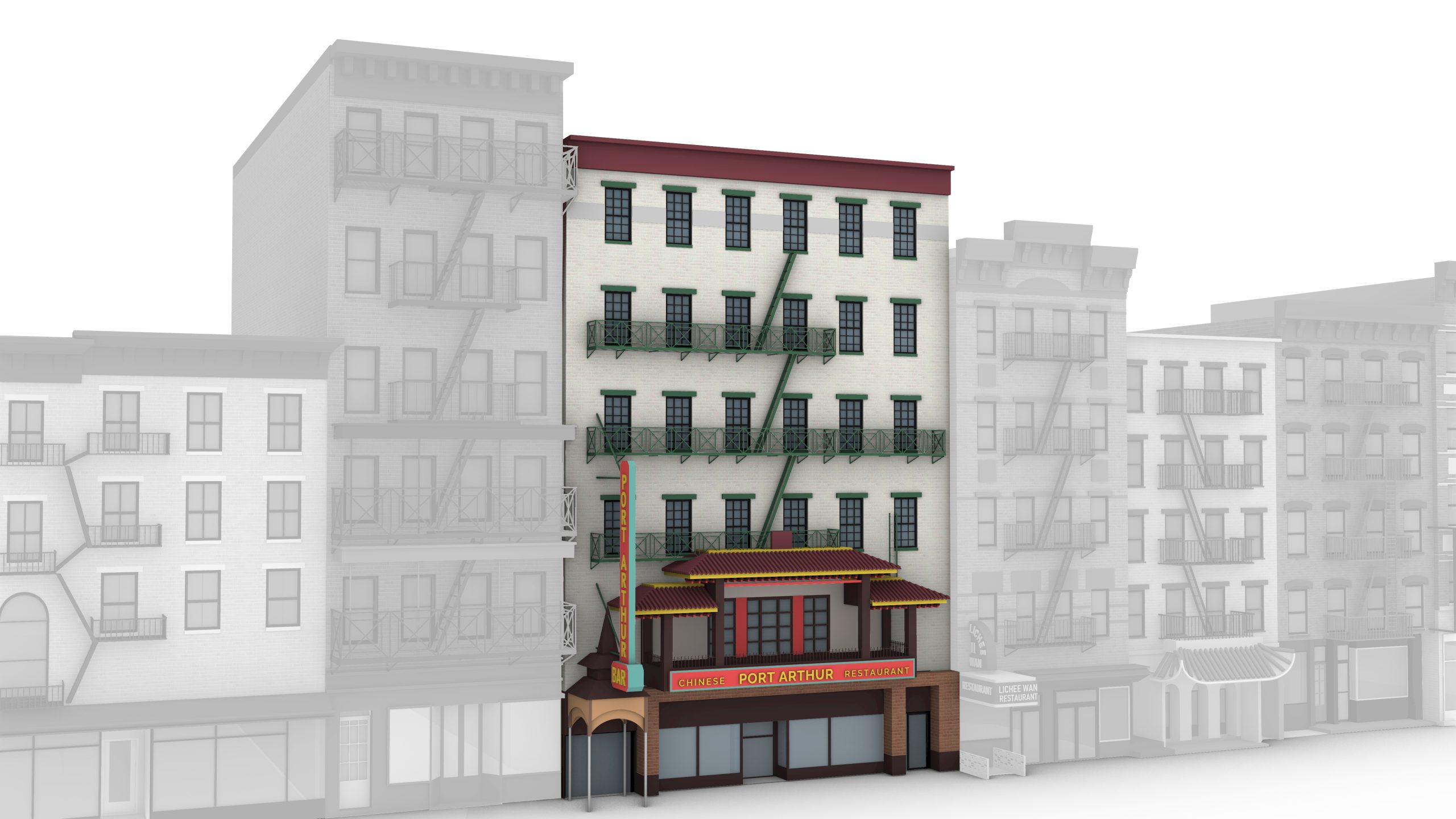
7-9 Mott
Port Arthur Restaurant
Built in 1885 or earlier
1940s
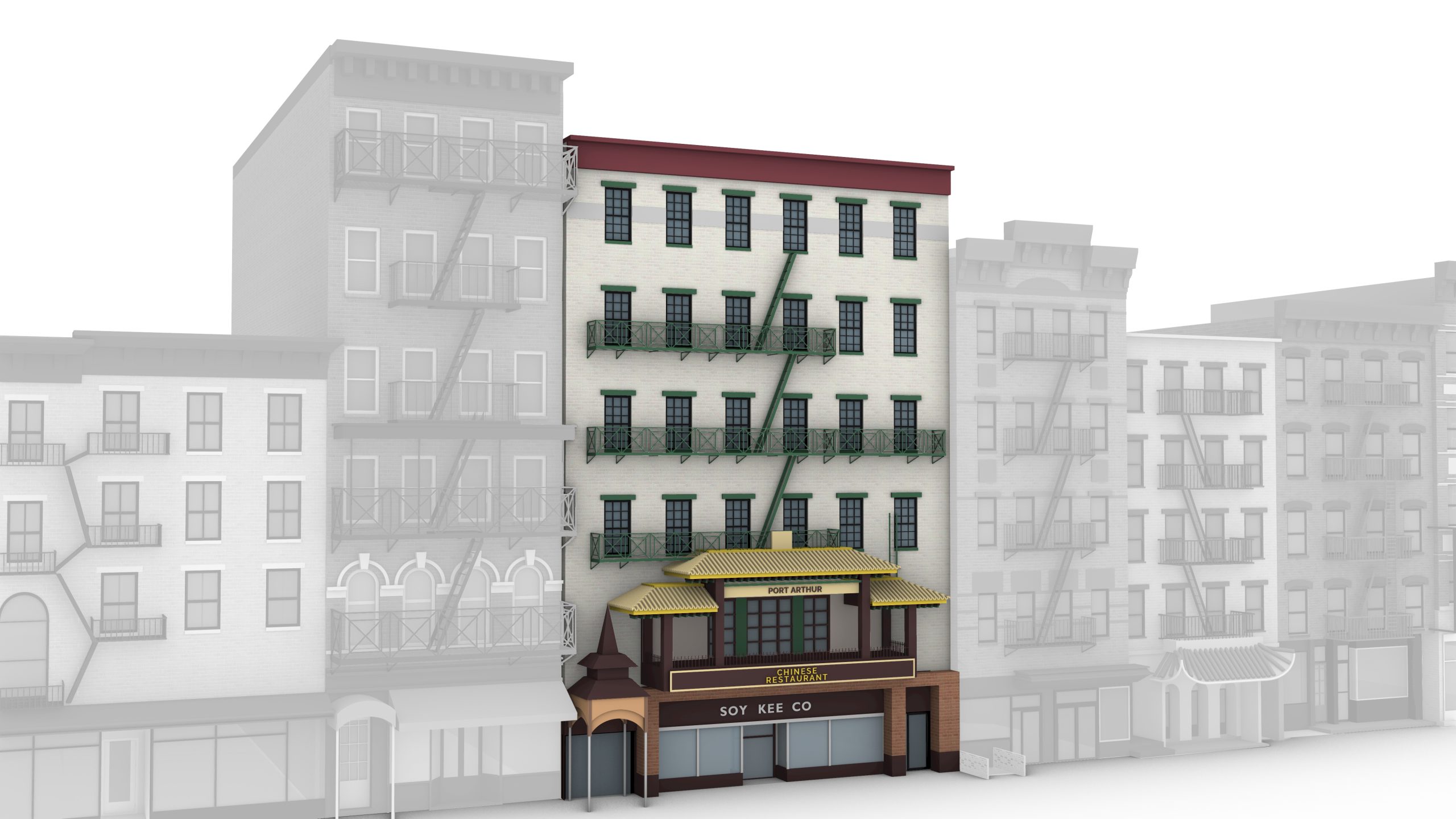
7-9 Mott
Port Arthur Restaurant / Soy Kee Co.
Built in 1885 or earlier
1900s
Interview
WITH ROBERT GEE (BUILDING STEWARD)
+ When was this building constructed? How did the church come to own the building?
I believe the building was built in the 1920s.
This purchase was purchased by Mazet Realty Corp, which was a corporation created by Dr. Mabel Lee in the 1930s to use the property as a way to finance activities in perpetuity for the First Chinese Baptist Church. She was a visionary. It’s a vision that Dr. Mabel Lee had, along with the Morning Star Mission, the Reverend Lee Towe Memorial and the Chinese Baptist Church, which are separate entities.
How does the legacy continue? How does it continue to provide for the Chinatown community?
[Having the property] helps sustain the activities we do here.
I am here to protect Dr. Mabel Lee and Reverent Lee Towe’s legacy.
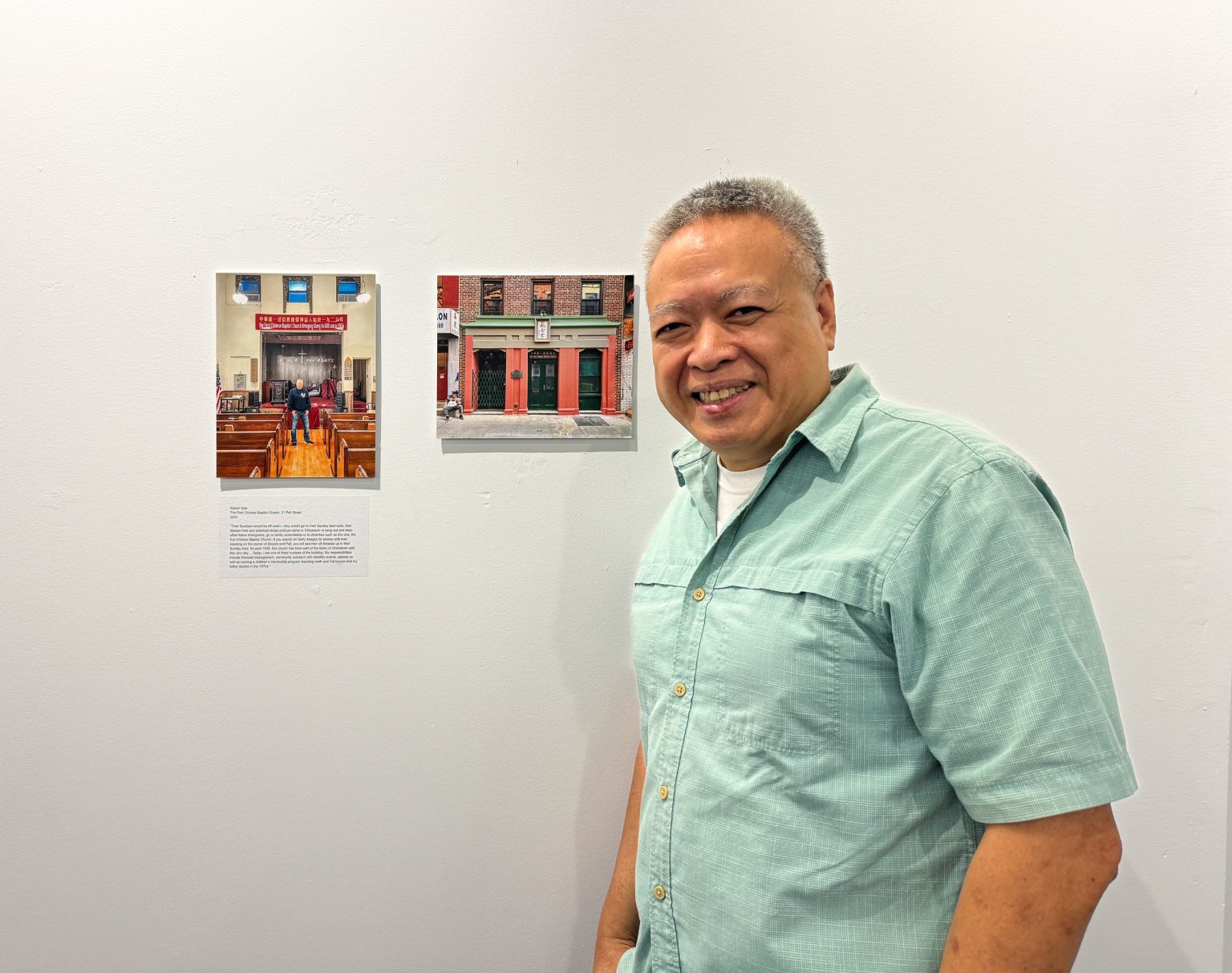
Rob Gee in front of portraits of 21 Pell Street, of which he is also a building steward, at the REFLECTIVE URBANISMS exhibition at St. Francis College’s Art Gallery in Brooklyn, New York. 21 Pell and 7-9 Mott are both owned by the same corporation founded by Dr. Mabel Lee. Photograph taken in July, 2024.
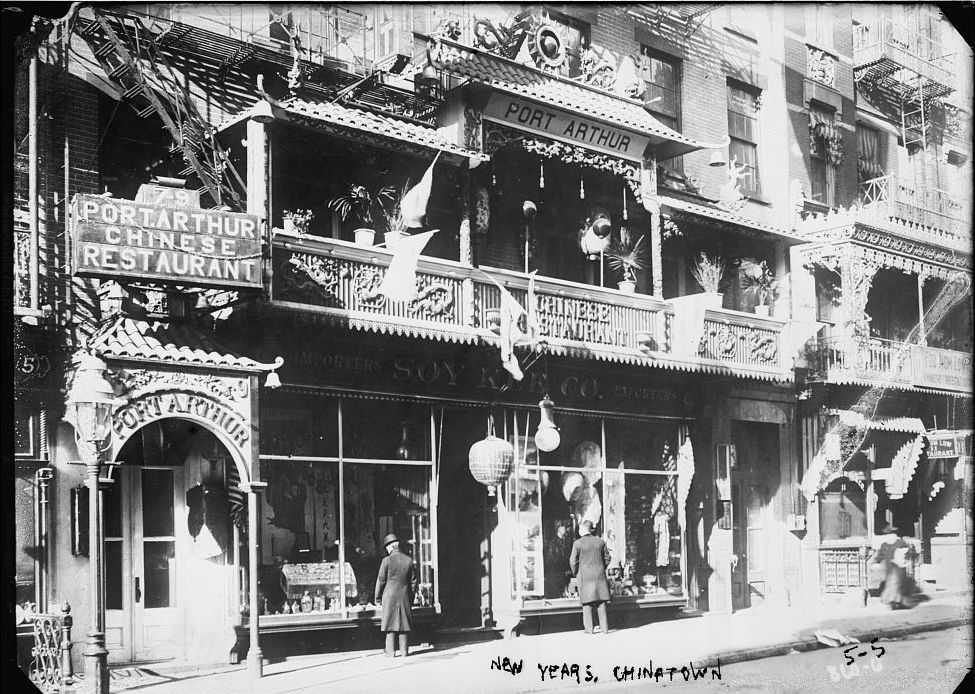
Bain News Service, P. New Years, Chinatown Port Arthur Chinese Restaurant, New York. [No Date Recorded on Caption Card] [Photograph] Retrieved from the Library of Congress, https://www.loc.gov/item/2014680024/.
+ Can you share any information about the building’s history or its past lives?
Give me a rough timeline of the main businesses and people who have occupied this building.
This used to be a six-story building, six windows across. In this photo, the Soy Kee Company looked like a trading company in the retail space on the first floor, and then on the second floor, there was Port Arthur Restaurant, which occupied the second, third and fourth floor. I believe the fifth and sixth floor were used for storage and administrative offices for the restaurant. Port Arthur was the tenant from the 1920s all the way through the late 1970s. They were a tenant before the building was purchased.
With other restaurants coming onto the scene in Chinatown such as Silver Palace, Golden Palace (which ultimately became Jing Fong in that space on Elizabeth Street), with much larger venues for banquets this ended their 70-year reign as the top restaurant in Chinatown.
Chinatown Fair was there from the 1950s through the 1970s. Port Arthur roughly closed in the 1980s or so. [Kamkuo Corp was there] Probably from when Chinatown Fair closed up shop in the late 1970s. They came in for the next 20 years. [They were an important supermarket at the time] because we didn’t have Hong Kong Supermarkets or other types of convenience grocery chains. They did have its sister store on Canal Street – Kam Man between Mott and Mulberry. That was the main store and it’s still here to this day.
+ It makes me think about those older buildings with the banquet halls – weren’t some of them previously theaters or event spaces? It’s interesting – is there something about perhaps the theater industry dying out and then the restaurants coming in to use the space?
They retrofitted a lot of these residential walk-ups and created these restaurants such as China Lane, which was at 20 Mott Street. You entered the restaurant and you walked down a few steps to then walk through the lobby bar area to walk back up the steps into the big theater-type banquet hall… As an example. It was slightly smaller than Port Arthur, but it was the second most popular banquet hall on Mott Street.
Then across the street upstairs from the bakery [at 41 Mott Street] had a two-storey banquet hall and that ultimately became The Lee Family Association.
+ Can you tell me about any major renovations or changes to the building that you know of?
In 2003, we (Mazet Realty which is the owner of 7-9 Mott) asked the main tenant of the building — Kam Kuo Corp, which is the grocery chain, to finish up the lease because they were late on payments. We felt it wasn’t financially best for us. There was no landmarking at the time because the building was really rundown by the previous tenant. They basically ruined the fourth, fifth and sixth floor and they just left water running. It destroyed areas. They basically rented the entire building; it was a triple net lease, which meant that they rented the entire building and maintained the whole building – they’re required to maintain the building, which they didn’t. When they ran out of gas, they just left everything for us to clean up and discard.
We gut renovated the building from 2003 – 2006 and we took the building down to its support beams. The front facade was still there; but we reinforced it with two layers of bricks straight up to support the original facade. (We covered the front facade.) Then we added a seventh floor to the sixth floor of the original building with intentions to have the first restaurant rooftop bar in Chinatown. The vision was to have floor-to-ceiling windows, but the structural needs and financial requirements were too high. We just went straight to a commercial tenant scenario, because you’d have to reclass and recode the building for restaurant use, for gas use… and a dumbwaiter to have a cooking facility down in the basement. We said that was just too costly. We decided against that and just made it an office.
We had to reinforce the foundations / foundational beams to add the additional seventh story. We had to dig another 6-8 feet lower in the basements and around each of the support beams put in these pyramid-type supports around each beam. It was growing pains because we were not in the construction business.
We also made a new facade in the back and brought the entire building up to current New York City code with firing suppression systems that are required by FDNY.
+ Who are the current users / tenants / visitors of this building?
The anchor tenant is visiting nurse service of New York (VNS of NYC) with the Chinatown Community Centre on the ground floor. There are professional offices on the other floors — lawyers, accountants, financial advisors and other professional businesses that support the Chinatown community.
When we thought about how we’re going to build out the space, we did not want yet another restaurant in Chinatown to steal share from the other existing restaurants. The mission was to provide services that will add value to the community. We also knew that by renting out to restaurants, you have a higher risk of turnover.
Today, Chinatown has a voice, a representative to help them with senior citizens’ needs or for folks going through rehab through the visiting nurse service. This is a federally-sponsored organization.
+ Tell me about Port Arthur!
Port Arthor was the place to go for Chinese banquets with family associations and weddings. The decor was very 1930s/1940s with white octagon tiles on the floor. Very 1930s’ feel with round columns / support beams in Chinese red. You had the marble tables when you walked in, but then for banquets, they put the round table tops on.
And that’s when we all got together for family banquets; probably the most traditional Cantonese banquet meals that you would get back in the day. Shrimp toasts – these round little flying saucer type shapes. Those were the beginning appetizers that would come out. Their signature dish was sticky rice, where it was stuffed in the carcass of a chicken (lo mai gai) and they baked it. They left, of course, the drumstick and the wing intact and stuffed the carcass with sticky rice… It was a unique dish that no one else in Chinatown had. To this day, there is no dish that follows that recipe. They had the most authentic, in my opinion, tasting shark’s fin soup, which is probably not as common these days. It was probably the most popular dish that they had at that restaurant. [Nowadays] It’s not a big thing because it’s not very ecologically friendly, it’s about not killing sharks.
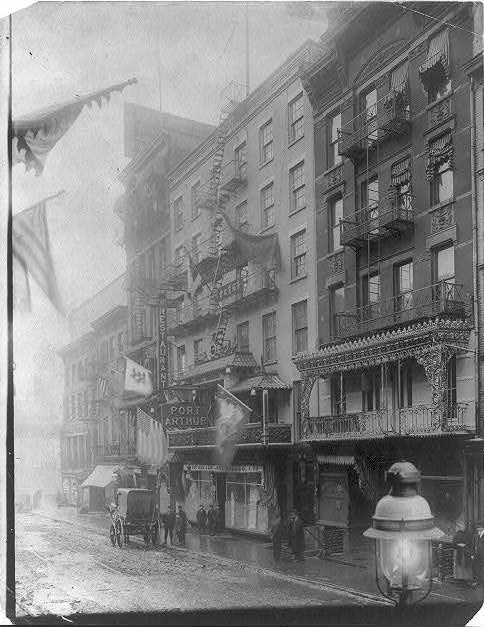
(1909) New York City Chinatown decorated for New Year,- looking toward Port Arthur restaurant. New York Chinatown, 1909. [Photograph] Retrieved from the Library of Congress, https://www.loc.gov/item/2001704345/.
The memories were that it was the place for family gatherings, celebrations, weddings. My paternal grandfather’s 80th birthday celebration was held here and we rented out the entire banquet hall.
+ What do you remember about that big family banquet?
It was probably during 1969. My father was a very active community leader in the 1960s, 1970s up until when he passed. We would recall as children, being the youngest of six, that my father always had to be getting up and giving speeches on behalf of wedding couples or community organizations – a welcome speech, congratulatory speech because he spoke both English and Chinese (Cantonese) and back in the day, that was a rarity. Toishanese or Cantonese was the language here in New York.
For my paternal grandfather’s 80th Birthday Celebration it was a standard banquet-type setup as if it was a wedding. There was just an abundance of food, 10 courses and just lots of family members from the Gee family coming to celebrate.
The menu remained the same over the decades because of the heritage and because of the cooks; it wasn’t the new-style Hong Kong style of cooking.
The ambiance when you walked in had a feel of what China could be – for an ABC (American Born Chinese). It had a 1930s, 1940s, 1950s type of feel. And yet the waiters had the short white captain’s jackets serving you, so that was the Americanized feel. In a sense, from an ABC’s perspective, this could have been what a restaurant would be like in China, Guangzhou, maybe Shanghai, or what they’re trying to recreate today, when you’re in modern-day Shanghai.
It was mainly an evening dinner banquet type of place. Chinatown Dim Sum didn’t really come in until, as I recall, maybe in the 1970s when you had the influx of a lot of Hong Kong influence.
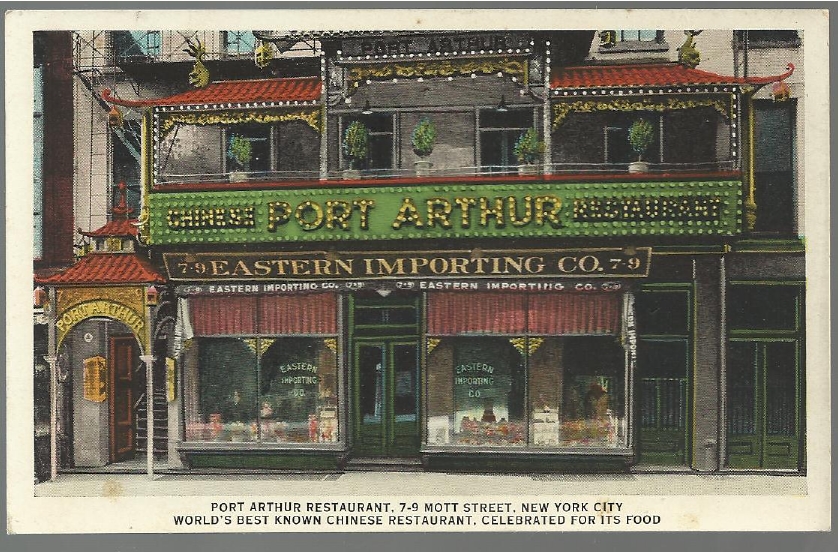
Irma and Paul Milstein Division of United States History, Local History and Genealogy, The New York Public Library. (1900 – 1945). Port Arthur Restaurant, 7-9 Mott Street, New York City. World’s best know Chinese restaurant, celebrated for its food Retrieved from https://digitalcollections.nypl.org/items/7a8b7780-b3ba-0132-3b6a-58d385a7b928
+ Are there any artifacts from Port Arthur that were left in the building?
We have some tables that were left over from Port Arthur. They’re embedded with stone implants with designs on the side. We have one table left.
The church does have in its possession, under lock and key somewhere, the paneling from the entryway up to the restaurant floor level, with phoenix and dragons painted in gold. It’s somewhere in an undisclosed location. I’ve had topline discussions with some museums. People would say, “Oh, no, we would take it and it wouldn’t be on loan.” I said, “Well, then, no one gets it.”
+ Tell me about the Chinatown Fair!
From a child’s perspective in the 1960s, it was the concrete amusement park in Chinatown. We didn’t have fresh, outdoor amusement parks, so that was the place for us to have fun. Parents would bring their kids there as a treat. Because we weren’t rich, we would splurge every now and then to throw a few nickels and dimes into the arcade machines, which would eventually become a quarter in the 1970s. Now in today’s present day, it’s like $2 a game.
In the back of the facility of the building was a sort of cave with bars on it; as if they had slayed a dragon and stored it in the basement. So you put a nickel into the machine and it would open up the slide and you could see the dragon in the dungeon. Hence the cave-type feeling. You had the bars there and you would see the dragon. All of a sudden, after a minute it closed and you were like: Can I get another look down there again?!? To have a huge dragon probably the width of the building of 7-9 Mott… at the smallest, it was maybe a 15 to 20 foot dragon down there, at a height of maybe 8-10 feet because there was no subfloor. Because I remember there were 3-4 observation spots. As a child, it’s all put into perspective though.
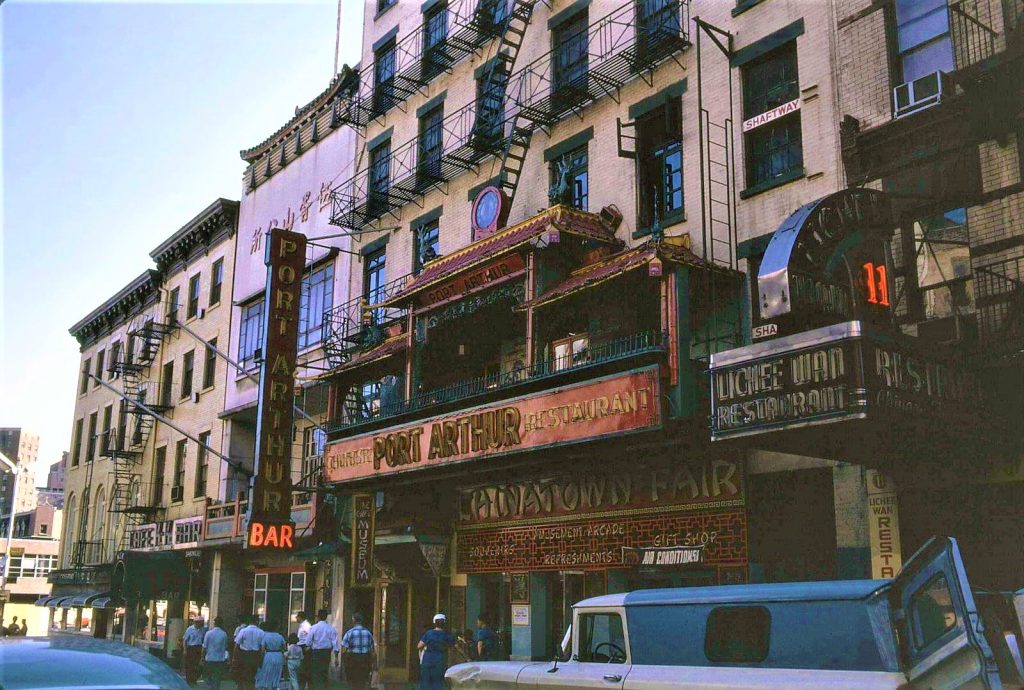
Port Arthur Restaurant and Chinatown Fair Arcade. Date of photograph unknown, likely the 1960s. Courtesy of Joe Chan.
+ What was it like when you walked in? What was the interior, the ambiance, like?
It was like a 1950s / 1960s arcade with wooden hardwood floors, with path marks where traffic has come through so you know it’s been there for decades. There was music going on from all these different games and push buttons to make a clown puppet move, to a little mini ferris wheel where you sit in a little bucket and the kid goes around to six feet … and there were a lot of the old horse rides and airplane rides and little animal rides, where you pull back on levers and through hydraulics things go up or down. There were more mechanical-type rides.
Then you had one of these old film-driven arcade rides where you had a steering wheel and just by turning the wheel, this thing would move left to right as if it was the car. And you’re watching a movie clip just to make sure you’re staying on the road. That’s how you played with driving games.
When you didn’t have electronics – you had skeeball. You would put in a nickel and down came 10 balls. You would get tickets to get a prize. Another attraction was sitting on a high-top stool and rolling the ball down the rubber path.
Mostly the Chinese community came here. It was a great pre-game place before the young kids had to sit quietly to listen to the Chinese speeches, or sit patiently through the 10-course meal at banquets… it was a way to bribe the young kids to come to the banquets.
They lost the lease — they couldn’t afford it. I recall when my father, as a trustee of the church, was negotiating the lease with them. It closed down in the early 1980s. So then I guess it came to a point where they said we’re going to close up shop. They left but the folks who opened up across the street – I’m not sure if they were the true descendants of Chinatown Fair or if they just wanted to retain the equity of the name “Chinatown Fair” and just started the location across the street in the mid-1980s.
Because when Porter Author closed down, the church needed to find a lease holder for the entire building. That’s how the triple net lease came about where we rent it out to Kam Kuo Corp.
I was the fly on the wall. I watched and heard most of the things with my father, managing the building. We were in Chinatown, from Queens, every Sunday.
7-9 MOTT - BUILDING PHOTOGRAPHS
Photographs taken in 2024.