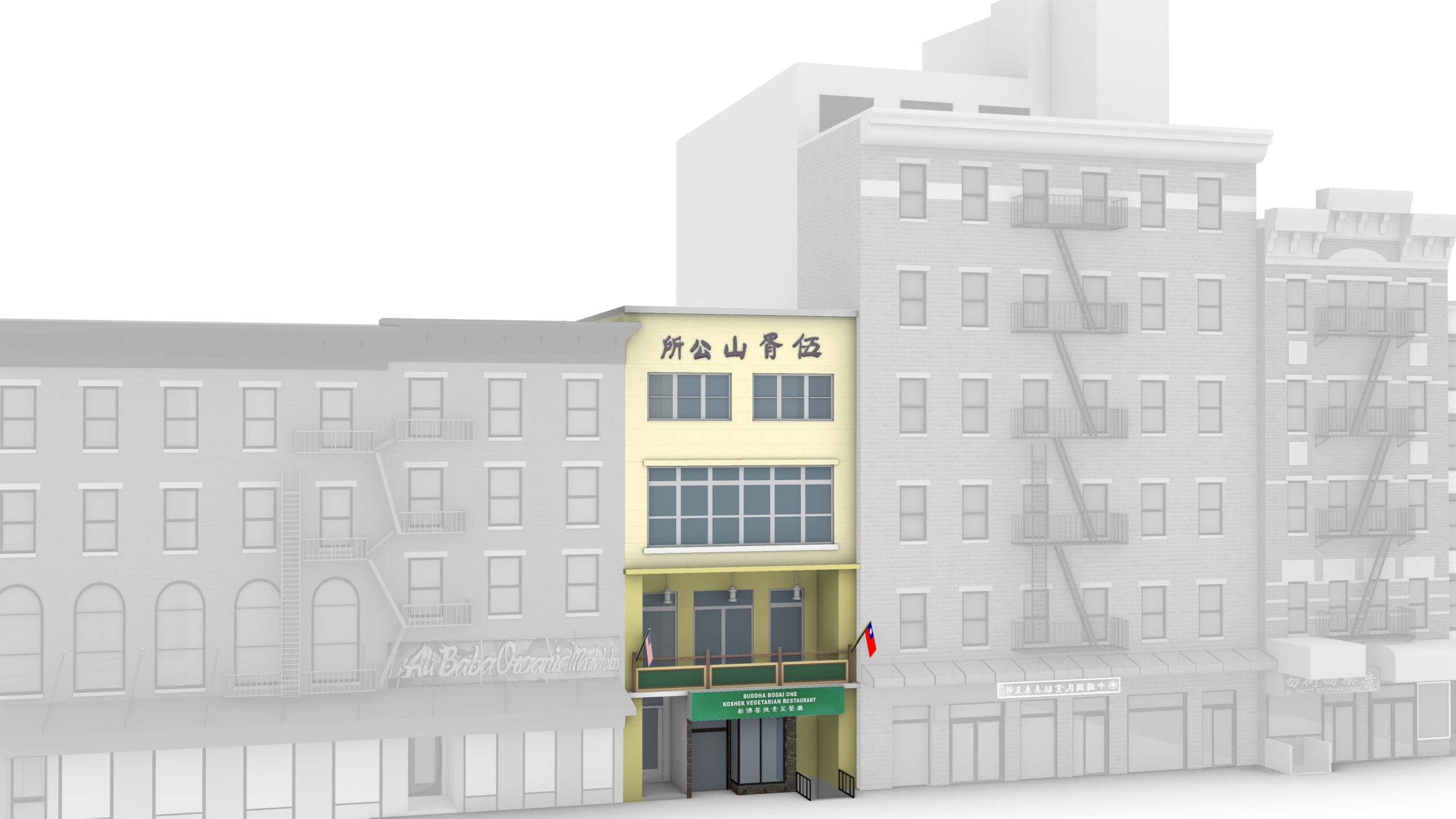
5 Mott
Eng Suey Sun Association Building
Built in 1952
2024
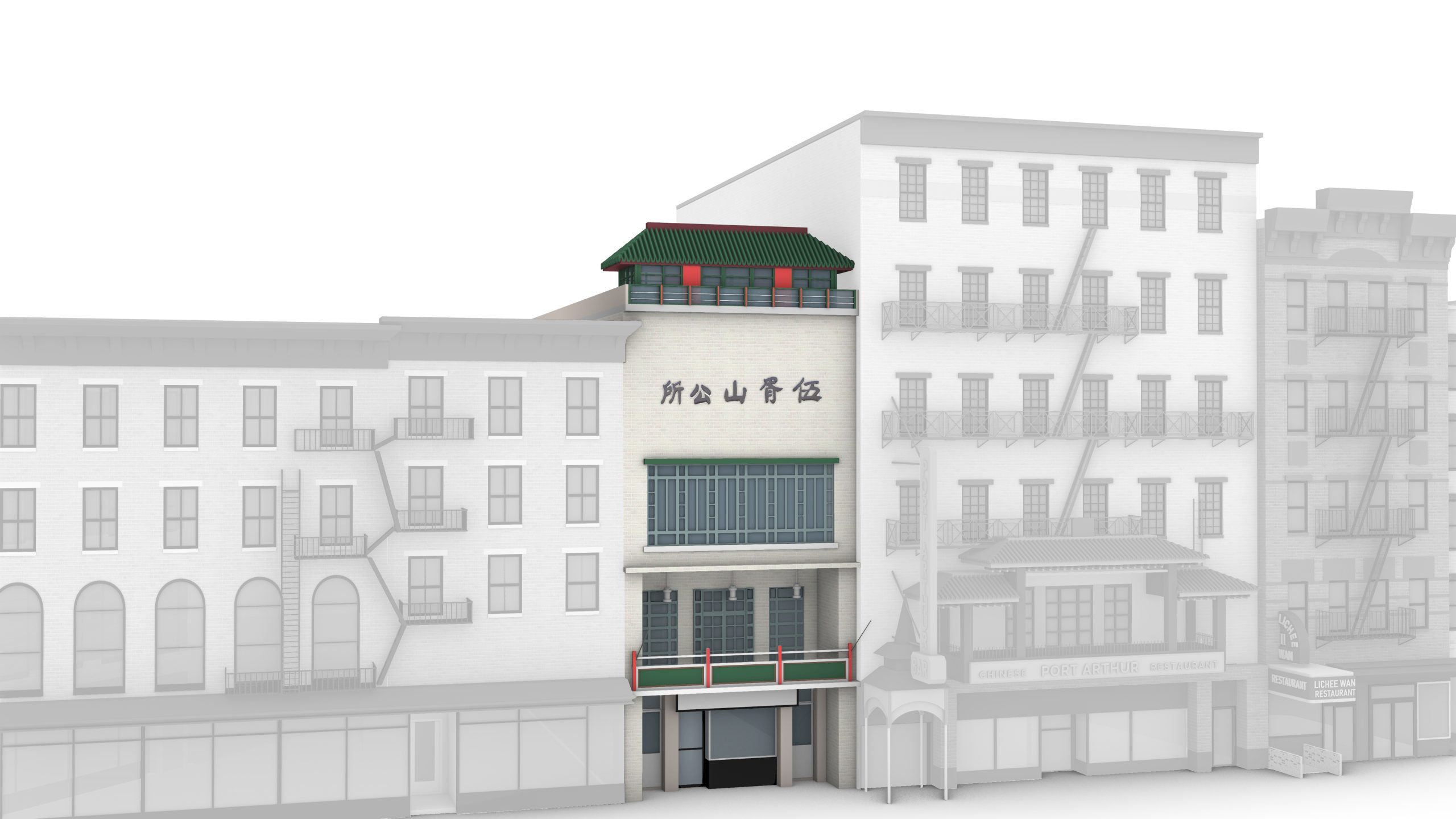
5 Mott
Eng Suey Sun Association Building
1952
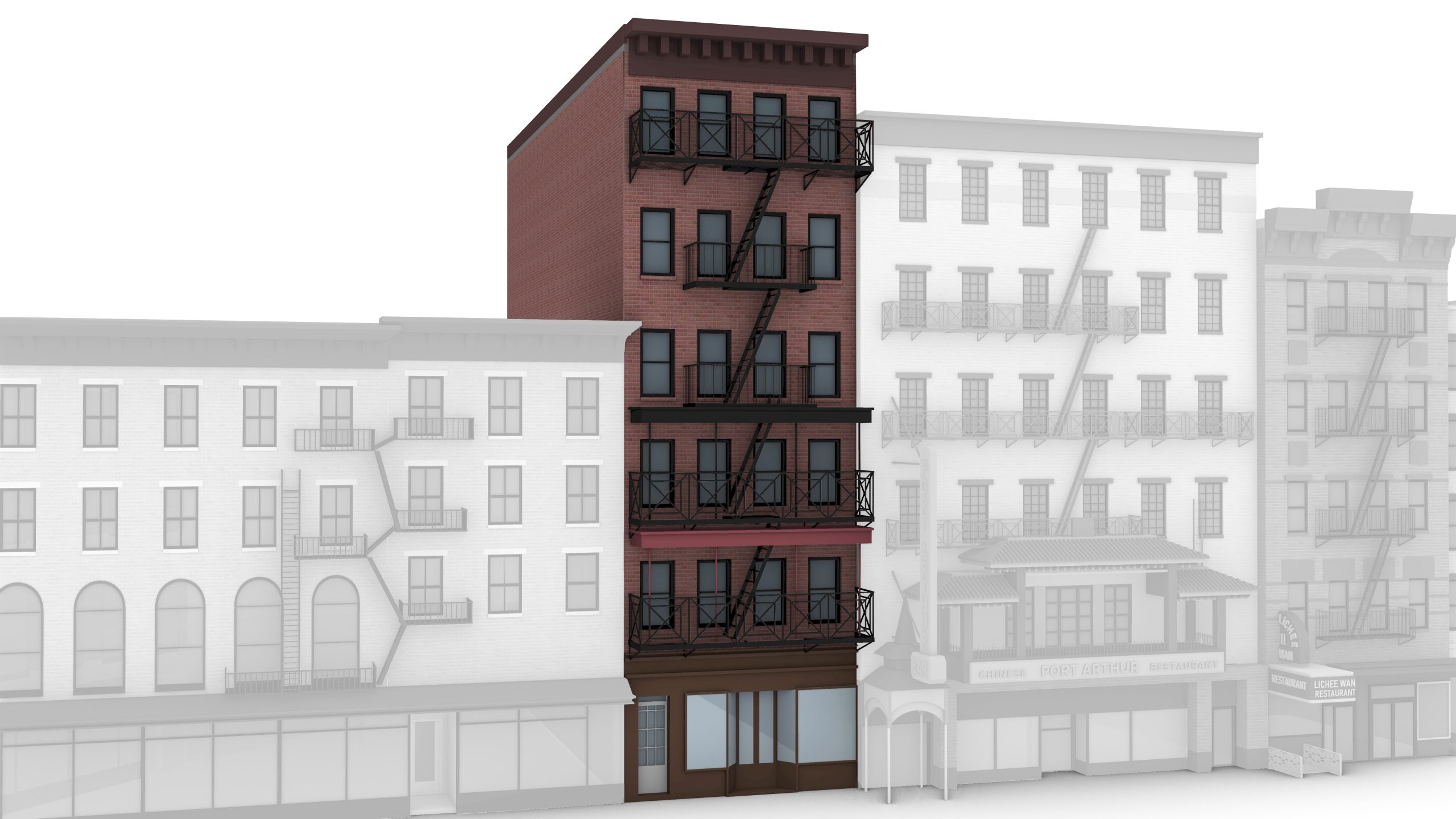
5 Mott
1940s
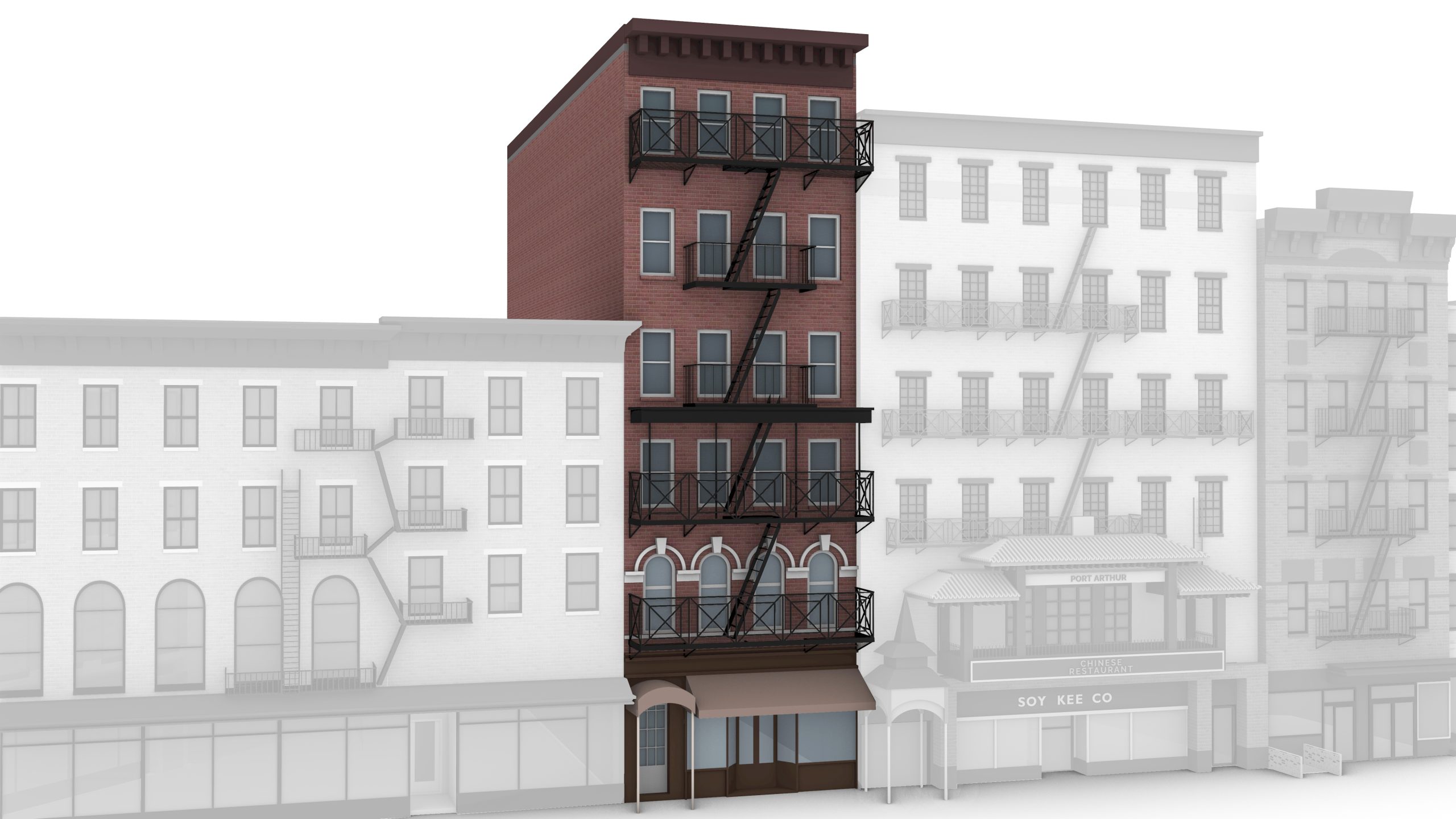
5 Mott
1900s
Interview
WITH ERIC NG (PAST PRESIDENT OF THE ENG SUEY SUN ASSOCIATION)
+ Tell me about your past tenures as president. When were you president of the Eng Suey Sun Association?
In 1994-1995, I became the president of the Eng Family Association.
In 1996 to 1997, I was the president of Hip Sing Association.
From 1998 – 1999, I became the president of the Chinese Freemasons Association.
From 2000 to 2004, I became the president of the Hoy Sun Ning Yung Association.
I became the president of the Tak Ming Alumni Association from 2002 to 2011. I held the title for too long.
From 2004-2007, I became the (international) president of the Eng Family Association.
From 2006-2008, I became the first president of the CCBA. By that time, I had become the president of many associations already. Then, from 2014 – 2016, I held the second term of being president of the CCBA.
From 2012-2013, I was the national president of the Eng Family Association.
From 2016 to 2020, I became the national president of the Hip Sing Association.
From 2018 to 2020, I held a third term as the CCBA president.
So, I’m the guy who’s been involved in community business since I stepped in in 1994. I never stopped. I like to use whatever formula we use. I don’t want to change it because when a new president comes in and uses a new rule, this mixes up all the associations. I hate it. That’s why I talk to everybody: Follow the rules. When you follow the rules, no one complains about you. That’s why we call this the traditional association.
From 2004-2007, I became the president of the Eng’s Family [Association]. They elected me and I had to travel to Canada, Hong Kong and China to communicate for the Eng family relationships. In 2007, I had the Eng Family reunion in Toishan.
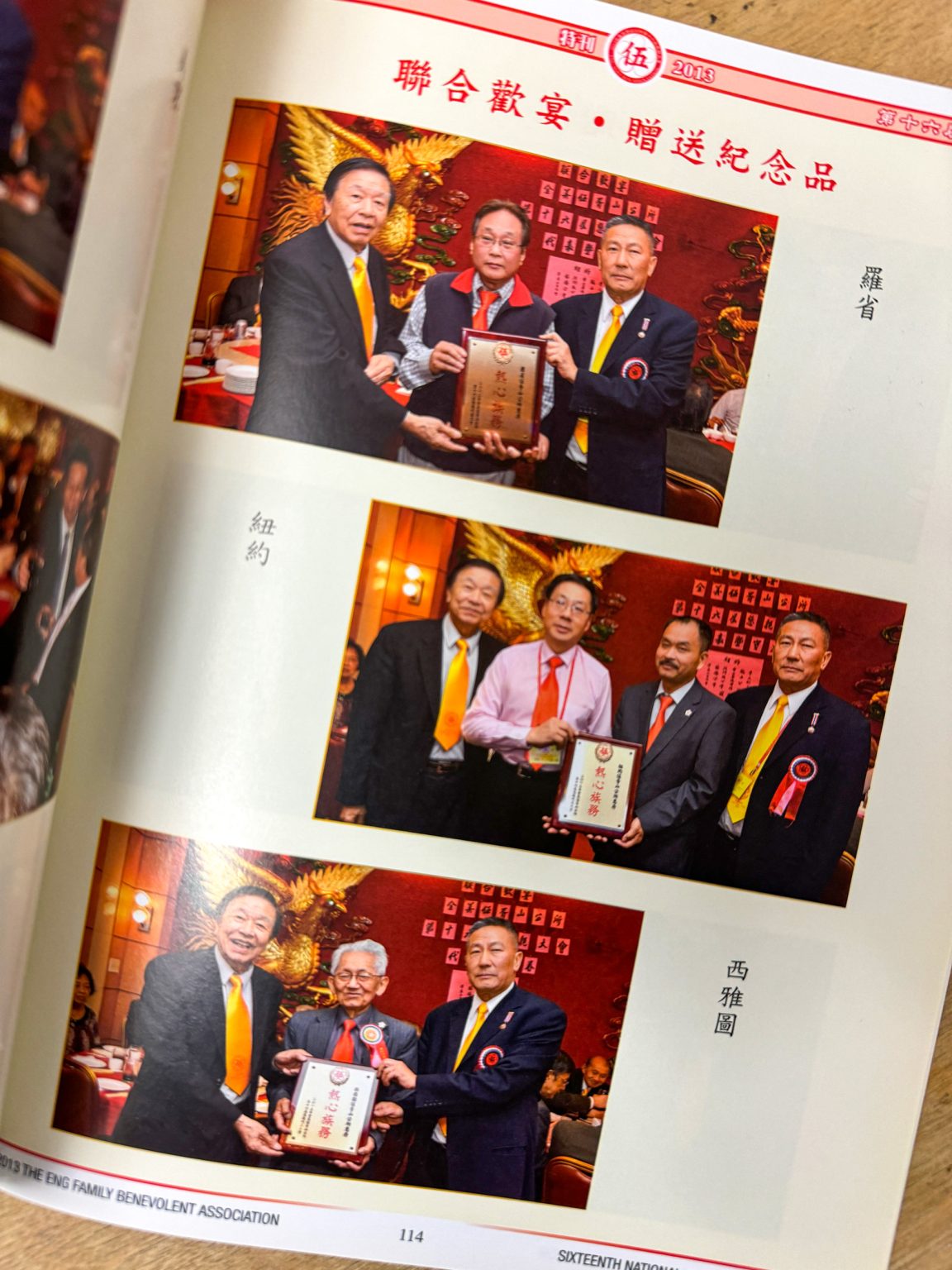
Eric Ng (on the right of all images) at association events, in photographs published in the Eng Suey Sun Association’s 2013 commemorative publication.
From 2012 – 2013, I became the president of the Eng Family [Association] for the whole U.S. Every 4 years we have a convention. In 2013, we did it in New York. I managed that convention. I did the entire publication for the convention by myself — it took 3 months.
+ How long has the Eng Suey Sun Association been in this building? Tell me about the building. When was this building constructed? Who is the architect for this building? Do you know of any major renovations or changes to the building?
Eng Suey Sun Association is the same name as the Eng Family Association – internationally, we call it the Eng Family Benevolent Association.
We started the association in 1908. Before, we rented 5 Mott Street. We had to prove it. We proved that the sun tai (ancestral shrine) was built in 1908.
The association then bought the building in 1952. Around then, we rebuilt the building. The architect/Designer was Poy Gum Lee.
We cut down the building (the building got shorter by two floors) and redid the facade. Maybe around 2010, we redid the building again. We put more windows in and moved the signage. It used to have a pagoda. At that time, insurance couldn’t cover the pagoda on top so we wanted to flatten the roof. By that time, it was too dangerous, so we cut it down flat. By 2013, we had a brand new building.
I was involved, but at that time we made group decisions.
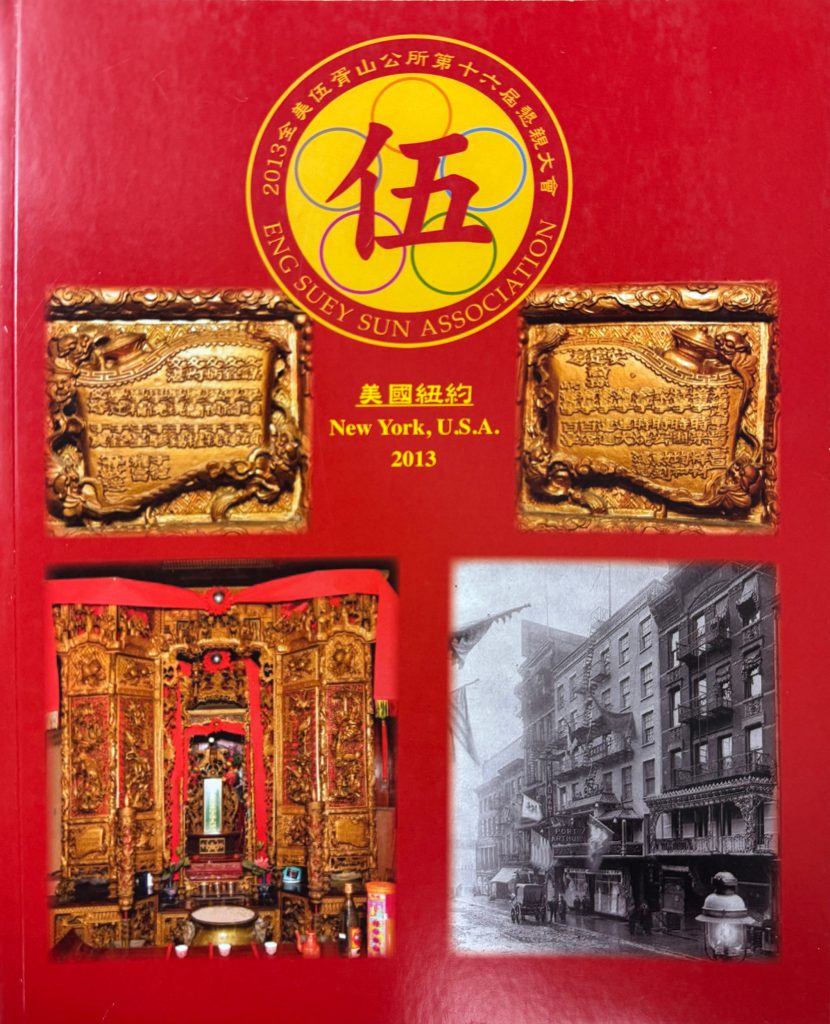
The cover of the association’s 2013 publication.
+ Who are the current users / tenants of this building?
How does the association use its spaces in the building?
The first floor is a restaurant. Right now, it’s the vegetarian restaurant on the ground floor. Before, it was another restaurant. In 1999, it was a gift shop.
The basement is where we usually had the association – one of the branches of the Eng Family – and right now it’s rented out to a foot massage parlor.
The second floor is the Eng family office. The association is always on the second floor. The second floor is mostly used for meetings. We have some guys who work here to manage the building. There’s the guy who has the keys for the Eng Family [Association] – he’s the treasurer of the association.
On the third floor, we have two apartments.
We don’t play mahjong here. We are the biggest organization and we don’t want any gambling here. This is a main point. When you play mahjong, a lot of people might come here, but we have a mixed message for a lot of people… This association combined a lot of different family names, so we don’t want each family to use this place for gambling. Here, we do meetings usually every two to three months, but not during the pandemic.
+ Would you give me a brief introduction of yourself? When did you come to New York?
I left China when I was 4 years old. I came here to New York City in 1970 at 20 years old. The day I remember I stepped down, my relatives took me to the apartment – I first lived at 56 Henry Street.
I came with my mother and my brother because I’m the fourth and the first generation (born out of the U.S). With the fourth generation, I mean that my great-grandfather, grandfather, father & I were all here in New York City at the same time. Being the fourth and first generation is why I know a lot of history from my parents.
From 1970-1973 I worked at Chemical Bank, which is now Chase Manhattan Bank.
From 1973-1976, I worked at Deloitte (Huskin & Sells), a CPA firm.
In 1976, I started to make fortune cookies.
Twenty five years ago, I took care of the Eng Family [Eng Suey Sun Association]. And then later on, step by step, I started to take care of this building [Hoy Sun Ning Yung Association] and then the Chinese Consolidated Benevolent Association (CCBA) building.
In 1922, over a hundred years ago, the CCBA of Newark bought a plot in a cemetery to bury the Chinese in Newark. It was managed by the Eng family in the 1970s. Around 1980, the Eng Family [Association] gave authority to New York’s Eng Family [Association] to handle it. Around 2010, we tried to sell all of the space and we bought another 100 plots.
When I came in 1970, my grandfather had already passed away. Every year I go to ching ming [sweep the tomb for the Ching Ming Festival], so when I see these stones, I know the history. The CCBA owns spaces in Evergreen (Staten Island).
I’m also a collector. I always traveled to a lot of cities for stamp shows & auctions. This is my hobby.
+ How long have you been working in Chinatown? How did you come to be connected to Chinatown?
My parents never brought me to Chinatown [when I was a child.]
When I came in 1970, I had a lot of alumni from Hong Kong. We had alumni associations in Hong Kong and in 1971, we rented a space to establish the alumni. This space [for the Tak Ming Association] still exists at 16 Mott Street. The Chinese Consolidated Benevolent Association (CCBA) is the property owner. That was my first step into Chinatown. Alumni business is different from community business.
Every Saturday and Sunday, we hung out in Chinatown with the alumni. We learned a little bit of knowledge from Chinatown but we were not really involved in the community. I became involved later on because I started my business.
I started a business making fortune cookies in 1976-1977. Along with another alumni member, we took over the business from the previous owner. I sold it to him in late 1978. It was at 6 Chatham Square. Before, it used to have a liquor store in the storefront and we made fortune cookies in the back. I started another fortune cookie business, with fully automatic machines, in 1978 at 53 Chrystie. I sold the business to Wonton Foods in 1983. I was too busy and had no breaks as the machines were going seven days and seven nights a week. By then I was also doing wholesale, which I started in 1982. Major products sold were eggs and coffee. Martinson Coffee, which is famous in Hong Kong — I sold that product. At the time, all the cafes drank this coffee. By 1991, I had gotten a younger partner. I left this partner the business, minus the eggs and coffee. We split the company into two companies at 7-11 Ludlow and 23-25 Ludlow.
+ What was Chinatown like when you first arrived in the 1970s?
I went to work and my connection was mostly with the alumni. Every Saturday or Sunday we had meetings together. We didn’t go outside to do new things. Then, it was different. I was too busy.
In 1973, it felt like the situation was getting worse in Chinatown with the gangs… though they didn’t bother me with my business, and my store was outside Chinatown.
+ How have you seen the Chinatown community change over the past decades?
A lot has changed. In 1975, the Vietnamese came here and the size of Chinatown boomed. My wife was Chinese-Vietnamese (she passed away in 2005). Between 1970 and 1980, a lot of Taiwanese came here. Around 1985, a lot of Malaysians and Singaporeans came here. At the end of the 1980s to the early 1990s, a lot of Fujienese came here.
Chinatown is changing — during that time, we expanded to the north, but we couldn’t expand westward because of the jail. We also expanded in the east. To the south, there were the projects, so we didn’t expand there. Hester, Grand Street – boom – Chinatown moved up north.
But around 2010-2015, from the north, the Americans pushed back.
+ What are your feelings about what Chinatown has been impacted since the pandemic started?When the pandemic started, I had an appendicitis emergency. I stayed two months in the hospital and three months in a rehab center, four months resting at home and last year in January, I went back to the hospital for surgery again and then was doing better and better… It was a two-year experience.
I have nothing to say because Justin Yu, the former president of the CCBA, was the public face of COVID. He was famous because he first stepped into this title in this month. Everything shut down in Chinatown and he handled it.
5 MOTT - BUILDING PHOTOGRAPHS
Photographs taken between 2022 – 2024.