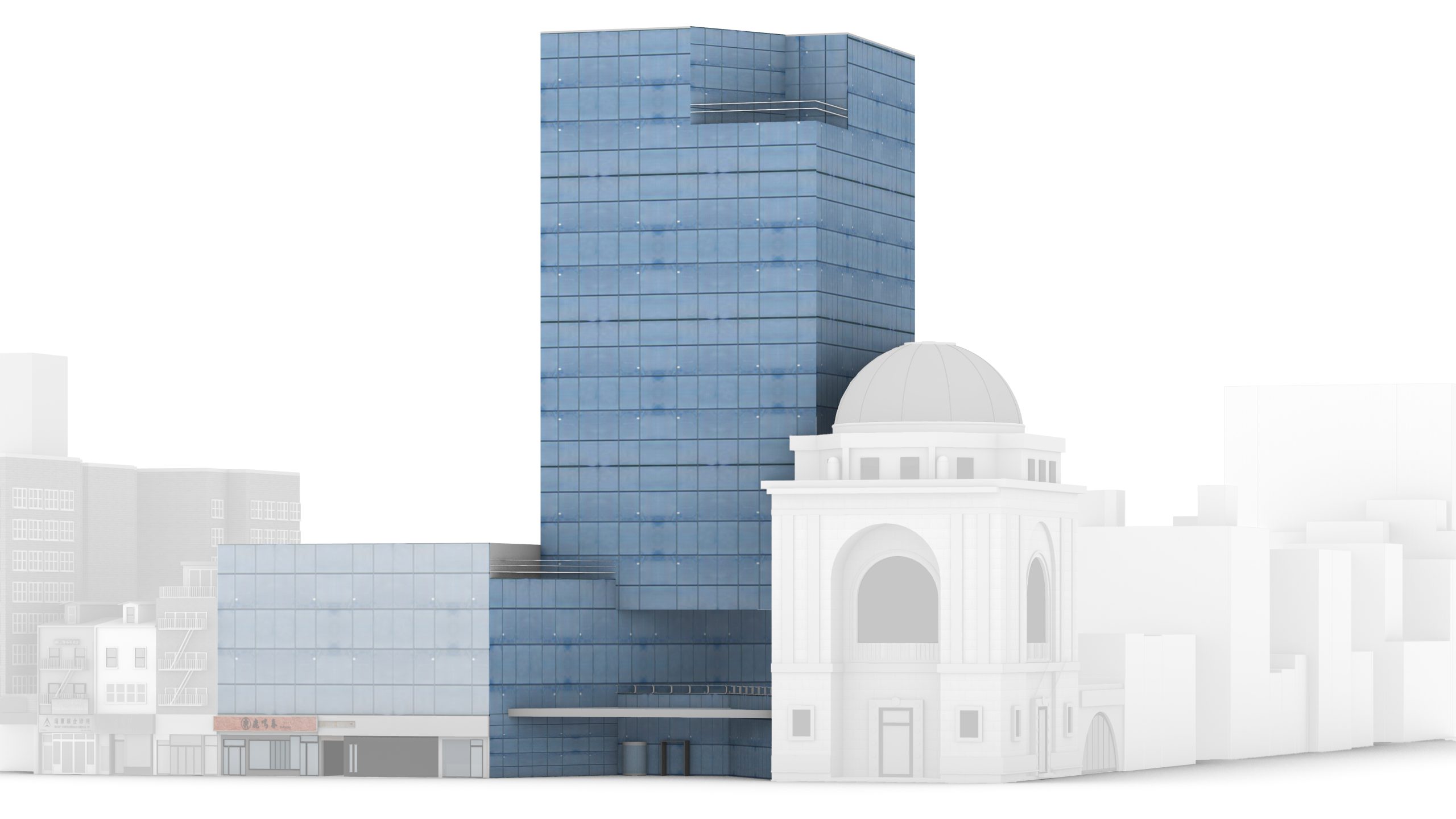
50 Bowery
Hotel 50 Bowery
Built in 2017
2024
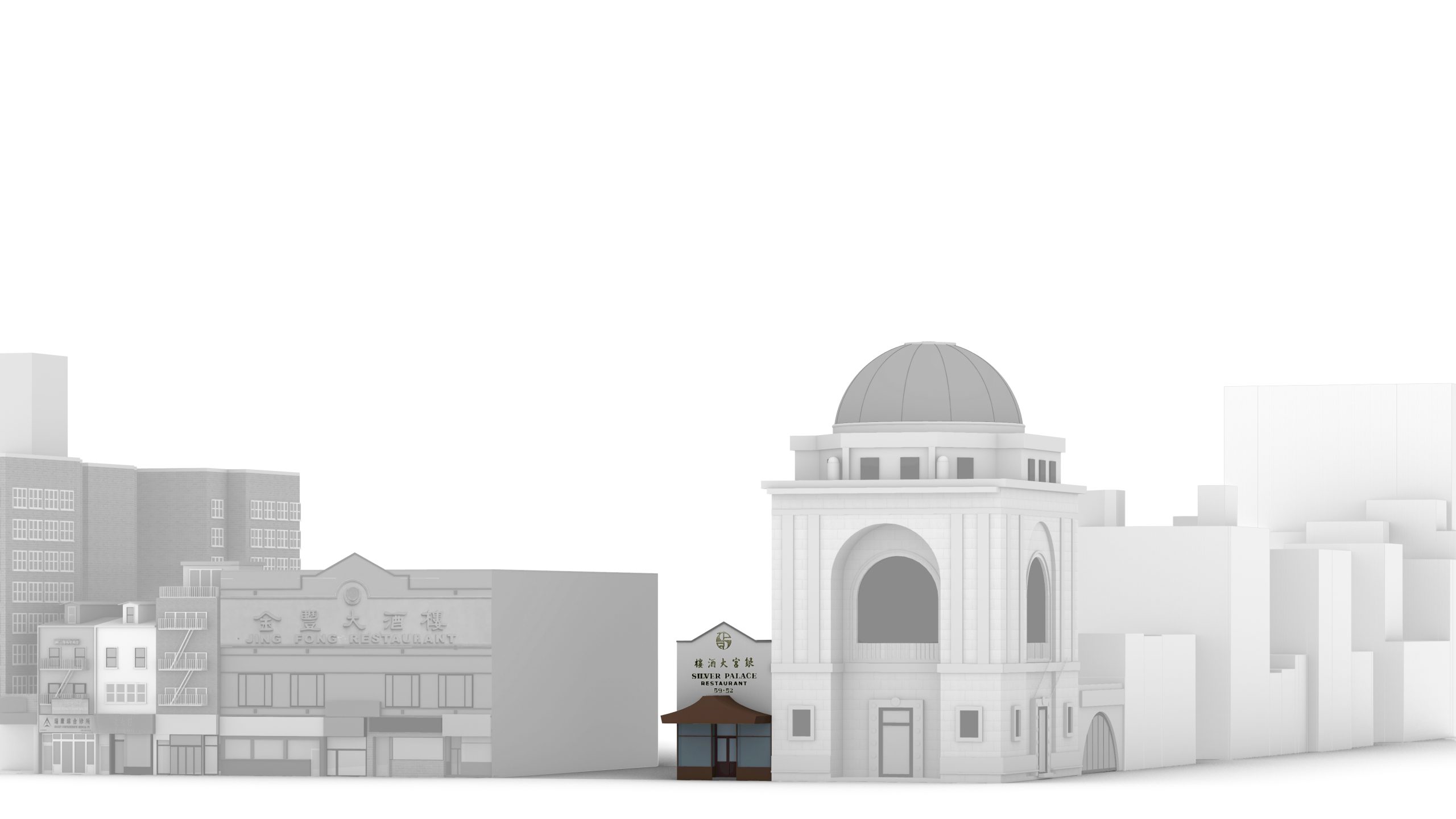
50 Bowery
Silver Palace Restaurant and adjacent lot
1976 - 1990s
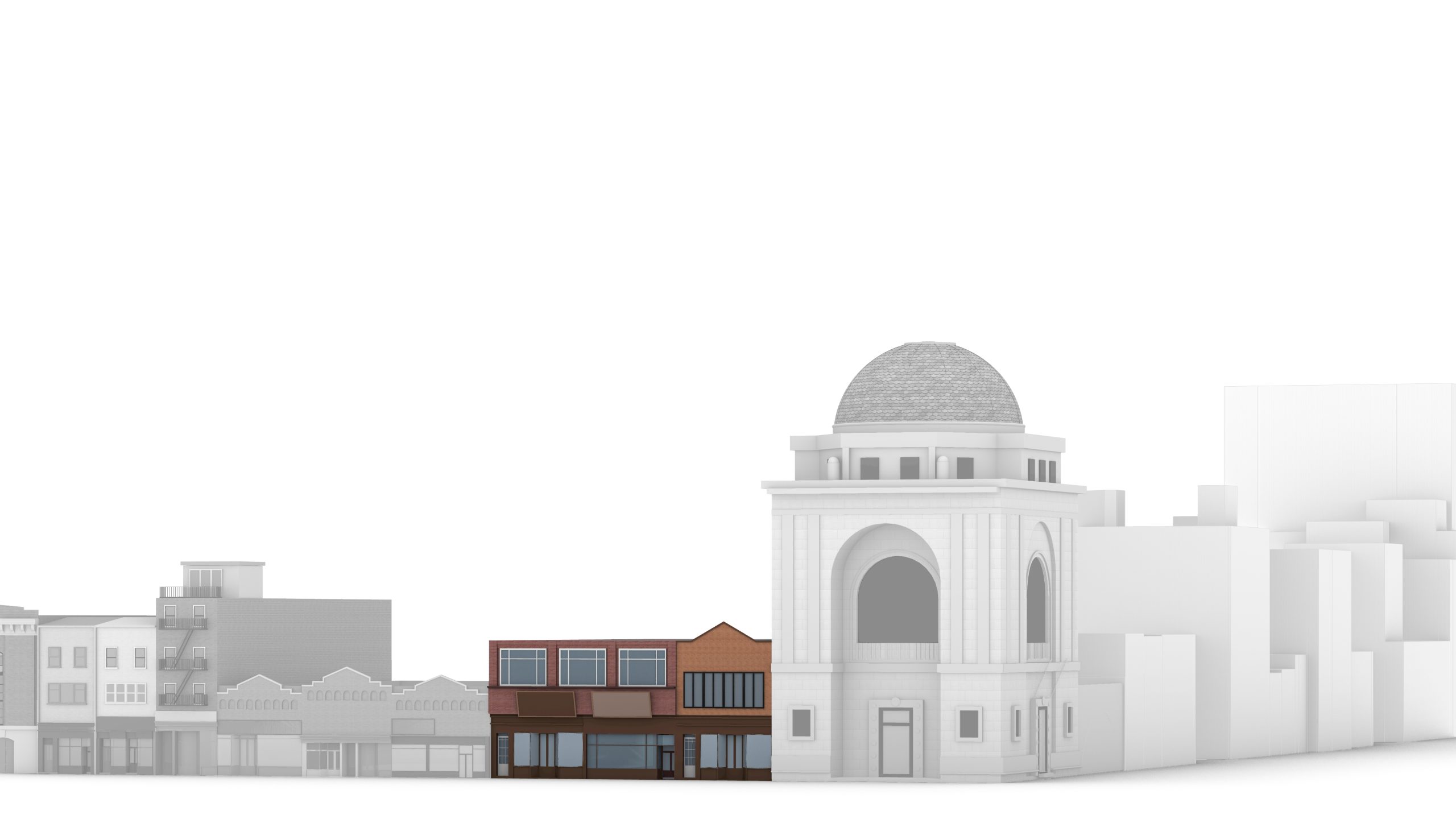
50 Bowery
Harry Kelner & Sons carnival goods shop and Chinese-American Press
1940s
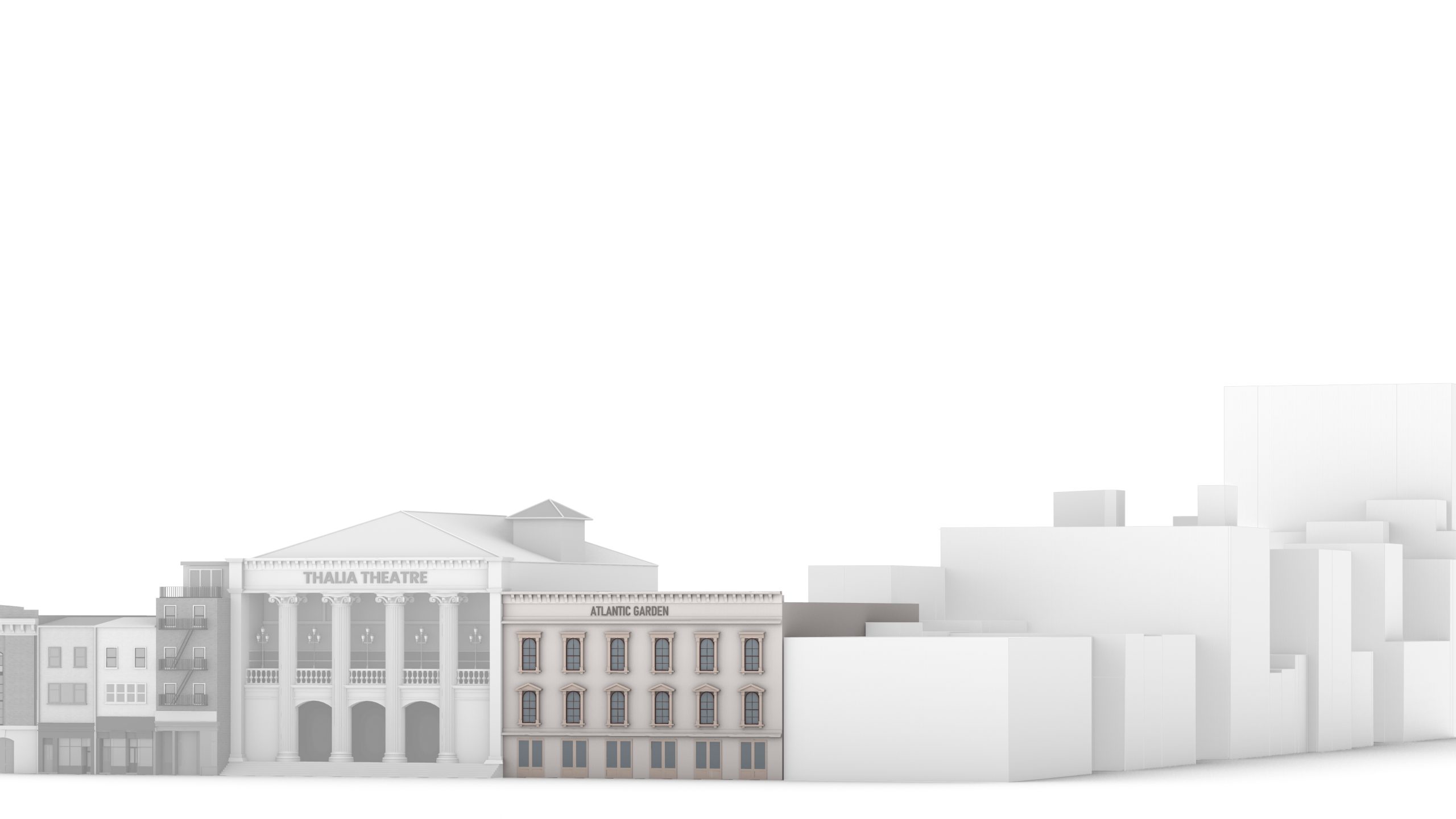
50 Bowery
Atlantic Garden Beer Hall (reopened as the Yiddish Vaudeville Theatre, then the Atlantic Garden Sporting Club until demolition in 1929)
Built in 1858
1858-1910
Interview
WITH TOMIE ARAI (ARTIST AND CHINATOWN ACTIVIST)
Interview conducted in May 2022.
+ What is the significance of Silver Palace?
50 Bowery used to be Silver Palace.
I wanted to share this with you. One of the members of CAB (Chinatown Art Brigade) was involved in a hunger strike to unionize a restaurant called Silver Palace, which is where the hotel (Hotel 50 Bowery) is now. It was one of the biggest labor issues in Chinatown – in labor history! It went on for a year.
It was the first unionized restaurant in Chinatown. When they closed, because Jonathan Chu closed them, then Jing Fong became the only unionized restaurant in Chinatown.
+ Please give me a brief introduction of yourself – How long have you been working in Chinatown? How did you come to be connected to Chinatown?
I was born and raised in New York in the Upper West Side, in post-World War II New York. When I was growing up, there were very few Asians in the city. I’m Japanese-American, and there were only a handful of people my age. I saw Chinatown as the only geographic community of Asians that I was familiar with. Before the 1960s, it was still a bachelor’s society, before the new influx of immigrants. I think that, as a result of the immigration in the 1960s, there were, in the 1970s, a lot of people my age who decided to think more deeply about identity.
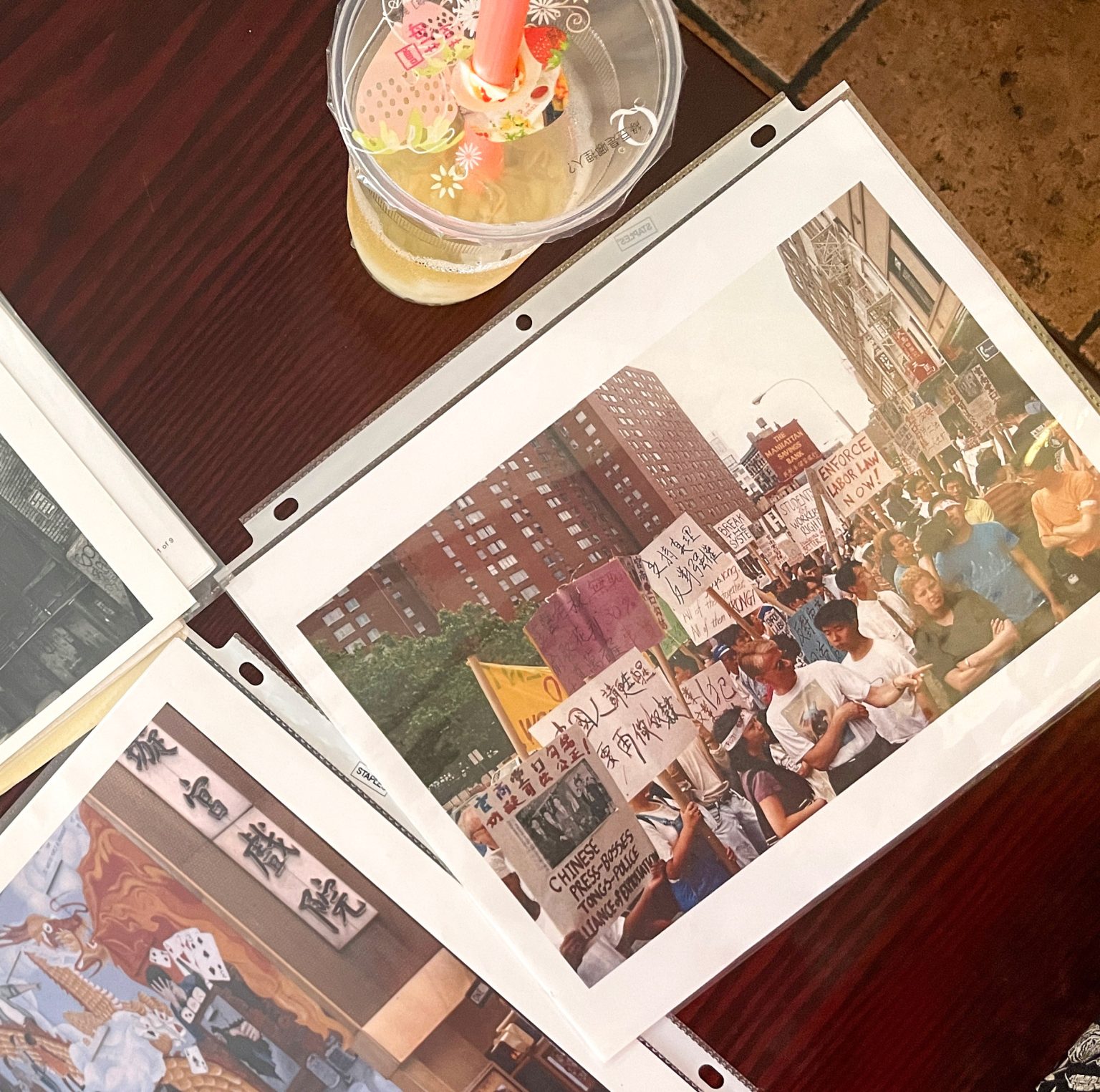
A photograph of Tomie’s photograph of the 1970s protests outside Silver Palace restaurant, taken during our interview session, May 2022.
When I was in my 20s, I heard about this group of Asian American writers and artists who were coming together to put together an anthology of Asian American art — it was based on this group of folk musicians called Yellow Pearl… and so I went down to Chinatown and met this group of young artists and musicians. It was really the first time that I was in a group of Asians, growing up in the city. I used to be the only Asian in the class, a familiar story for people of my generation. It was the beginning of my path to becoming an artist. I met my husband (Legan Wong) in 1972 in Basement Workshop. When I met him, he was teaching the first Asian American experience course at Hunter College, before Ethnic Studies was taught at college. They wouldn’t allow him to call it an Asian American History course. Faye Chang, the director of Basement Workshop, allowed him to teach the course. He got me interested in history; his parents owned a laundry in Crown Heights and his mother worked in a garment factory in Chinatown and later in Long Island City.
When I became the first artist-in-residence at MOCA (Museum of the Chinese in the Americas) in 1988, I read a lot of the stories in the archives. It was an offshoot of Basement [Workshop]— [originally called] the Chinatown History Project. At that time, I did a silkscreen print project based on oral histories of Asian women living in NYC. In 2006, I co-initiated a project called Archaeology Change, looking at changes in the community. We interviewed the landlord of the building that it’s currently in, Larry Goodman, who talked about the fascinating history of the neighborhood that changed. We interviewed the owners of Pearl River Mart, grocery owners across the street, people who were being displaced by MOCA, etc…
+ What was your impression of Chinatown at the time, back in the 1970s?
There are old-timers like Henry Chang (Chinatown’s resident writer), Wing Lee (related to Sandy Lee), Jan Lee’s brother, Corky Lee and Victor Lee who all hung out together as teenagers and talked about Chinatown being like a village and a small town: everyone knew each other and grew up together… and it was, in many respects, much smaller in scale. I remember that it felt like we were building something new when we came down. Formerly, I felt like there weren’t a lot of platforms for young people to have a voice. It’s not surprising that a lot of people who were members of Basement went on to become leaders in the community, running senior centers and community centers, becoming teachers and principals, founding health clinics and becoming leaders in Chinatown.
+ Tell me about Chinatown Art Brigade and how it forms part of your artistic practice.
It’s been so interesting to work with W.O.W. because it’s a younger generation of artists and people interested in creating work about the neighborhood. It’s really opened up my eyes to what possibilities there are that are different from the way I’ve worked in the past.
I love murals, but there are so many other ways you can imagine spaces and transform them. I think originally that’s what CAB wanted to do — to question how artists can work with communities and develop with communities to speak about some of the things that are hard to address and to make changes. I think as artists, we’re trying to make art and say things differently.
One of the hallmarks of the murals is the process — you can’t paint a big mural by yourself. CAB has learned from its mistakes as it neglected a lot of steps in the process. We’re always trying to learn from that. One of the things I appreciate so much about being in Chinatown is that I am always so aware that I am simultaneously an outsider and an insider. An insider through the years I’ve spent working here, but I am not privileged in a way to speak on behalf of the community. I need to be aware of my role in this complicated process, which is to listen, be open and never assume anything.
I love that Chinatown is something where you see things at scale. The city can be overwhelming and I come here and there are some things that are constant. Like seeing Karlin on the corner. Places that are still here. I appreciate them.
+ How have you seen Chinatown change over the past decades?
I feel like in many ways, I’m kind of an outlier. I see Chinatown through the eyes of someone who visits it, which isn’t the same as someone who lives here day-to-day. We did a mapping project with CAAAV (Committee Against Anti-Asian Violence) with the tenants and it was an interesting experience for me, because people who live here don’t see the changes… because they live with the changes. It seems to people visiting that things are changing overnight.
Now I feel like everything has changed. The store you wanted to go to is now a bar. I think that there was a hyper development happening here until the pandemic… and now you see so many abandoned storefronts. Things have emptied out in a way that contributes to this feeling of real precariousness. You can sense that the future of Chinatown is threatened.
+ What are your feelings about what Chinatown has faced since the pandemic started?
The pandemic has changed a lot of things. It’s made it that much harder to understand how to get past the impact. Jobs, housing… Thinking about where this community sits in terms of the plans the City has for recovery — it’s hard to wrap your head around.
The issue of safety is driving so much fear and fear of change. More calls for policing give the sense that this community isn’t safe. I think we really have to try to understand how these issues are connected.
It’s always been so important to me to live and work here in Chinatown because I feel like it’s a microcosm of the city. Chinatown is such a global place, and not just a local neighborhood. What happens here has an important impact on what happens elsewhere.
50 BOWERY - HISTORIC IMAGES
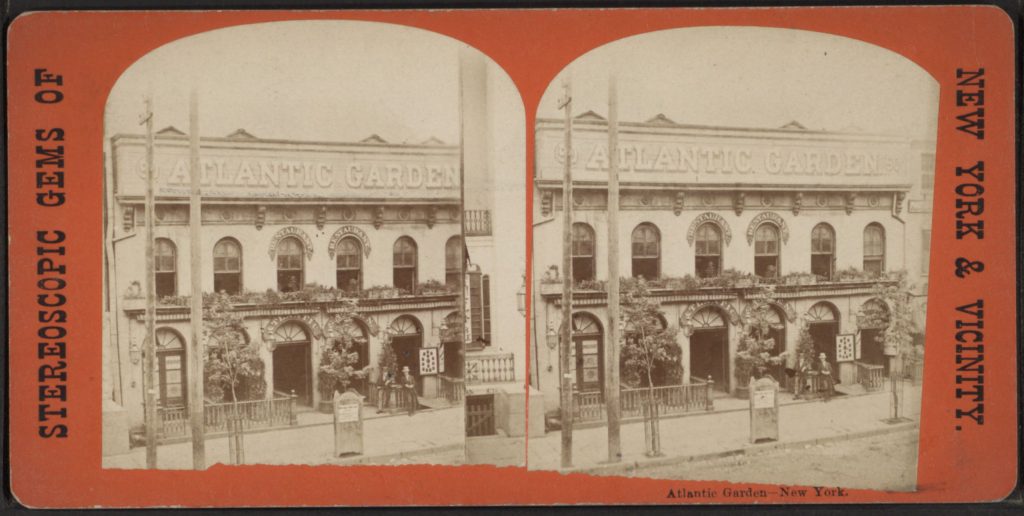
The New York Public Library. (1828 – 1828). Bowery Theatre, New-York. Retrieved from https://digitalcollections.nypl.org/items/510d47e1-065a-a3d9-e040-e00a18064a99
50 BOWERY - BUILDING PHOTOGRAPHS
Photographs taken in 2024.