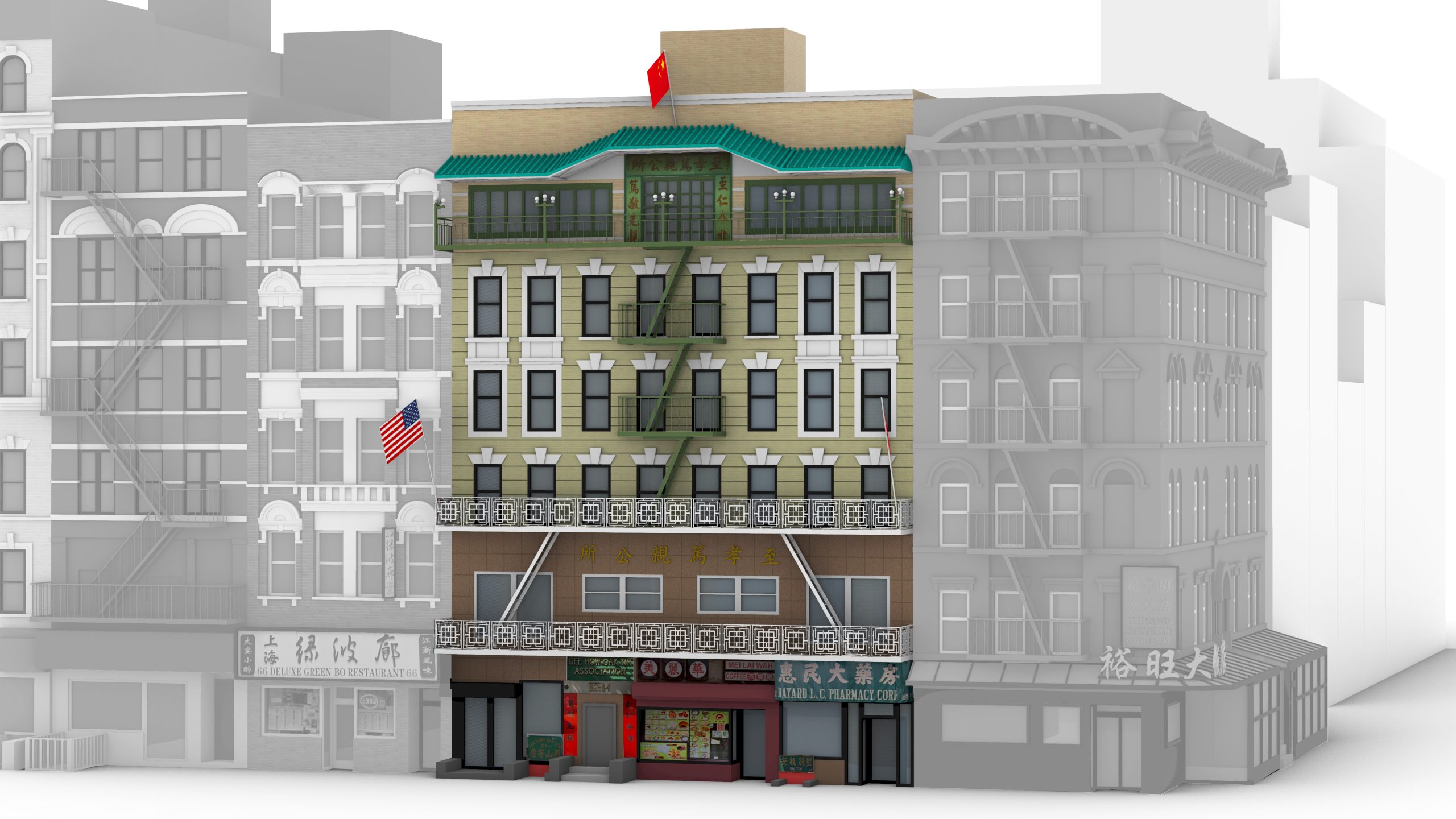
62-64 Bayard
Gee How Oak Tin Association
Architect: Charles M. Straub / Developed by Samuel Rosenberg
Built in 1910 and remodeled in 1927; Building purchased by the association in 1927
2024
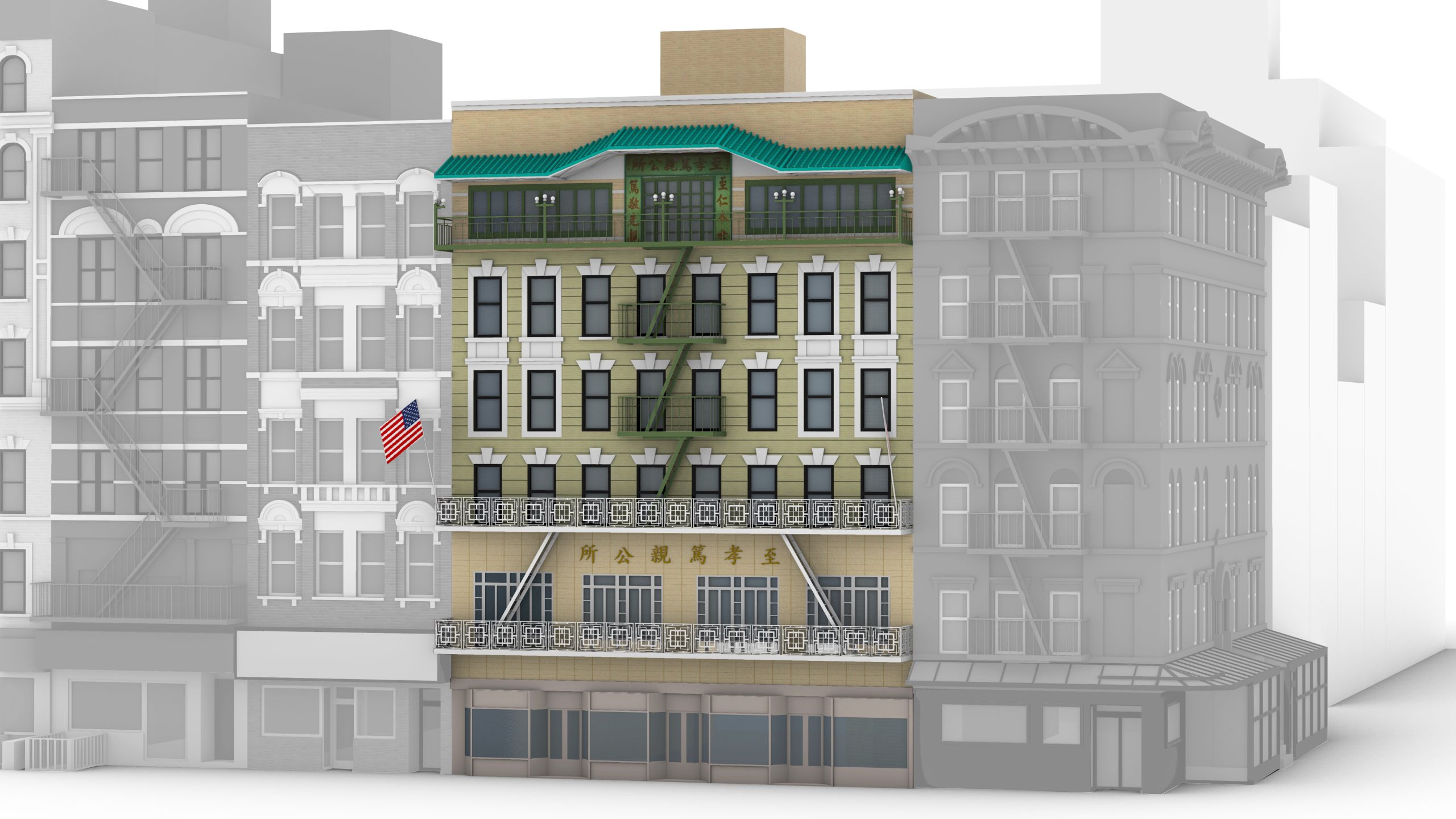
62-64 Bayard
Gee How Oak Tin Association
Architect: Charles M. Straub / Developed by Samuel Rosenberg
Built in 1910 and remodeled in 1927; Building purchased by the association in 1927
1963
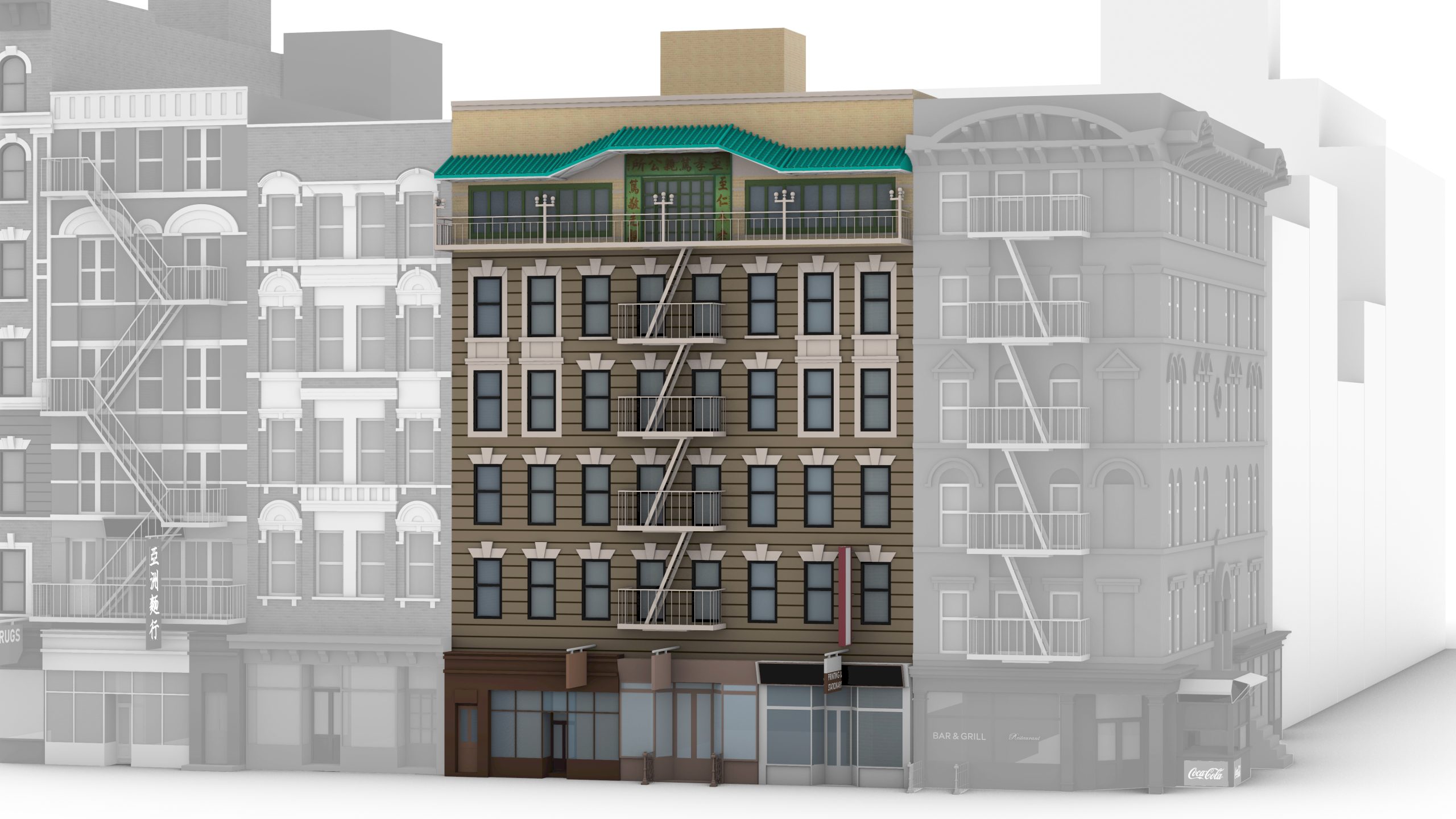
62-64 Bayard
Gee How Oak Tin Association
Architect: Charles M. Straub / Developed by Samuel Rosenberg
Built in 1910 and remodeled in 1927; Building purchased by the association in 1927
1940s
Interview
WITH JIANPING CHEN (SECRETARY OF THE GEE HOW OAK TIN ASSOCIATION)
Interview conducted in May 2022.
With Mandarin interpretation by Roxy Chang
+ Would you give me a brief introduction of yourself and your connection to Chinatown? How did you come to be connected to Chinatown?
I’m Mr. Chen. I’ve been the secretary/bookkeeper since 2014. I came from China in 2007. I came and joined shortly after I arrived.
+ How long has the Gee How Oak Tin association been in this building?
Does Gee How Oak Tin Association own the building?
We registered in 1924 — it’s been an association for almost 100 years.
We entered this building in 1927, but it has over 100 years of history. This building existed before the 1920s. Back then in 1924, our predecessors combined from different associations and saved up $10,000 to buy this building.
Every 3 years we have an annual conference. In 1927, it was the 4th annual conference here, which lasted for a month.
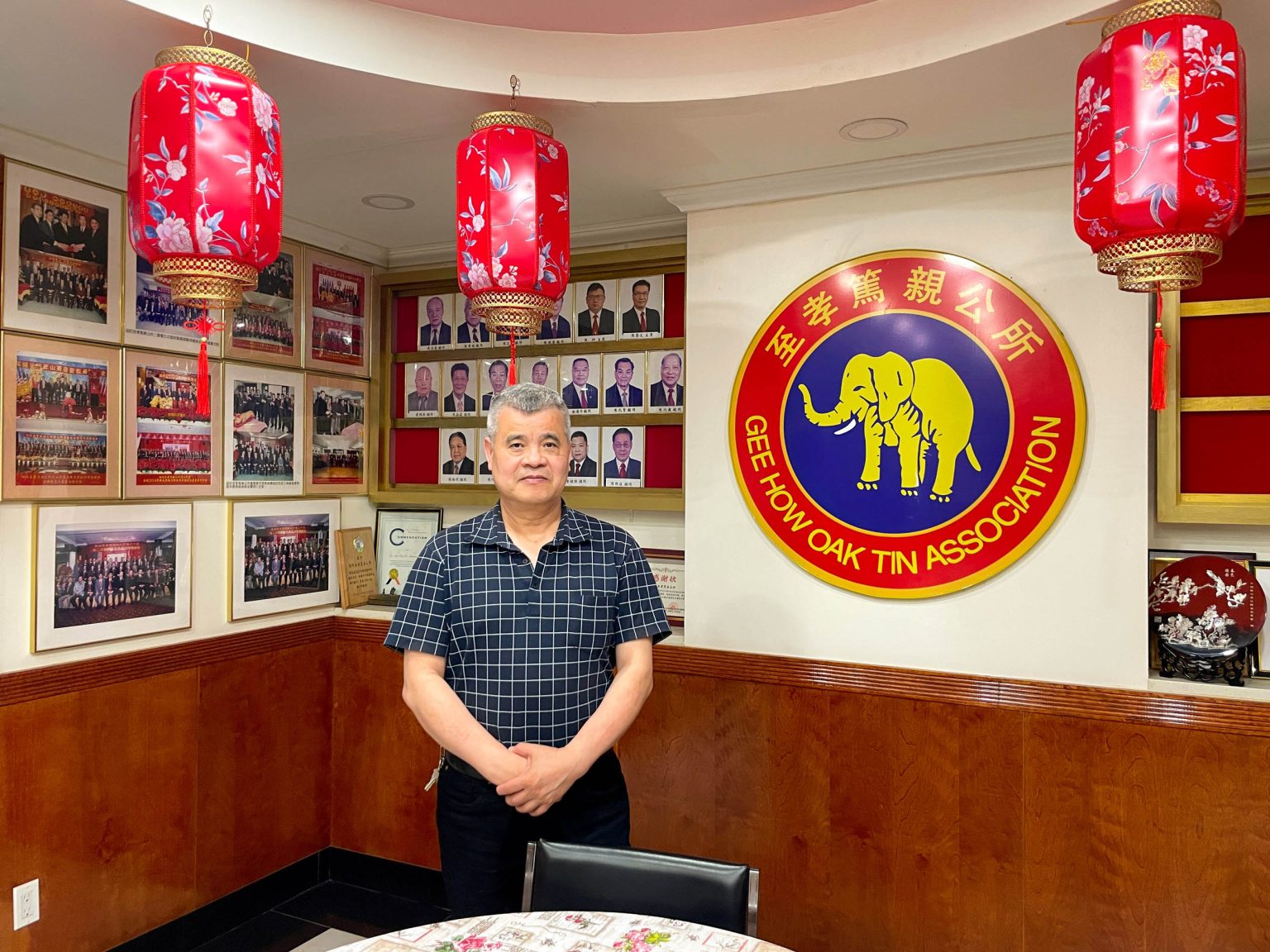
Jianping Chen at our interview session, May 2022.
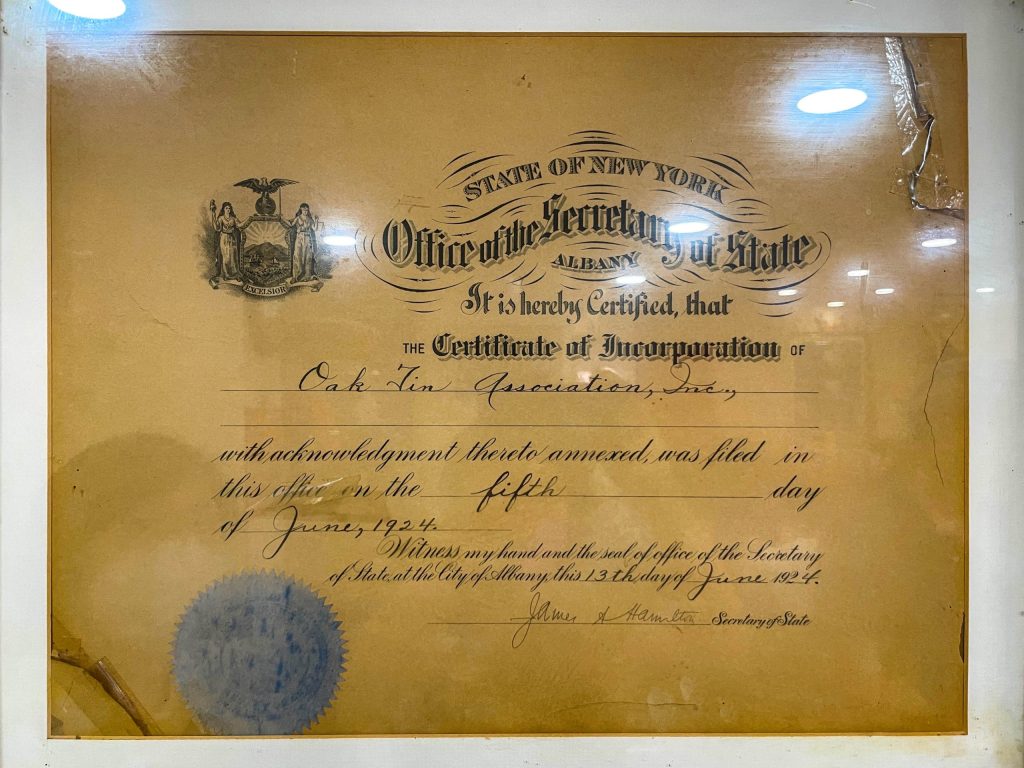
The Certificate of Incorporation of the Gee How Oak Tin Association, dated June 5, 1924, is framed and displayed in the building. Photographed in 2022.
+ Can you tell me a little bit about any major renovations or changes to the building since it was first constructed? Can you share any information about the building’s past lives?
Around 1964, we changed the exterior facade’s decorative elements, and in particular the second floor — you can tell it’s different from the rest of the building. Most of the changes happened here.
The association office used to be on the sixth floor, but now it’s on the second floor.
On the ground floor, it was always similar: a Hong Kong-style restaurant similar to Mei Lai Wah. Mei Lai Wah has been there for more than 30 years.
We changed the flag in 2002 [from the Taiwan flag to the People’s Republic of China flag].
+ Who comes here to the building? What does the association do with its community members?
It’s a place for members to connect and to worship ancestors. There are certain cemeteries that we visit as a group and we have ceremonies in the spring and fall. There are also certain duties we have as an association and we gather together to discuss those. Mostly it’s about relationship building with each other.
People come to celebrate the lunar new year together. We usually hang up lanterns and our colored flags. For members who are 70 years old or above, they come to give their respects to the elders. Usually during the lunar new year and the Mid-Autumn Festival, there are more people who come back. However, with the pandemic, in the past years we haven’t been able to have bigger gatherings.
On a daily basis, people sit together to chat…
+ Associations used to be a place for new immigrants to get connected, especially during the Chinese Exclusion era. Is this still an anchor for new immigrants?
We’re an association based on the last names of Wu, Yuen, Chin… As long as they fulfill their requirements, then they can join the association. Margaret Chin is also a member of our association.
+ How many women are members vs. men?
More men, for sure! Mostly men!
+ Describe the building.
We have six floors, a rooftop (that we don’t use that much) and a basement.
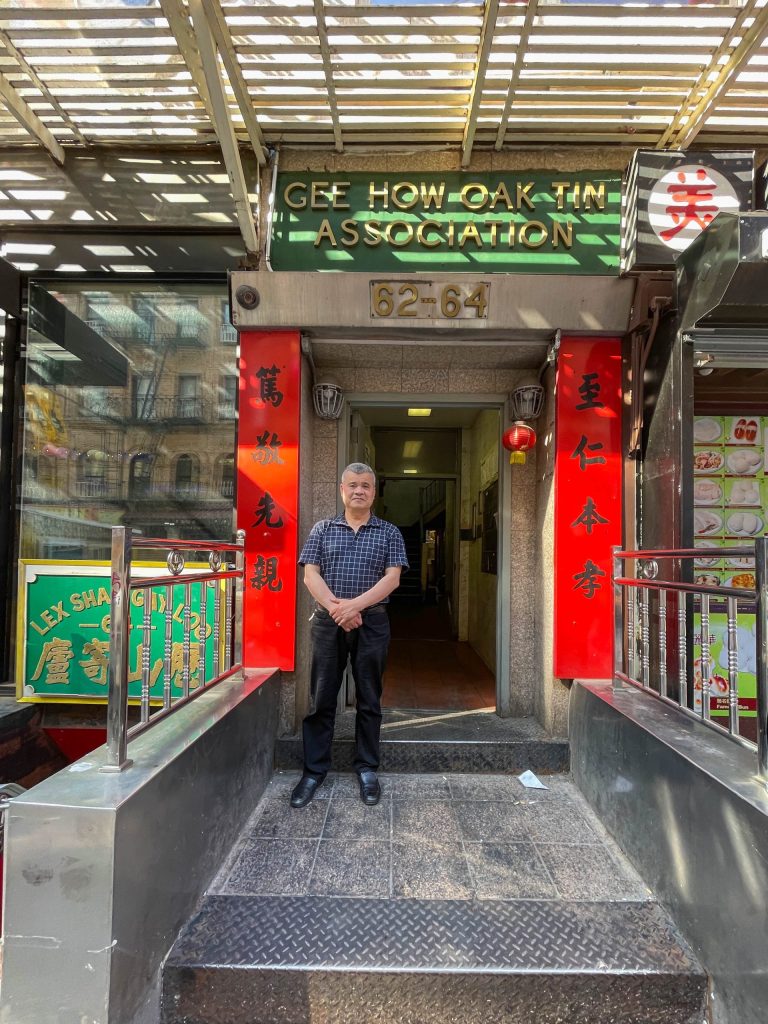
Jianping Chen at the front entrance of the Gee How Oak Tin Association building, May 2022.
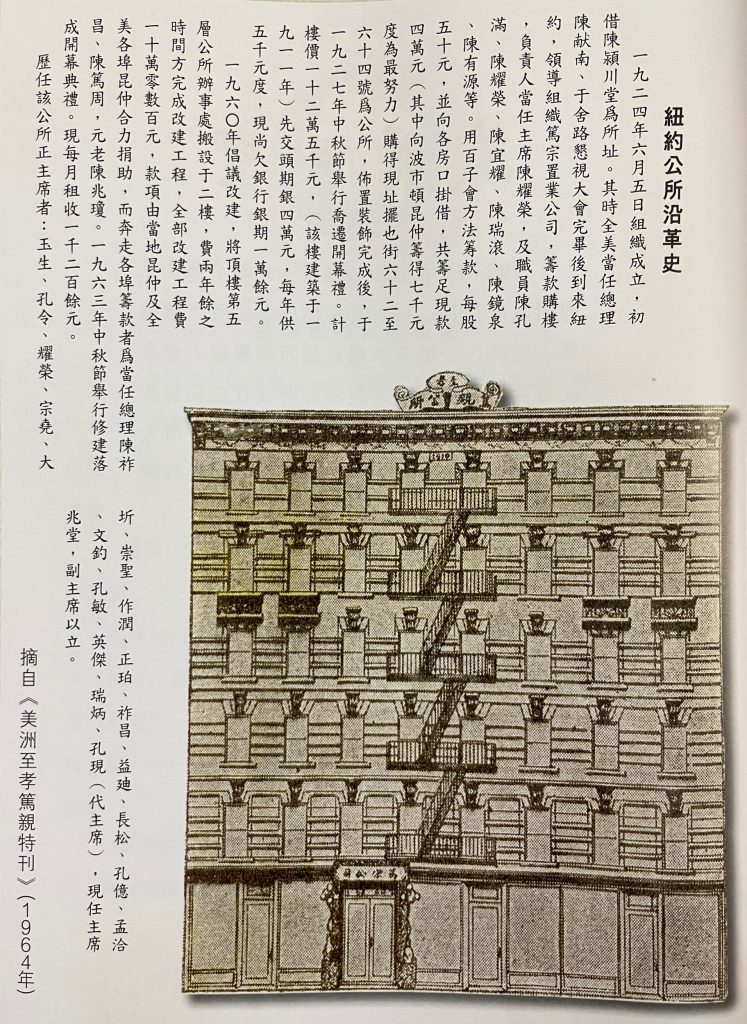
Page from the association’s 1924-2014 commemorative publication.
An excerpt from the association’s commemorative publication:
History of the New York Association
Edited in 1964, included in Gee How Oak Tin Association’s 1924-2014 anniversary catalog
Translated from Chinese by Lai Ying Wong
The association was first founded on June 5, 1924. At first, it was housed in the 陳潁川 Hall. During that time, the premier, 陳献南, came to New York. He led the association to buy property for the organization.
The person in charge (陳耀榮) and several staff members (names…) fundraised to raise the money for the purpose. Each share cost $50, and in total they raised $40,000. (Including Boston’s brothers, who raised $7000). With this funding, they purchased the present building at 62-64 Bayard Street.
After the renovation, the association was opened in 1927 on Mid-Autumn Festival Day. The total amount cost $125,000. They paid the first down payment of $30,000 and then paid $5000 yearly as mortgage. (The building was originally built in 1911.)
In 1960, they transformed the building. The office was moved to the second floor. The restructuring cost $1000,000 and some change. It took over 2 years to complete. (The expenses were paid for by funds raised by local brothers and brothers from other states all over the US.)
The premier at that time tried very hard, running around different states to raise the funds. The newly renovated building was completed and opened in 1963 on Mid-Autumn Festival Day. The building generated $1200 in rent each month.
[The last paragraph includes names of the different premiers.]
Interview
WITH NORMAN CHIN (SIFU AND FOUNDER OF SOUTHERN PRAYING MANTIS KUNG FU AND LION DANCING TROUPE AND FORMER RESIDENT AT 62-64 BAYARD)
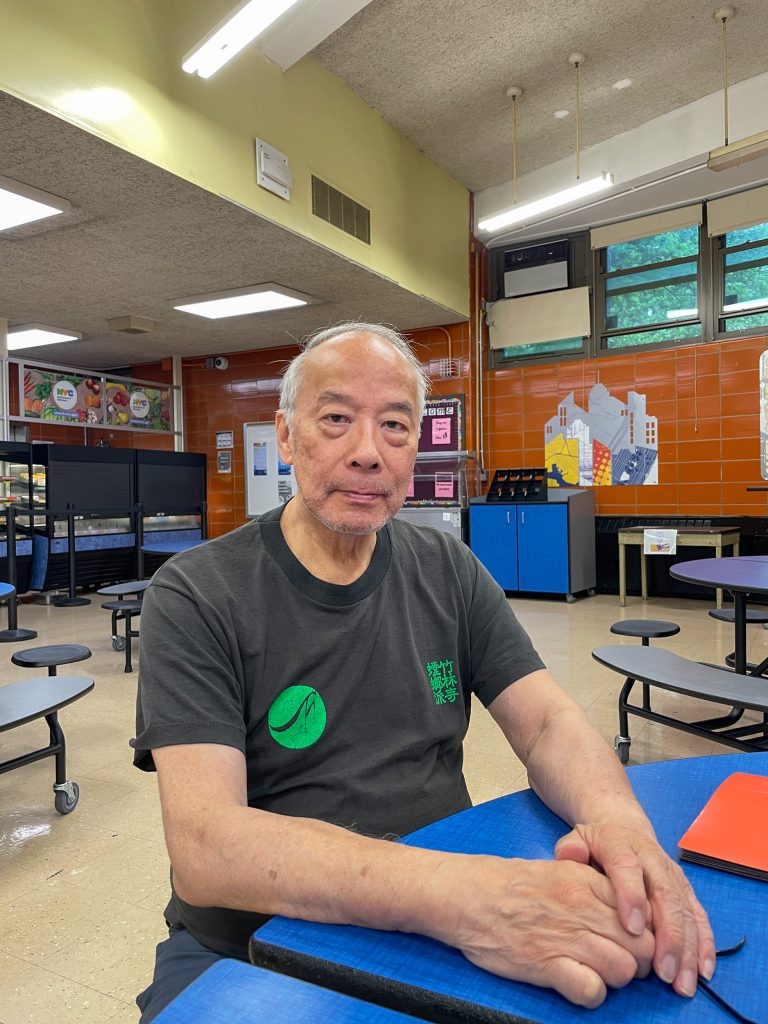
Norman Chin after an afternoon of teaching kung fu and lion dancing. Photographed at our interview session, May 2024.
Interview conducted in May 2024.
+ Would you give me a brief introduction of yourself and your connection to Chinatown? What was Chinatown like at the time?
My name is Norman Chin and I was born and bred in New York. My dad was born in Toishan, China and my mother was born in Weizhou, China. My mom moved to Hong Kong during World War II and my dad had moved from Toishan to New York back in the late 1930s.
I was brought up in Chinatown. We went to school here. I went to P.S. 23 on Bayard from kindergarten until 6th grade. I remember going to school in knickers – tight little pants with an elastic band on the bottom and little caps… Since I was five years old, we walked to school. It was very safe; Chinatown was about four blocks. All of the store owners knew everyone and they were “aunts” and uncles” watching over the kids.
+ How long did you live in Chinatown at 62-64 Bayard? What do you remember about living there?
I lived there until I was about 30 years old. I moved out because after graduating [from school], everyone was moving out of Chinatown… later on, I regretted it. I should have kept the apartment. I moved to midtown… and [later] in the West Village, where I was across the street from Bob Dylan. People were going through Bob Dylan’s garbage on MacDougal Street.
62-64 Bayard was owned by the Chin Association; most were all Chinese living there at the time. There weren’t a lot of Westerners in the 4-5 block area of Chinatown.
In the building, everyone knew everyone. I was close friends with some of the other apartment dwellers: distant relatives living on the fourth floor and friends on the second floor. I lived on the third floor. We lived as a community, and it was a close-knit community. We knew everyone in the building. Four apartments on each floor and up to 16 apartments in the building. On the top of the building, there was the association’s community room.
+ Can you describe the interior of the building and of your family’s apartment?
I lived in apartment #9 in a 2-bedroom apartment. At that time, most of the family members were living together. At one point, we had [more than] seven people living in the 2-bedroom apartment: we had an aunt and uncle living with us – mom, dad, me and my four brothers and sisters.
In the old days, we did not have gas heating – we actually had a kerosene heater in the living room. I remember growing up, we’d buy kerosene from the people on the corner. In some apartments, we had coal stoves. We had to buy coal.. and no air conditioner, obviously! The place was basically heated with kerosene stoves.
It was pretty crowded and most of us didn’t speak English until we went to kindergarten – mom and dad were speaking to us in their own dialects. My dad would speak Toishanese and my mom would speak Hakka and Cantonese. We grew up with two dialects.
There were grayish linoleum floors. The 2-bedroom was nice; you had natural light all around and it opened to a courtyard… a garbage courtyard. We had lots of daylight, even if it was in the back of the building.
+ What are your fondest childhood memories of this building?
My favorite memories of living in the apartment were of Chinese New Year. It was even more important than Christmas. We looked forward to a midnight Chinese New Year dinner – we would have vegetarian dishes only to open up the New Year. It was always exciting. The food would be set out and the family would get together on New Year’s Eve. At that time, with the lion dancing, we had a club in the Chin Association. Once you heard the drumming, you’d know that Chinese New Year was around.
+ Did you ever visit the Association in the building or were you connected to them in any way?
My family was a part of the association – we were always a part of the Chin Association. We would go up to the top floor and do our prayers and burn incense at the family altar on New Year’s Eve and on New Year’s day. That room used to be a lot larger. The impression was that the ancestral altar was very unique and it was a special place to go to once a year.
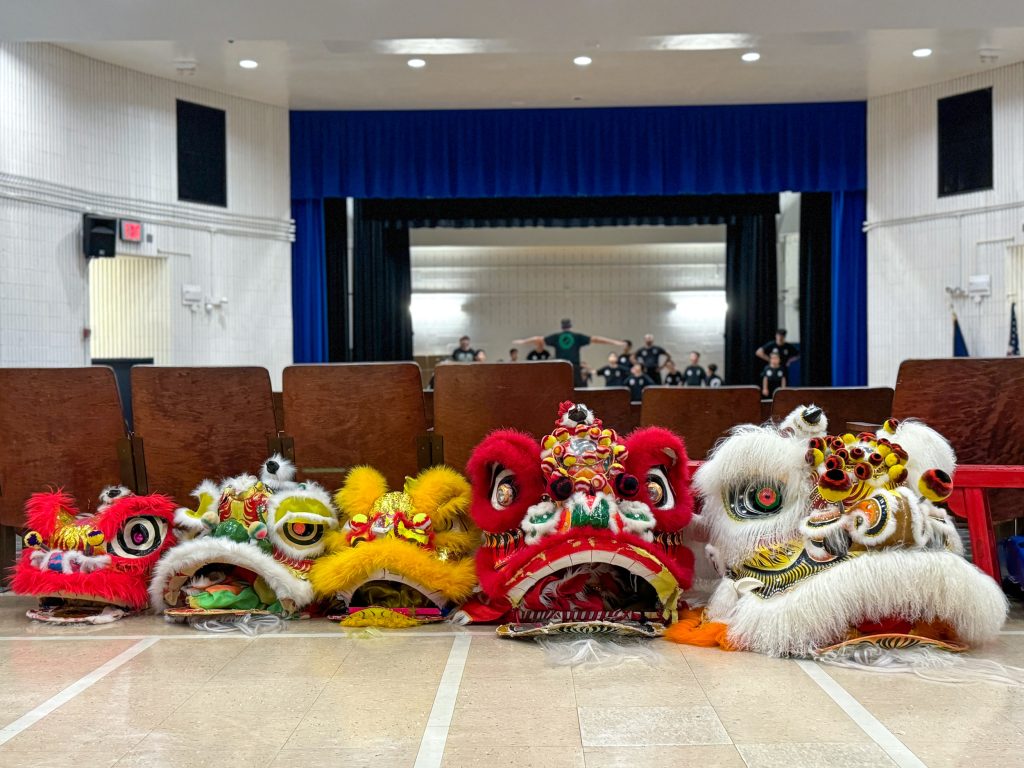
Lion heads of the Southern Praying Mantis troupe.
+ Can you share any information about the building’s history, or its past lives?
Originally there were two stores in the front of the building. One was a dry cleaner (on the left side, if you were facing the building) and the right side was a Chinese music store. The owners lived in the back of the store. Back in the 1950s, they had a great collection of Chinese records and sold Chinese musical instruments. The shop owners were very nice, but very traditional. It was a unique place. You could go in and buy any Chinese instrument. It lasted until about the late 1960s, when it became a coffee shop – Mei Lai Wah, which was famous for the cha siu bao.
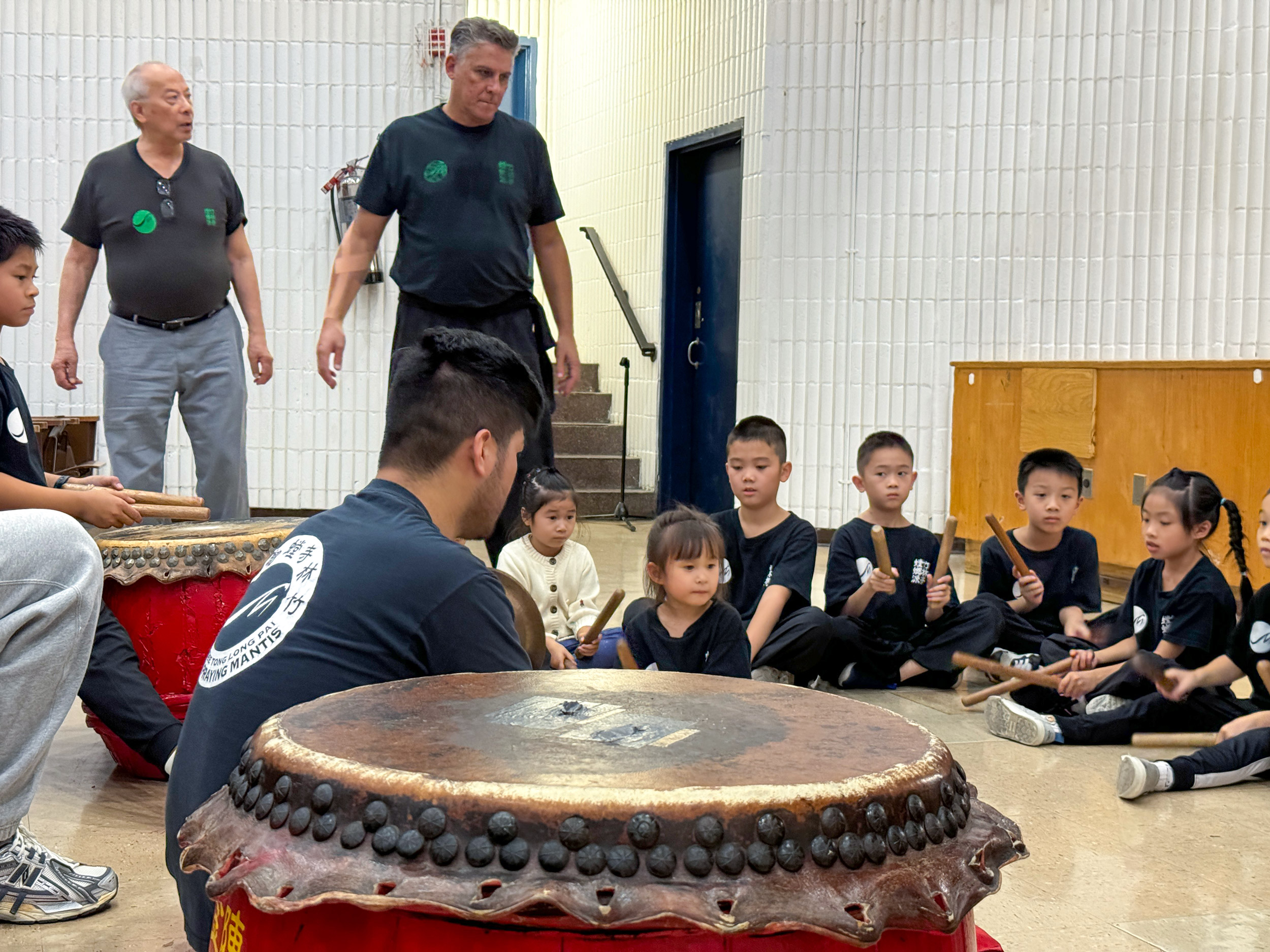
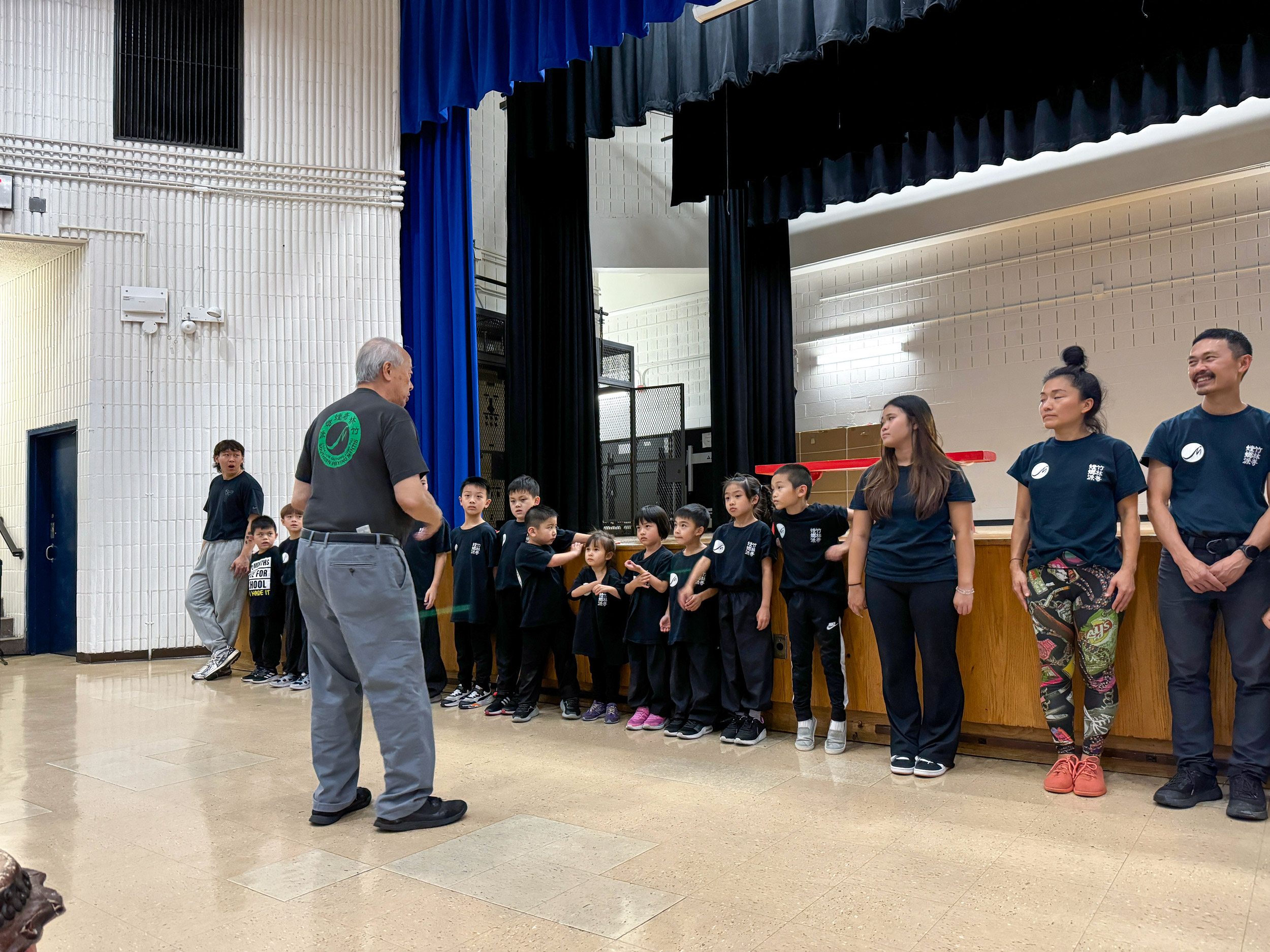
+ Today, you teach kung fu and lion dancing. Tell me about the history of the founding of the Southern Praying Mantis troupe. How do you see this as a powerful way to preserve part of our Chinese culture and hold on to your connection to Chinatown?
I have been studying kung fu and lion dancing since I was seven or eight years old. It was taught at the Chin Association. In Chinatown, there were other associations and clubs that taught kung fu and lion dancing… to continue the tradition. I have been interested since then.
During my training period (during high school in the early 1960s), I became a [Free]Mason and then I became the chief instructor there for a while until the late 1980s… and that’s where I learned Mantis. To me, every martial arts and kung fu teacher is the same thing; you’re supposed to be strong and disciplined. There are traditional values like respect and honoring the elders, but nowadays, some of this is not thoroughly practiced. Kids are more independent now and don’t have a hierarchy that they respect.
As I was growing up, even in high school, I studied different styles of martial arts and in my junior year, I studied praying mantis. It was a system I embraced, and I started teaching back in 1972, I believe. I opened my own school at the time. I hoped to preserve our martial arts heritage and also lion dance techniques. In Chinatown, it’s very difficult because there are a lot of people who don’t consider taking the time to learn it… but these days, hopefully we can keep our culture alive.
+ How do you think this building is important to Chinatown?
It’s important because all the apartments were 2-bedrooms.
At the time, there were a lot of railroad flats, and some of them had the bathtub in the kitchen.
The Southern Praying Mantis’ Lunar New Year lion dancing festivities in Chinatown, February 2025.
62-64 BAYARD - GEE HOW OAK TIN ASSOCIATION - BUILDING PHOTOGRAPHS
Photographs taken between 2022-2024.