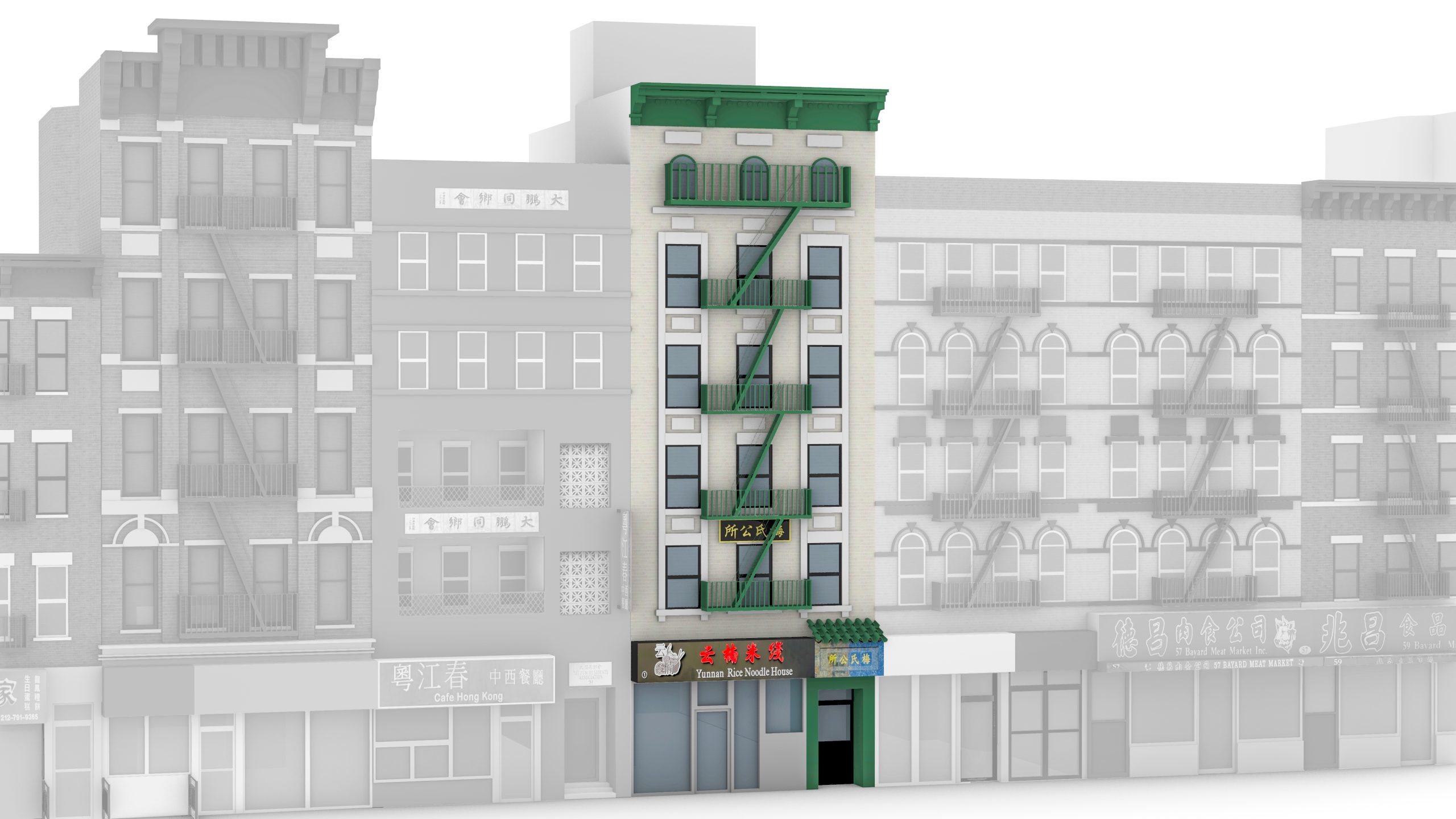
53 Bayard
Moy Shee Family Association
Architect: William A. Boring
Built in 1903
2024
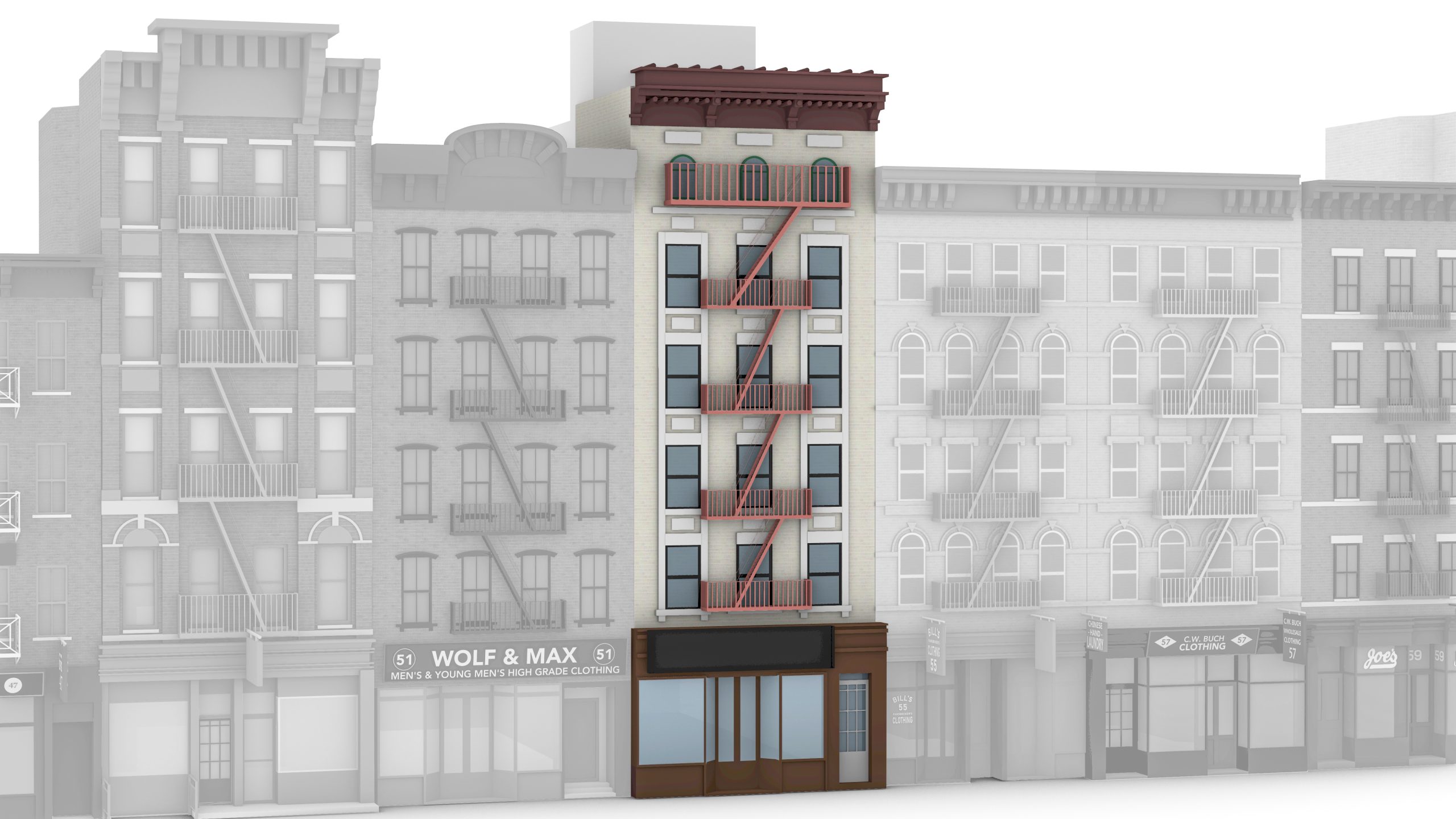
53 Bayard
Architect: William A. Boring
Built in 1903
1940s
Interview
WITH TONY MOY AND WILLIAM LOK S. MUI (TREASURER AND ELDER OF THE MOY SHEE FAMILY ASSOCIATION)
Interview conducted in August 2022, with Cantonese interpretation by Alice Lam.
+ Would you give me a brief introduction of yourself and your story of arriving in and growing up in NYC? How long have you been living in Chinatown and how did you come to be connected to Chinatown?
William: I was born in Toishan, China and then came to New York from Hong Kong in 1964 with my parents. In 1967, I went back to Hong Kong to get married. I lived in Chinatown, downstairs at 53 Bayard and owned a Chinese restaurant business in New Jersey. My grandfather retired and then my brother and I started the restaurant – “Golden China” in West Orange, New Jersey.
I joined the association when I came in 1964. Now, I’m a senior member (elder) of the association.
Tony: Most of our parents have been members of the association. My father came [to New York City] in 1965 and I came in 1968 with my whole family. I graduated from Seward Park High School and went to city college, majored in engineering and ended up in banking. At that time, most of us worked as waiters in restaurants after school Monday to Friday, Saturday and Sunday. Our mothers worked in the garment factories. My father worked for a restaurant. That was what was popular in the 1960s.
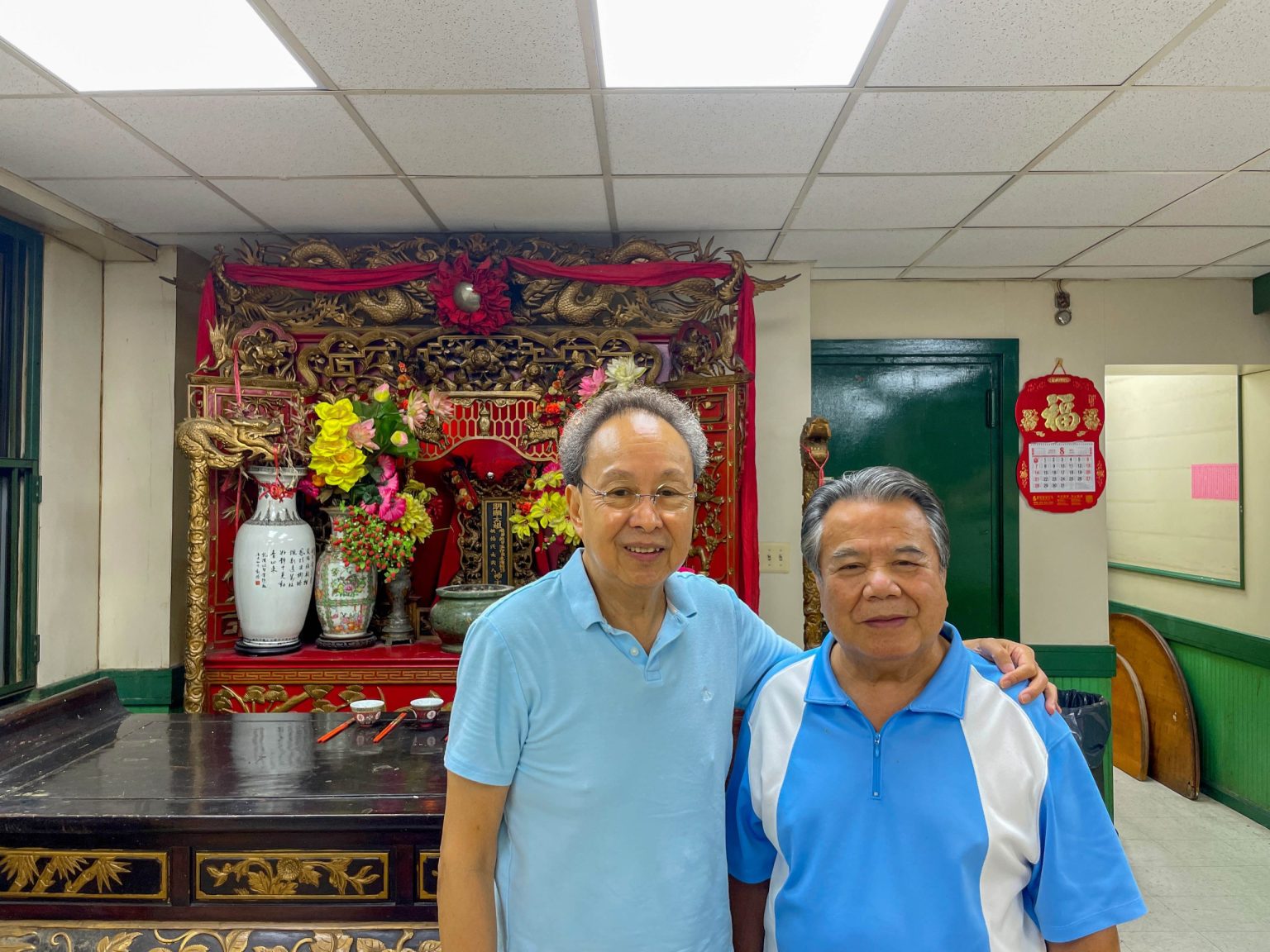
Tony Moy (left) and William Lok S. Mui (right) at the Moy Shee Family Association building, photographed at our interview in August 2022.
All my life I’ve been living in Chinatown. When we first came, we lived at 38 Eldridge Street, and after they built Confucius Plaza, our whole family moved there. After I got married, I bought my condo on Grand and Baxter Street.
I am now the association treasurer.
+ What was Chinatown like back then?
William: In 1976, the Chinese Consolidated Benevolent Association [helped] built Confucius Plaza. They applied for the mortgage, the federal funds to build it. It was really good for residents to have this building. From the 1960s – 1980s, Chinatown was more affordable. Now the spaces are too small and expensive so people have moved to the suburbs.
Tony: Back in the 1960s, there was only one Chinatown — this one, which is the main one. In the 1970s, the Chinatown in Flushing, Queens started. When the Fukienese started coming, they started living on East Broadway and when it grew crowded, they started moving to Brooklyn.
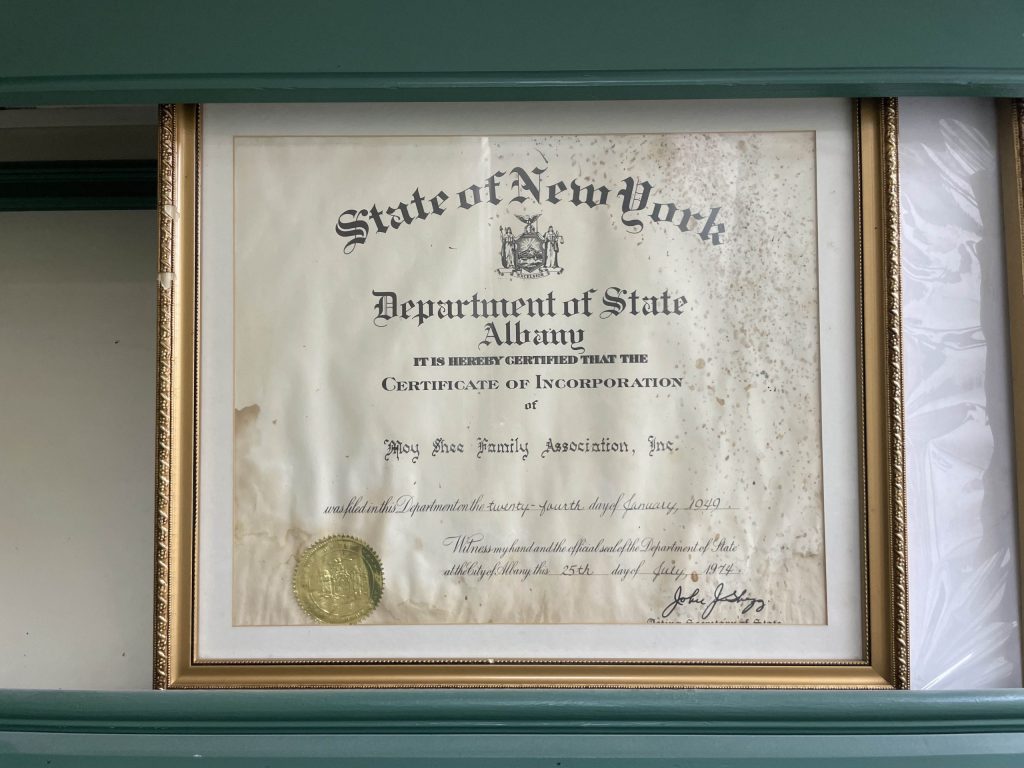
The association’s Certificate of Incorporation is framed and exhibited in the building. Photographed in 2022.
+ How long has the Moy Shee Family Association been in this building?
William: The association has had 125 years of history in New York City. We have a few different locations — in New York, Chicago, Boston, Minnesota, Miami, California.
The association has owned this building since 1949.
Before, we were across the street renting in 68 Bayard on the second floor. That might have been from the early 1900s, at least 60 years ago.
Tony: When we purchased the building in 1949, the current tenant was still on the lease, so we didn’t move over from across the street until 1972.
My father told me that the purpose of our Moy Shee Family Association was for people to get together.
The old people (I should call them seniors!) are very smart. They had old-fashioned thinking then — if you wanted to establish an association, you should own the place. They collected donations from all of the members with the last name Moy [to purchase the building]. When we purchased the building, we only paid $30,000 – $40,000 at that time. The purpose of the building for the association is for people from the same village in China to gather to talk about the old days or to network. At that time, everyone with the last name Moy joined… we had more than 500 members in the 1950s.
William: Moy was the last name of the first official Chinese interpreter at the immigration office in New York. Seven days a week, there was always someone here to play mahjong and talk about the old days, to [safely] leave shopping here, etc.
Now when we have holidays, we order catering from local restaurants and everyone can come here and eat.
+ Tell me about this building. Can you share any information about the building’s history or its past lives?
Tony: Besides one commercial unit on the ground floor, we have six floors, each with four residential units. Since we took over the space in 1972 [when the tenant moved out], we have occupied two floors. We knocked down four units to make the communal space for the association.
This is a rent-controlled building. It used to be all rented to people with Moy family members. We have nine residential units in the building now.
Until 1972, we had longtime residential tenants and have always had a restaurant downstairs. Back in the 1960s, the first tenant was Lin Garden Restaurant. After that, it was First Taste Restaurant (a Cantonese seafood restaurant) and then a Malaysian restaurant in the 1990s. Most tenants have been Chinese.
+ Can you tell me about any major renovations or changes to the building since it was first constructed and any decisions behind the building’s design?
Tony: In the 1970s, we knocked down four units to make one on the 2nd and 3rd floors. We redid the ceiling here. When we took over the building in 1972, after we knocked down the units, we actually built a commercial kitchen. We had a chef and cooked every night for members who didn’t have family here, so they were able to eat dinner at night, free of charge. They only paid a dollar of tip for the dishwasher. That lasted until when I became the management agent. About 6-7 years ago, I decided that it wasn’t financially worth it to maintain the chef and a commercial kitchen with professional cleaning — it was too expensive to maintain this. I realized it was cheaper to order take-out to feed members. We recalculated and now we have one restaurant in Chinatown (Amazing 66 Restaurant on Mott Street) to supply us dinners, which just closed.
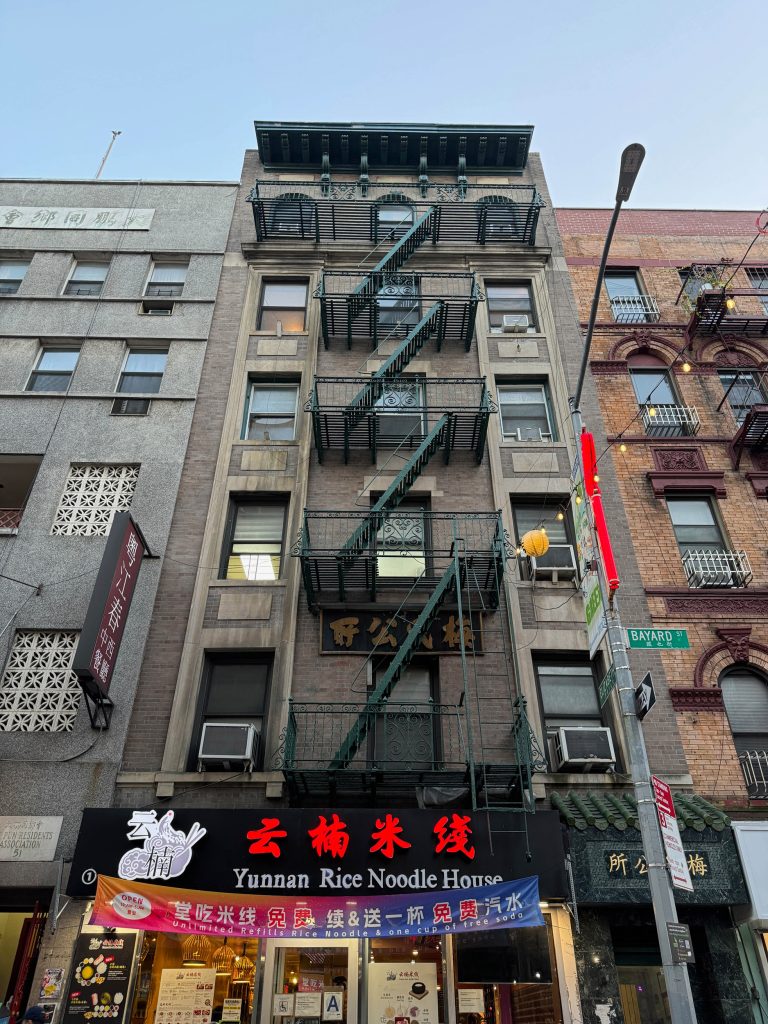
The New York headquarters of the Moy Shee Family Association, 2022.
The chef used to work for a restaurant and then after he retired, he came here to work. He was a Moy. He cooked for two tables, to feed at least 20 people. After a few years, when the older folks passed away, we had less people.
[Other renovations:]
Recently we changed the lights to LED.
The shrine we have here was shipped over from Hong Kong and has been here since we took over in 1972.
Before the pandemic, we had a cleaning person each morning clean the space and make a big carafe of tea. Then we would have tea time and free coffee every morning.
Also, every year around Chinese New Year, we would have a banquet of around 70-100 tables at Jing Fong for members and guests from different associations… but [because of the COVID-19 pandemic] we haven’t had a gathering for the last few years.
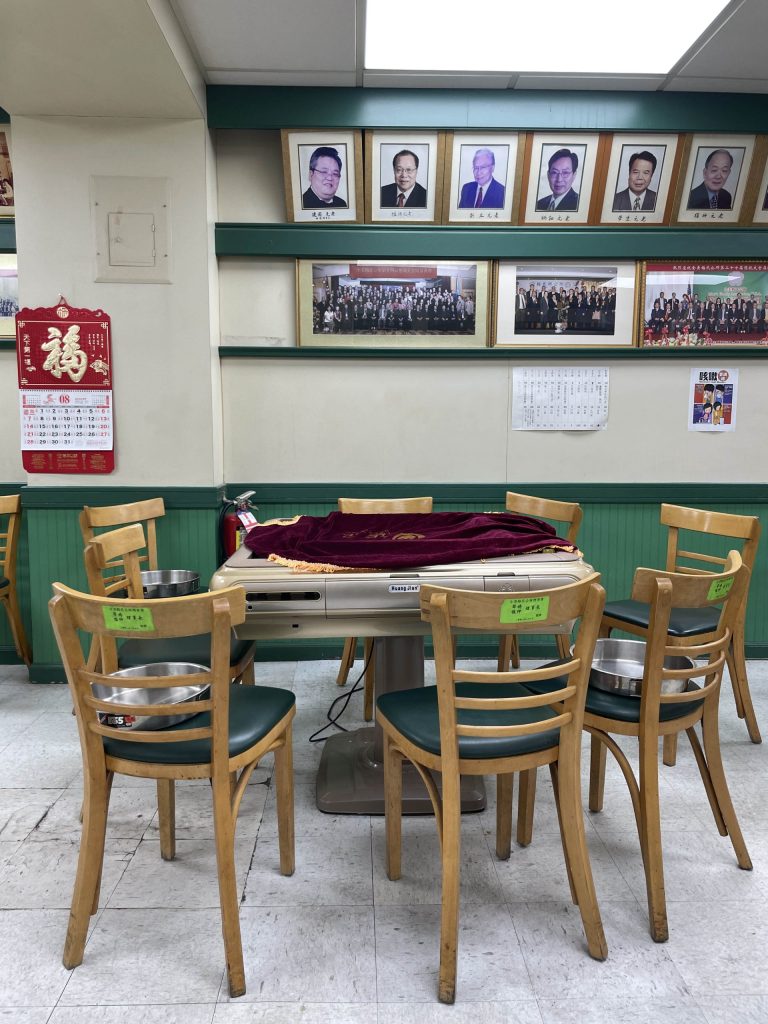
Interior of the Moy Shee Family Association, 2022.
+ How is the current space used? Who are the current users and tenants in this building?
Tony: The third floor has offices and mahjong tables up there.
The second floor is a casual meeting place with tables and chairs and our shrine.
The ground floor is a restaurant and the 4th, 5th, 6th floors are residential. There are no kids in this building; only retired couples as tenants. There is no rooftop.
We celebrate Chinese New Year, the Mid-Autumn Festival and Christmas here. We order a lot of food (including a roast pig) and we pray at the shrine and make offerings to the ancestors. Sometimes there’s alcohol.
Since 1949, we’ve always had a cat here in the association building. This cat sleeps here 24 hours a day — she has no name.
+ What are your fondest memories of this building?
Tony: I have only been coming here to the association regularly for the past 10 years. I wasn’t that involved before, when I was still working and I wasn’t a member. One of the senior members of the association came over to the bank where I was working and asked me to help — to look over a letter they received in English. When the treasurer at the time had a heart attack and passed away, and I happened to retire, I came to the association to do the work.
When I took over the job, I had to go through all of the papers, junk papers that had collected for the past 30-40 years. I had to sort through what I needed and what I didn’t need. The day I took over the job remains in my memory.
William: My happiest memory is of 1972, when all of the associations got together and held a convention.
We created a governing body and called a convention for all of the Moy Associations from different states to meet every three years. The first convention was held in 1972 here in New York City. We held banquets in a few restaurants. We would come back here [to our building] and pray at our shrine, paying tribute to our ancestors. We took the visitors on a tour of New York City for five days.
Each branch makes contributions for their senior members to get together. We always have a lion dance performance and have Cantonese opera performances at the banquet.
+ Who are the association’s members? What members visit? What activities take place at the association building?
Tony: Most associations don’t say that they don’t welcome females — but they don’t [often] come. Mostly it’s men. Membership fee is $10/year if you’re under $65. If you’re older, it’s free.
Every Chinese New Year, every member over 90 gets a red packet with $90 and longevity noodles. if you’re over 65, you get $30 in your red envelope. The oldest member is in their 90s and the youngest member is 30 years old.
Lunar New Year festivities: Fresh lettuce is held out for a lion dance troupes from the second floor balcony of the Moy Shee Family Association building. Photographed in 2023.
+ How have you seen your association and Chinatown impacted since the pandemic started? How have you felt about this?
William: These two years, the impact has been big. Safety has been an issue and it isn’t safe with homelessness and anti-Asian violence— there hasn’t been much business. Every day at 6PM, Chinatown is dead and no tourists come. There are lots of empty storefronts.
Tony: The economic impact for most associations who own their own building has been very hard; during the pandemic, we weren’t able to collect rent from commercial tenants. We had to make agreements with them — we tried to help them — to collect half of the rent, for almost 2 years. For three months, we didn’t collect any rent.
The property taxes have just been going up for the last three years — our real estate tax is around $70,000 per year now!
It’s been picking up since the beginning of 2022. Before that, our building was empty for the last two years. No one came. Most of our members are older, who have retired. It’s harder for the younger members.
53 BAYARD - MOY SHEE FAMILY ASSOCIATION - BUILDING PHOTOGRAPHS
Photographs taken between 2022-2024.